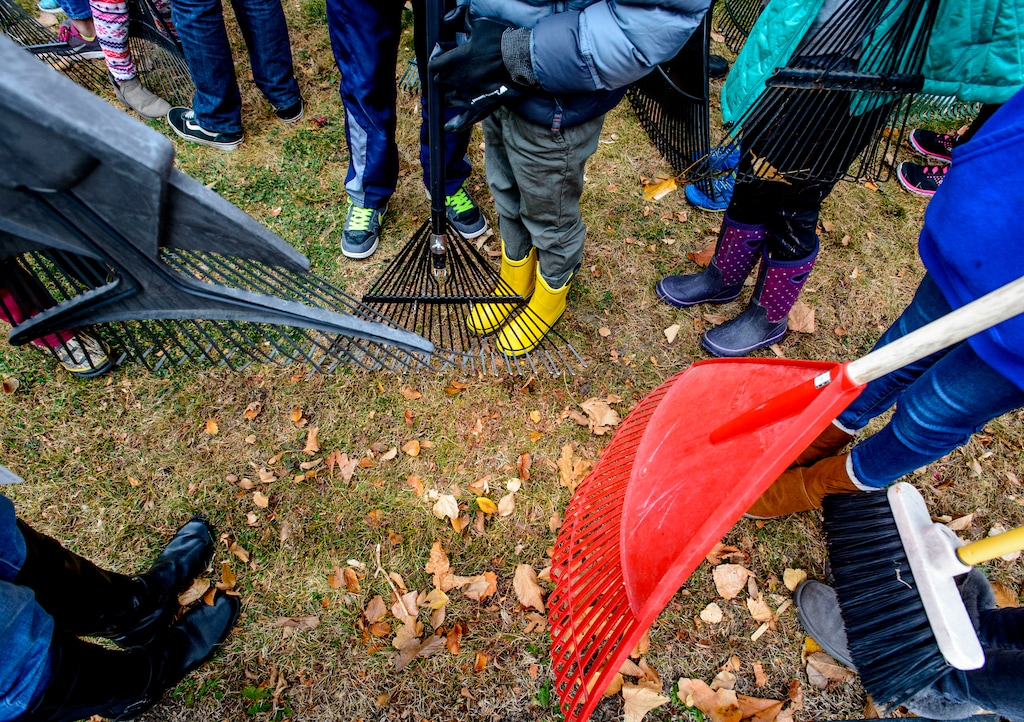
Some things, like precipitation events, fall colors and warm autumn days, are unpredictable year by year, but one thing is always guaranteed to be in abundance: fall leaves.
As a gardening educator with 17 years’ experience, I’d like to offer these tips to those about to reach for their yard waste bins.
Leaves can help your soil.
Leaves are a reliable source of organic matter and can be incorporated into the soil as a soil amendment or mulched and left on the soil surface. Leaves contain nutrients that can be recycled back into the garden soil. Leaves are not a fertilizer source because nitrogen, phosphorus and potassium levels are relatively low in leaves, but leaves will eventually decompose within the soil, which improves soil structure and enhances micro- and macro-organism activity. Plus, leaves are free.
It is best to mulch your leaves with a mower. Chopping leaves up into pieces will speed up both the decomposition and composting rate of leaves. A thin layer of leaves on turf areas can be mulched instead of raked and removed, which adds beneficial organic matter to the lawn area. Mulched leaves can help with future weed control since leaf pieces fall into pockets of bare soil and obstruct sun access, which can reduce weed seed germination.
Avoid thick layers of leaves, though, as too many leaves can obstruct sunlight from reaching photosynthesizing plant parts like grass blades.
Not all leaves are created equal.
Diseased leaves and leaves from certain species, such as black walnut trees, should be discarded in the yard waste bin. Avoid mulching or composting reproductive parts of problematic plants — such as field bindweed rhizomes, puncturevine seeds or grape hyacinth bulbs.
Don’t overdo it.
Too many leaves are just too many. Without getting too technical: Too many leaves added at one time can create problems for gardeners, specifically by knocking off the carbon-to-nitrogen ratio, which impacts plant access to soil nutrients. Plus, layers of leaves just get slimy and gross.
Long story short: Don’t overdo it all at once. Incorporate small annual additions of mulched leaves into the garden, and discard the rest.
Be careful.
Leaving leaves might not be lazy, but it can be dangerous. As leaves become wet and decompose, they tend to become slippery. Decomposing leaves in high-traffic areas can become a hazard. Place mulched leaves in garden areas with restricted access until the following spring, like vegetable gardens or in contained spaces such as compost bins. Wet, slimy leaves on hardscaped areas, like driveways or patios, aren’t just gross; they are also a liability.
And don’t forget to wear gloves and long sleeves when picking up leaves — creepy crawlies like spiders might be lurking under them.
Lean into the leaf litter.
One final pro tip to ponder over the dormant months: I have lost track of how many times I have been asked how gardeners can gain maximum benefits with minimal effort and perfect curb appeal. Garden maintenance decisions are like anything in life; there are pros and cons to most choices.
True, mulched leaves might contribute to more vacuuming at the front entryway or might not look as tidy as a perfectly raked yard, but leaves provide valuable resources for your landscape. Mother Nature doesn’t rake the forest floor every fall, so sometimes a little leaf litter or pine needle cover is tolerable.
And let’s all hope everything eventually gets covered up by a gorgeous blanket of white snow just in time for the holidays.
(Katie Wagner) Katie Wagner is an Extension Professor of Horticulture for Utah State University Extension in Salt Lake County.
Katie Wagner is an Extension Professor of Horticulture for Utah State University Extension in Salt Lake County. She is forever in search of ways to garden smarter, not harder, and loves to advise on ways Wasatch Front land managers can increase biodiversity, improve water conservation practices, and enhance the curb appeal of Salt Lake garden spaces. She lives, works, weeds, and sometimes rakes leaves in the Salt Lake Valley area.
The Salt Lake Tribune is committed to creating a space where Utahns can share ideas, perspectives and solutions that move our state forward. We rely on your insight to do this. Find out how to share your opinion here, and email us at voices@sltrib.com.