Our arrival on Aug. 12 at Pleasant Creek campground was supposed to be the apex of our journey, camp two of three on a 37-mile, four-day vigil walk from Boulder, Utah, to Torrey.
Instead, Pleasant Creek campground — where we saw purple, tainted water — became a new emotional low in our efforts to save wild Utah.
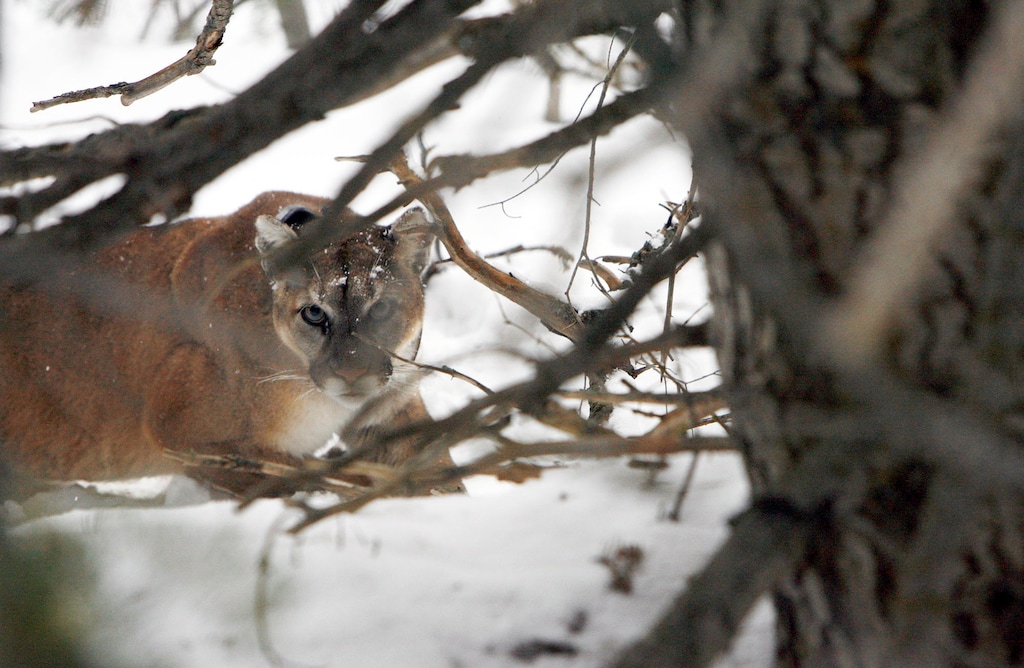
The vigil walk was conceived by Constance Lynn, longtime Boulder resident, to mourn the loss of local mountain lions and the impact of their loss to Boulder Mountain. That loss is the result of Utah’s wildlife management laws and policies that prioritize trophy species.
Those laws and policies need to change.
It all started in 2020 when Utah passed HB125 mandating that big game predators be “reduced” when big game populations fall below established targets. The mule deer target was then set to 404,900, a 37% increase over the 2024 population, and is a population Utah hasn’t seen in over three decades.
In 2023, HB469 passed, creating a year-round all-you-can-kill open season on cougars with few restrictions. The Mountain Lion Foundation and Western Wildlife Conservancy subsequently sued the state. The case remains before the Utah Supreme Court.
Then in late 2025, DWR launched WRI-7707 to study the effect on mule deer populations by eliminating cougars (a protected species in Utah) in six deer management units. The Boulder unit is one of those units.
Calling WRI-7707 a “study” is a ruse. It’s broadly understood that environmental impacts and disease affect deer populations more than predators. The project is sponsored by the Sportsmen for Fish and Wildlife and the Wild Sheep Foundation, whose priorities are the availability of trophy mule deer and trophy wild sheep.
Hunters, houndsmen, ranchers, scientists and conservation groups have all expressed concerns over the merits of this study.
The value of a cougar’s presence is immeasurable. They play a vital role in ecosystem management, their presence and kills contribute to what scientists call trophic cascade, and they can help control Chronic Wasting Disease, an incurable disease the Utah Division of Wildlife Resources deems a growing threat to our mule deer.
As for the numbers, estimates range from over 2,000 cougars in Utah in 2016 to less than 1,000 today. Of the 567 reported killed in the 2023-2024 season, the majority were females. Research shows that such kill rates threaten cougar population sustainability. Killing a mother will also likely kill her dependent kittens and could lead to more human conflict and livestock predation from unskilled adolescents. Granted, the state restricts the killing of a mother with kittens. But traps and snares don’t discriminate. In June, the Wildlife Board rejected a recommendation to outlaw the use of lethal traps and snares.
Thus the vigil walk.
We knew DWR planned to poison Pleasant Creek with rotenone just before our walk. The rationale for the poisoning was to replace the current non-native brook trout with native cutthroats, a Utah trophy fish. The sight of the neon-purple water caused by the rotenone neutralizer potassium permanganate was gut-wrenching evidence of the state’s methods and priorities.
By Thursday morning, the waters of Pleasant Creek were clear again, with the tainted water and its victims cascading downstream towards the Fremont River watershed and on to the Colorado river. The creek looked eerily placid. Our souls were not.
Pleasant Creek is now a metaphor for the state’s cougar management practices. Cougar legislation, regulations and management have all been poisoned for the benefit of select varieties. Rather than science-based wildlife management, Utah is mandating the manufacture of more profitable trophy species, all at the expense of critical native wildlife.
Under the Public Trust Doctrine, the state holds wildlife in legal custody for the benefit of all, ensuring all native species endure for future generations. The state must honor this doctrine by halting WRI-7707, abandoning trophy-prioritizing legislation and returning wildlife management to knowledgeable wildlife professionals.
By doing so, Utah remains wild for all to enjoy.
(Paul Garvey) Paul Garvey is a member of the board of directors of the Mountain Lion Foundation.
Paul Garvey is a member of the board of directors of the Mountain Lion Foundation. The views expressed are his own.
The Salt Lake Tribune is committed to creating a space where Utahns can share ideas, perspectives and solutions that move our state forward. We rely on your insight to do this. Find out how to share your opinion here, and email us at voices@sltrib.com.