 Megan Banta
Utahns started filing protests within hours of a new water-rights application for the proposed data center complex in Box Elder County.
By Monday afternoon, close to 200 people had logged their concerns about the project and how it could affect the Great Salt Lake. That’s despite celebrity investor Kevin O’Leary’s continued claims that the project is “almost certain to result in a net increase of water flowing to downstream water rights and the Great Salt Lake.”
O’Leary’s company reiterated that argument in a new water rights change application for its hyperscale data center project – also known as Wonder Valley Utah and Stratos – on Thursday. The new request comes after it withdrew two applications earlier this year that received a deluge of protests.
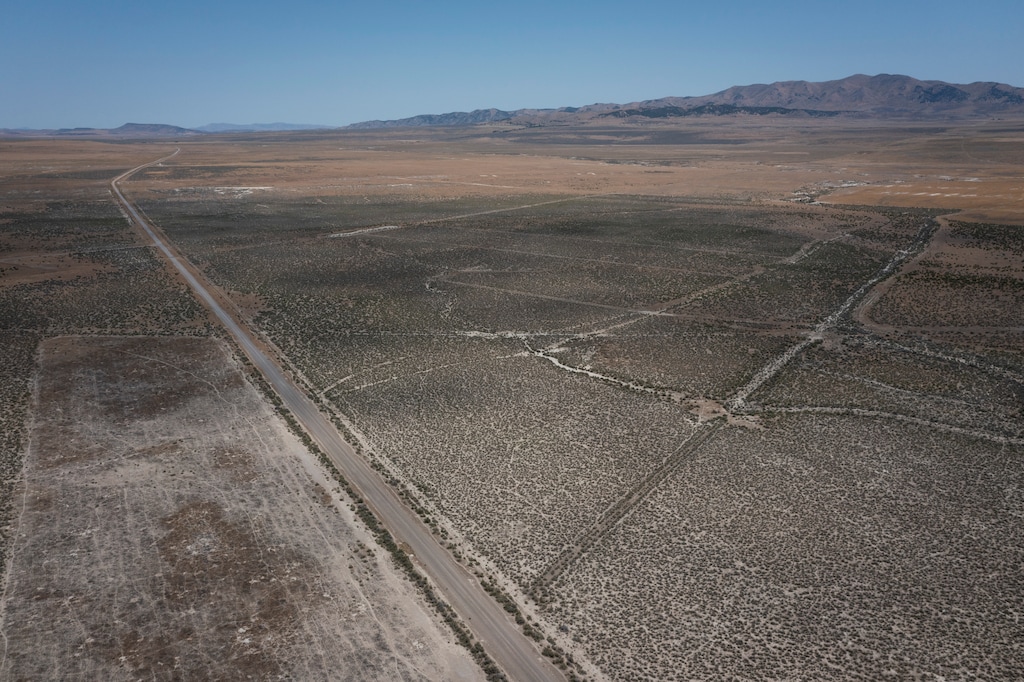
O’Leary Digital is asking Utah’s state engineer to approve plans to take water that has been used to irrigate land at Bar H Ranch for decades and instead use it for power generation and other commercial and industrial needs.
The application lays out a development that will eventually include 11 data center clusters and 7.5 gigawatts of power generation to help train, deploy and run artificial intelligence systems.
It seeks to change a water right that allows the rural Box Elder County ranch to divert up to 1,712 acre-feet of water each year from the Salt Wells Spring Stream for irrigation. That’s less than previous applications, which sought to transfer a little more than 1,900 acre-feet.
An engineering report included with the application projects the data center campus would divert about 1,215 acre-feet of water annually at full buildout. The report estimates the development would return about 229 acre-feet of that water through wastewater treatment and irrigation flows, leaving net depletion of about 987 acre-feet a year.
Those projections are conservative, the application reads, and are “less than the diversion and depletion amount under the current use.”
The application also proposes a roughly 2.5-mile pipeline that would carry unused water and return flows toward the downstream edge of the ranch property.
It’s not clear how much of the water flowing through that pipeline would reach the Great Salt Lake, the application acknowledges, but “there can be no question that more water will reach the Great Salt Lake from Salt Wells Spring Stream than has reached it historically.”
There still is a lot that O’Leary Digital needs to settle about the project, based on its application, including the actual power-generation option. Previous plans have relied on the use of combined-cycle natural gas, but the developer also is considering renewables and other options.
Financing already is underway, though. The developer says it has raised $20 million and is working to raise another $30 million to advance the project, and it’s secured about 11,000 acres through purchase agreements.