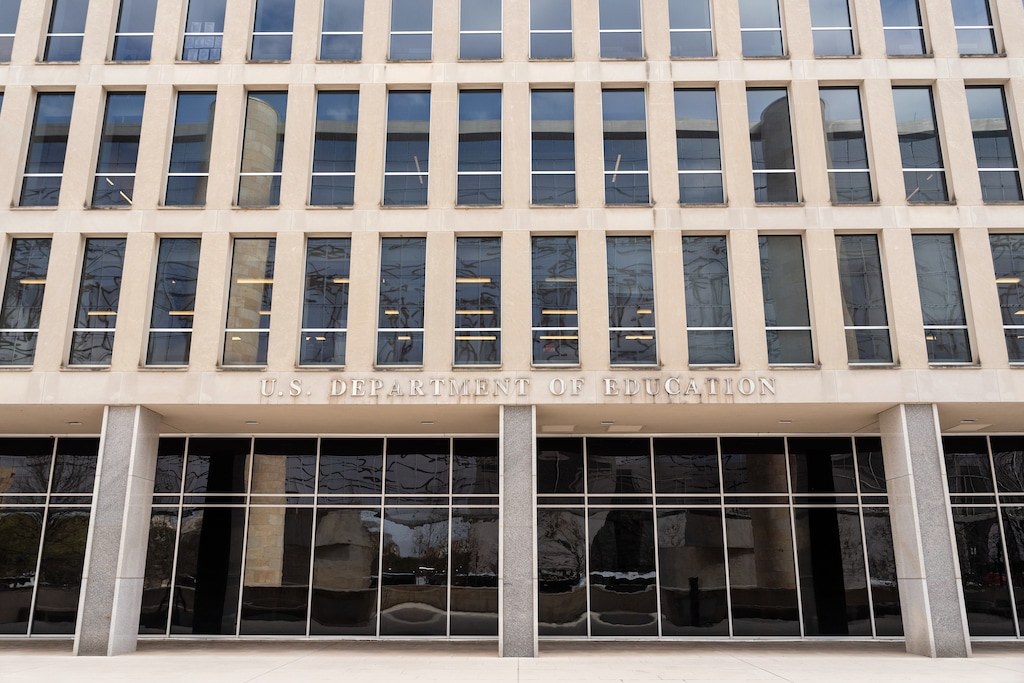
I was sitting in a conference surrounded by other Utah educators when I learned that the U.S. Department of Education is transitioning the Office of Special Education and Rehabilitative Services to the Department of Health and Human Services and moving the Office for Civil Rights to the Department of Justice. When the woman presenting, who happened to be the director of special education in a district in Indiana, shared the news, I could feel the energy in the room deflate. In the silence that followed, we all paused and looked at each other for a moment.
Do you know what I saw in the faces of my colleagues? Hurt. As the day went on, we had time to process what this could mean for our students, but we felt a sadness and grief that we just couldn’t shake.
The separation of the Office of Special Education and Rehabilitative Services from the rest of K-12 education and placement under a department whose objective is the medical health of a population seems insensitive at best and cruel at worst.
The Department of Health and Human Services is primarily focused on healthcare and medicine. Of course, many students receiving special education services do have medical diagnoses that are relevant to their education, but that does not make the move prudent. It’s not as though a parent takes their child with ADHD or dyslexia to their pediatrician to learn to read. A doctor can prescribe medication and share resources with a family, but it’s the Individualized Education Plan team at the child’s school that designs and delivers the specialized support to help a student meet their reading and academic goals.
These roles, medical and educational, are both important, but vastly different.
Our students with disabilities do not need to be cured. They need to be supported, celebrated and truly seen. Sending the message that they are a problem to be solved or an illness to be fixed is something that I will not stand for.
But this administration’s changes will not only affect special education students. Removing the Office for Civil Rights (OCR) from the Department of Education potentially puts the rights of all students at risk. The OCR ensures equal access to education by enforcing federal laws that prohibit discrimination based on race, color, religion, national origin, sex, disability or age.
Students deserve to be educated in a setting where they are treated with respect and dignity. So, if a district hasn’t followed a student’s Individualized Education Plan, a Muslim student is bullied for wearing a hijab, a school consistently suspends students of color more than other groups, or a university fails to properly investigate a report of sexual violence, the Office for Civil Rights steps in to investigate, resolve the issues and hold the district or university accountable.
In 2024 alone, the Education Department’s OCR handled 22,687 complaints — an 18% increase from the previous year. What will happen when the complaints continue to increase, but the Department of Justice isn’t fully equipped to handle them? Adding the Education Department’s caseload on top of the Department of Justice’s tens of thousands of cases annually is an invite for systemic paralysis. All the good intentions in the world can’t compensate for lack of resources or time, and inevitably some cases will fall through the cracks. Furthermore, although the OCR is mandated to review every complaint, shifting administrative priorities means the DOJ often chooses what cases are worth dedicating resources to.
When nuanced cases arise, the Department of Justice’s attorneys, while experienced in many areas, lack the educational expertise and context that these cases desperately need. When the Office for Civil Rights investigated the District of Columbia Public Schools in March 2025 for delaying student evaluations, their expertise in complex Special Education law allowed them to identify and resolve root issues that an attorney with a background in criminal litigation might have missed.
Change in the name of efficiency or fiscal responsibility is not worth making our students feel unsafe or like they don’t matter.
While these decisions are finalized, we must do better for our students by prioritizing education when we vote. We have the opportunity and responsibility to elect leaders who represent our most important values and will enact policies that can improve all of our lives, including and perhaps especially the lives and education of America’s children.
Over the coming months, get involved by researching candidates and learning about their educational platform. There are even some teachers running for local and state offices that would be excellent elected leaders. You can volunteer in your neighborhood school — we always need good people to help, but more importantly, it’s harder to forget kids you’ve worked with when you fill out your ballot.
If you put in the work now, when November rolls around, you’ll be able to confidently vote for candidates that will protect the educational rights of all students. Our kids are counting on us.
(Sydney Whatcott) Sydney Whatcott is a K–2 Special Educator for students with mild to moderate disabilities in Tooele.
Sydney Whatcott is a K–2 Special Educator for students with mild to moderate disabilities in Tooele, Utah. With nine years of experience and a Pestalozzi Award for excellence in her field, she is a fierce advocate for high-quality, equitable learning. A current Utah Teacher Fellow, Sydney believes that when teachers lead from the classroom, students and school communities thrive.
The Salt Lake Tribune is committed to creating a space where Utahns can share ideas, perspectives and solutions that move our state forward. We rely on your insight to do this. Find out how to share your opinion here, and email us at voices@sltrib.com.