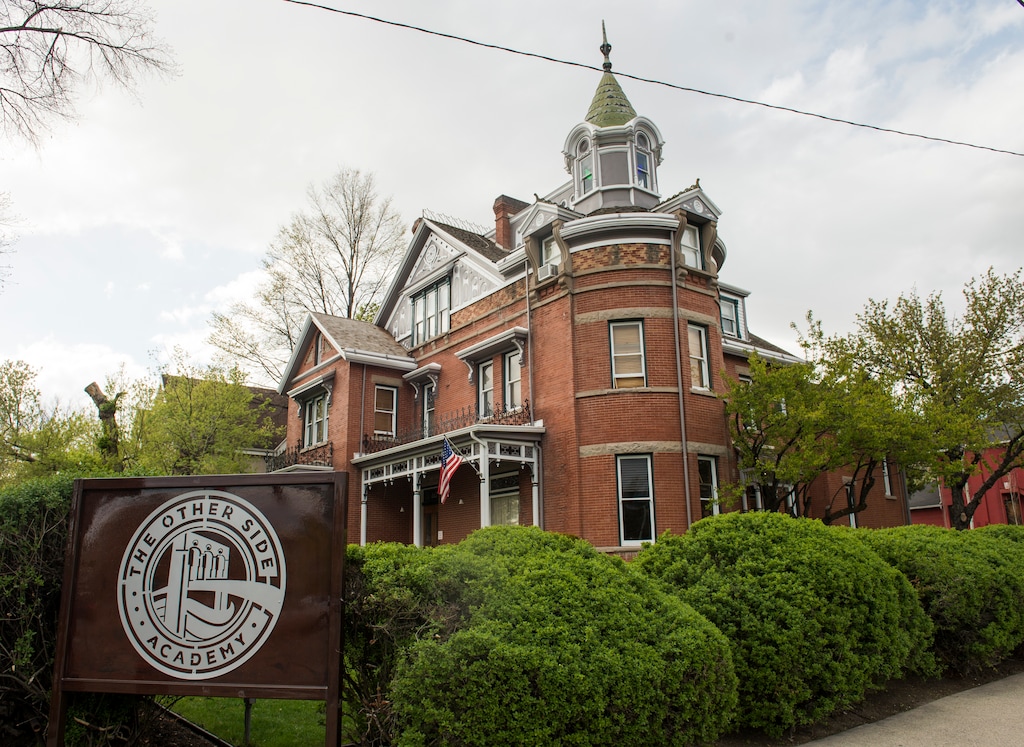
When I began studying The Other Side Academy (TOSA), I was skeptical.
For the past year, my colleague Shima Baradaran Baughman and I have conducted an in-depth study of TOSA, spending hundreds of hours observing the program, reviewing organizational documents, interviewing staff and former students, and analyzing what we heard. I came in expecting to find a program that was overly militaristic and exclusionary. Instead, I found something I have never seen in two decades of working in criminal justice.
The Salt Lake Tribune’s recent profile of TOSA, framed largely around the phrase “unpaid labor,” misses most of the story. Readers deserve a more complete picture of what makes this program remarkable — and why it deserves national attention.
The short version: TOSA works. The program achieves a recidivism rate more than 3.5 times lower than the national average. Among graduates, only 23% have been rearrested across the organization’s 11-year history. Nationally, some 82% of people leaving prison are rearrested within ten years.
For years, American criminal justice has cycled through reform efforts. Education programs, vocational training, drug courts, treatment programs, reentry services — most produce modest improvements, often reducing recidivism by about 10%. Nothing comes close to producing outcomes like TOSA’s.
Its results are especially striking because TOSA doesn’t hire professional therapists or clinical staff. Instead, it operates as a peer-run community: People who were once incarcerated, who attended TOSA themselves, now run the program, modeling for incoming students what a changed life looks like. The power of their credibility, example and inspiration is something no licensed clinician can imitate. This is consistent with a large literature affirming the effectiveness of peer-led recovery, including an extensive Stanford review finding that peer support matters more than formal therapy in overcoming substance dependence.
The Tribune’s “unpaid labor” framing misrepresents both the law and what participants actually receive. In Vaughn v. Phoenix House (2020), the U.S. Court of Appeals for the Second Circuit held that rehabilitation residents who perform work duties are not employees under the Fair Labor Standards Act — because they are the primary beneficiaries of the arrangement. They receive something more than wages: housing, food, healthcare, a program instead of jail. TOSA’s participants receive all of this, plus employment connections and help building credit and securing housing. Participants are also offered a financial literacy course, which includes matching of savings up to $10,000. It’s the same logic that has long governed unpaid internships: The absence of a paycheck is not the same as the absence of compensation.
Our research found that the work at TOSA is not incidental to the therapeutic model — it is the therapeutic model. Participants do not work because TOSA is harsh; they work because daily work is the canvas on which behavioral change happens. Love, honesty and cooperation aren’t taught in books or classrooms at TOSA. They are practiced, hour by hour, over two-and-a-half years, in the moving truck and the thrift store. The five-star rating across more than 1,800 customer reviews of The Other Side Movers is not a commercial footnote. It is evidence that the care, work ethic and service orientation instilled at TOSA are real and visible to the outside world. On the question of financial self-sufficiency, a point the Tribune treated with skepticism, our review confirmed that TOSA’s costs are fully covered by revenue from its student-run businesses. We make no claims about the Village’s finances; the Village was not included in our study.
The people at the center of this story are largely absent from the Tribune’s account. I spent hours and hours with them. Many cried, overcome with gratitude for the difference TOSA had made in their lives. Many said it was the first place that showed them “legitimate love” — where they felt totally seen, held accountable and supported in every way. One graduate told me the last time he lied was eight years ago, two months into TOSA, after he decided one night he was done manipulating other people. This is a space where people make dramatic, permanent changes. And they love who they become. Throughout the process, students are consistently inspired by staff who shared a criminal past: “If they can change, I can.”
I’ve spent over 20 years working with people in jails, running a treatment program in Oakland, seeking solutions to the cycle of poverty and incarceration. I’ll be honest, I was doubtful when I started my study of TOSA. I saw it as competition to other solutions I’d invested in, overly intense and foolish for leaving clinicians out of the picture. But after observing the program in action and interviewing its participants, I see I was wrong. The former students I spoke to didn’t describe a punitive, exploitative experience. They described a place that taught them love, accountability, honesty and support, in a way that nothing else ever had.
TOSA has a solution that works. It’s time to share it with the rest of the country.
(Jane Mitchell) Jane Mitchell is an associate professor at BYU Law School, where her research focuses on criminal justice reform and desistance theory.
Jane Mitchell is an associate professor at BYU Law School, where her research focuses on criminal justice reform and desistance theory. Over the past year, she served as the primary investigator on an in-depth empirical study of The Other Side Academy. Before entering academia, she taught in several incarceration facilities (San Francisco, NYC’s Rikers Island, Utah County) and ran The Reset Foundation, a residential alternative-to-incarceration in the Bay Area.
The Salt Lake Tribune is committed to creating a space where Utahns can share ideas, perspectives and solutions that move our state forward. We rely on your insight to do this. Find out how to share your opinion here, and email us at voices@sltrib.com.