Note to readers • This article discusses suicide. If you or people you know are at risk of self-harm, call or text 988 to reach the Suicide & Crisis Lifeline for 24-hour support.
Several years ago, I found myself standing on a freeway overpass in Utah County, frantically communicating with a man in a suicide crisis.
Cars rushed underneath us, he said his life felt like it was collapsing above him.
He wasn’t looking for a lecture, inspiring scriptures or a motivational quote that hangs on a wall. What he needed most in that moment was something simple and beautifully human: another struggling man willing to reach out and love him for exactly who he is.
I was able to love this man off the ledge using my own broken heart and the words, “I love you, bro.”
That experience changed me forever. It reinforced something I had already been struggling to learn: Many men in Utah are silently screaming on the inside, carrying heavy, muted, emotional weight.
The Utah Department of Health and Human Services reports that approximately 3 out of every 4 suicide deaths in Utah are males.
Men I’ve spoken with say they do not want to burden their loved ones with their emotional struggles, and many are afraid that sharing their mental health challenges will negatively affect the way people perceive them.
My own mental health journey included a painful divorce, heartbreaking grief and a secret addiction to alcohol that I tried desperately to keep hidden. I was ashamed of what society would think of me if they knew how “weak” I was.
For a long time, I coped the way many men are taught to cope: I pushed through, worked harder and completely internalized the pain. On the outside, my life looked functional — and it was, partly. On the inside, things were unraveling.
After many nights of doubting the value of my life, I realized something that felt both uncomfortable and freeing. I realized that my life, as flawed and imperfect as it was, has always been worthy — worthy of sacrificing every ounce of pride to reach out, worthy of every bit of discomfort to make changes and worthy of every shred of love others have to offer me.
The man on the overpass taught me that. I taught myself that.
This realization helped me start the I Love You, Bro Project, a Utah nonprofit organization for men’s mental health and suicide prevention.
The idea was super simple: I wanted to duplicate the shame-free space that was created on the overpass that day, and I wanted to make that space for men throughout Utah.
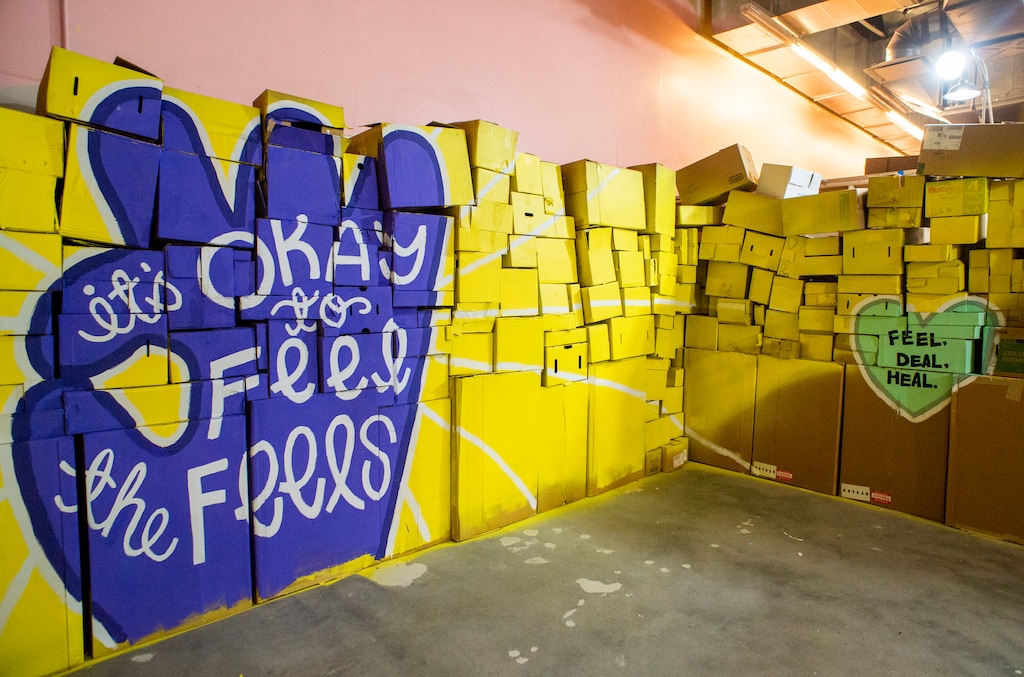
The I Love You, Bro Project hosts weekly, peer-led men’s support groups across the state. These groups are not clinical, and there are no counselors or therapists present. They are simply shame-free circles of broken-hearted men, listening and supporting each other without judgment.
These are judgment-free spaces where men could show up — just as they are — and talk about the things men normally bury: Loneliness, grief, negative self-worth, anger, addiction and a catalog of other challenges men suffer with alone.
In Utah, suicide has remained one of the leading causes of death for years. Yet many men still hesitate to ask for help because they don’t want to burden their loved ones. Our own surveys from men attending I Love You, Bro support groups tell a similar story. Large percentages report experiencing loneliness, shame, emotional isolation and feeling pressure to “figure things out on their own.”
But something powerful happens when that isolation is interrupted by a vulnerable connection. These weekly support groups for men offer dedicated spaces to celebrate wins, honor pain and create valuable trusted connections with other men. We call each other “2 a.m. Bros” — men who we can emotionally lean on at any time of day.
Often these conversations start with small admissions:
“Pornography is hurting my marriage.”
“I’m embarrassed to talk to anyone.”
“I feel so lonely.”
When given space to be honest and vulnerable, I’ve seen men create miracles for themselves, and I’ve seen sustainable healing begin.
Having dedicated spaces where men are invited to show, share and own their emotions gives other men an unspoken permission to do the same.
If anything, true masculinity means conjuring up the bravery to check in with ourselves before life actually forces us to — it means keeping up with our mental health before it escalates to a dangerous level.
That is true suicide prevention.
As men, we must ask ourselves some uncomfortable questions:
“How am I REALLY doing?”
“Who do I talk to when things feel heavy?”
“What is something I wish I could tell someone but am afraid to?”
We don’t need to wait until we’re in crisis, standing on our own emotional overpasses, to start a connective conversation. Sometimes the first step is as simple as texting a friend, sitting quietly with a brother, or even saying the words many of us rarely say out loud: “I need help.”
As a society and as human beings, it is imperative that we understand that saying the right thing isn’t nearly as important as creating the right space — space for others to be openly vulnerable and accepted as they are.
No fixing, just listening.
We can have these types of dedicated emotional spaces in our homes, schools, offices, churches. Anywhere. Everywhere.
Men in Utah do not need to face life alone. That is the foundational idea behind the I Love You, Bro Project, and it is the message I hope more men across our state will take to heart.
Many hands make light work, and many bros make lighter hearts.
We can choose to reach out for help, and we can choose to speak out. Sometimes the most powerful words a man can say (or hear) are also the simplest:
“I love you, bro.”
(Joe Tuia’ana) Joe Tuia’ana is the founder of the I Love You, Bro Project.
Joe Tuia’ana is the founder of the I Love You, Bro Project.
The Salt Lake Tribune is committed to creating a space where Utahns can share ideas, perspectives and solutions that move our state forward. We rely on your insight to do this. Find out how to share your opinion here, and email us at voices@sltrib.com.