In Utah, we pride ourselves on common sense. We don’t rush into decisions based on fear or speculation. We look at the facts, weigh the evidence and act accordingly.
That’s why the state’s new kratom law is so concerning.
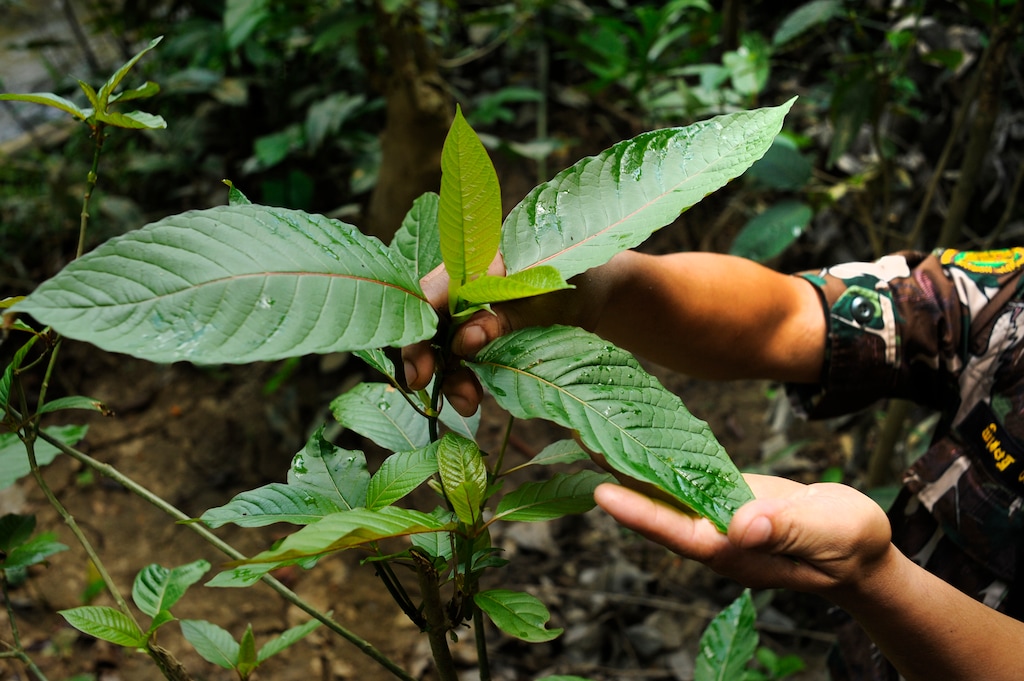
Senate Bill 45, which Gov. Spencer Cox signed in March and took effect May 6, bans all forms of the centuries-old botanical, except for kratom-leaf-only products sold by retail tobacco specialty businesses. That exception may be temporary, however, as Sen. Michael McKell says he supports a ban.
The new law means scores of other natural kratom products — including traditional teas and dietary supplements — will be off limits to thousands of responsible, adult consumers across Utah, despite scant evidence that these products pose any real public-health threat.
Moreover, there is no proof that natural kratom leaf products, in other formats, present risks to public safety or put a strain on Utah’s law enforcement resources. Even local police have acknowledged the supposed enforcement crisis fueling support for the new law isn’t matched by ground-level encounters.
In a recent report by the Utah Statesman, Utah State University’s student newspaper, USU Police Department Lt. Scott Murray was quoted as saying he has never seen a case involving kratom during his time on the force.
Murray told the Statesman that he even contacted a sergeant on the Cache/Rich Drug Task Force to inquire whether kratom was an issue on a larger scale. “In their investigations and the work they have done, they have seen very few incidents of it,” Murray said.
While kratom cases may be few and far between, the consequences of Utah’s new law for natural kratom leaf consumers like me are very real. For more than a decade, I have lived with atypical trigeminal neuralgia, a chronic nerve condition that causes relentless, debilitating pain.
I pursued every conventional treatment available: surgeries, nerve blocks, powerful prescription medications. Some left me sedated. Others left me hopeless. None gave me my life back. Natural kratom leaf did.
Natural kratom leaf products don’t impair me or leave me feeling altered. They allow me to function, to be present with my family, to participate in my community and to live with dignity.
But not all products marketed as “kratom” are the same. In recent years, a new category of products hiding under the “kratom” label have emerged in gas stations, smoke shops and convenience stores.
Among them are dangerous, lab-made kratom derivatives like concentrated synthetic 7-hydroxymitragynine (7-OH).
These substances are not natural. They are highly potent, chemically altered street drugs designed to mimic the effects of prescription opioids. These synthetic opioid products, not natural kratom leaf products, are driving the legitimate concerns raised by regulators and public health experts.
Even federal agencies have begun to draw the distinction between these two different types of products. The Food and Drug Administration has recommended scheduling concentrated synthetic 7-OH and similar compounds, and the Drug Enforcement Administration is expected to follow suit. As the FDA Commissioner made clear, the focus is on harmful synthetic byproducts, not the natural leaf.
Unfortunately, what’s happening now moves us in the opposite direction. A nonsensical crackdown on kratom product types — which fails to distinguish between natural leaf and concentrated synthetics, regardless of serving size or clinical evidence of safety — doesn’t solve the problem. It creates one.
Plus, this new law forces consumers like me to purchase their natural kratom leaf in a tobacco shop. I do not smoke, and I should not be forced to frequent these stores to purchase my form of pain control. The law insinuates that I am doing something wrong by severely limiting my access to products that keep me functioning.
If lawmakers are serious about protecting public health, the path forward is clear: Target the products that pose real risks, not the ones that have helped people like me rebuild our lives. Because when you strip away access to natural kratom, you don’t eliminate demand. Instead, you push consumers back toward the very alternatives policymakers claim to be concerned about — stronger pharmaceuticals, illicit substances or nothing at all.
Before we move forward with enforcement actions that could impact thousands of Utahns, we should ask a simple question: Where is the crisis? If even our own law enforcement officers are struggling to pinpoint real-world cases, the answer should give us pause.
The stakes here aren’t theoretical. For me — and for many others — they are deeply, unmistakably real.
(Lora Romney) Lora Romney served as treasurer for TRUCE (Together For Responsible Use and Cannabis Education) and helped bring medical cannabis to Utah. She began to advocate for kratom accessibility in 2019.
Lora Romney served as treasurer for TRUCE (Together For Responsible Use and Cannabis Education) and helped bring medical cannabis to Utah. She began to advocate for kratom accessibility in 2019. A resident of Layton, she is an accountant, a mother of four, a grandmother and treasurer of Harmonic Winds of Utah, where she plays the flute.
The Salt Lake Tribune is committed to creating a space where Utahns can share ideas, perspectives and solutions that move our state forward. We rely on your insight to do this. Find out how to share your opinion here, and email us at voices@sltrib.com.