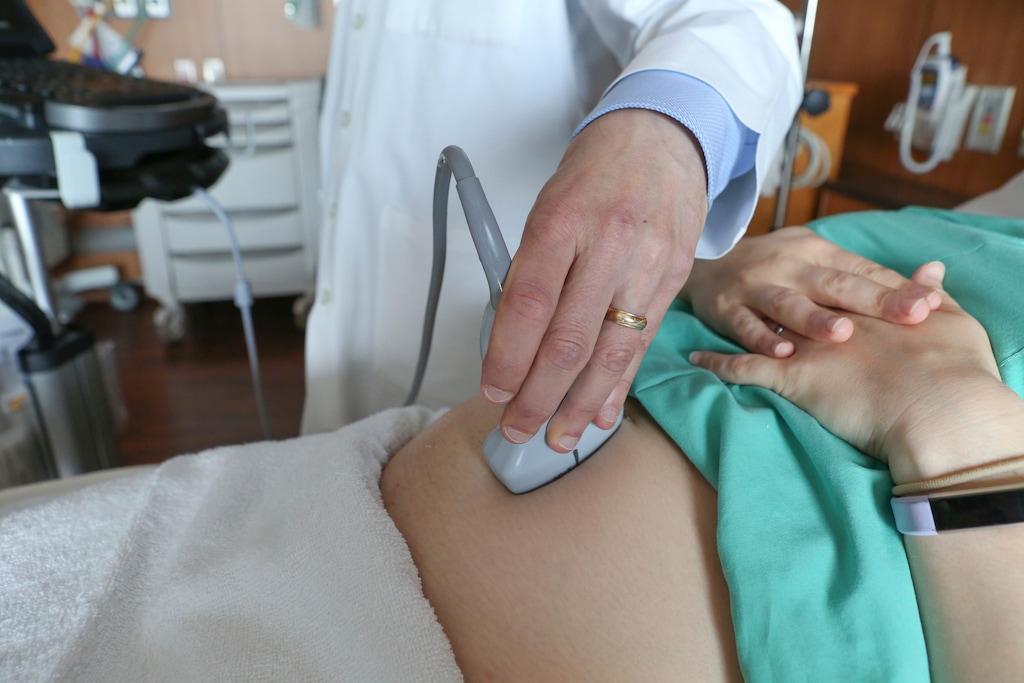
When a baby is born all eyes are on the baby, but who has eyes on the mom?
Giving birth is supposed to be one of the most magical moments as a mother — one of the most joyous experiences of our lives. But what happens when it’s not?
The birth of our third baby was supposed to be easy. We’d done it two other times, we already had a boy and a girl. The only excitement was supposed to be finding out the gender of this baby, but we weren’t expecting what came next.
As I held my minutes-old baby girl, I began to hemorrhage. They were able to control the bleeding, and I went home thinking, “Phew, that was it.” We were ready to live our lives as a new family of five. We were not prepared for what came next.
What followed in the weeks postpartum was a series of hemorrhages ending in a catastrophic delayed postpartum hemorrhage. At six weeks postpartum, I was fighting for my life in an ICU.
Thankfully, tucked into my delivery discharge packet was a flier with urgent maternal warning signs. This flier saved my life. I knew what to watch for and when to seek help.
My hemorrhage rocked our world. I left the hospital grateful to be alive, but unsure of how to move forward. We never saw this coming. I wasn’t giving birth in the 1800’s — I thought bad things don’t happen during delivery, and they for sure don’t happen once you leave the hospital, and yet here I was trying to recover physically and emotionally while doing my best to take care of a newborn.
This left me feeling isolated and numb. I didn’t know who to talk to. I was looking for anyone who understood my pain, but I felt like everyone around me was saying, “Women are amazing, our bodies are made for this.” Or “The newborn phase is just the best.”
These phrases can be dangerous to a mother grieving her birth experience. My body failed me, and I was drowning in the newborn phase. The guilt ate at me. I put on a brave face and would tell everyone I was doing great, but I would cry in my shower so no one would know just how broken I felt. It wasn’t until my doctor pressed a little further past the routine check up questions and asked how I was really doing that I finally felt safe enough to open up: I was not OK.
What I didn’t know was how many women felt the same. The March of Dimes reports that up to 45% of new mothers will report experiencing a traumatic delivery. This can be for various reasons: fear for the mother’s or newborn’s life; emergency cesarean sections or use of forceps; obstetrical complications such as hemorrhage; high blood pressure or tearing; a NICU admission; or a general feeling a lack of control at any point during delivery.
As birth trauma researcher and labor and delivery nurse Cheryl Tatano Beck writes, “Trauma is in the eye of the beholder.” If it was traumatic to her, it was traumatic. Period. We need to do more than tell women, ‘Phew, so glad you’re not dead. Here’s a newborn. Good luck!’”
The postpartum period is hard enough, but processing a traumatic delivery while trying to have a “normal” newborn experience adds another layer than many women are not expecting.
There are a few things we can do to better support and protect our mothers.
We need to educate ourselves with the urgent maternal warning signs. The U.S. Centers for Disease Control and Prevention’s Hear Her campaign does a fantastic job at highlighting urgent maternal warning signs and symptoms as well as sharing stories of women who have gone through them. It’s a great place to get familiar with them so we can be the lookout a new mother needs.
We also need to be more comfortable talking about uncomfortable topics. It’s not easy talking about postpartum bleeding, or how we are doing mentally — especially if you’re having troubling thoughts. If a mom wants to talk, we need to be ready to listen.
Frequent check-ins after delivery are also vital. New mothers might not be ready to open up — they might not even recognize they’re struggling in the beginning — but, when she is ready, she will know she has someone who will listen.
We can all create supportive spaces in which maternal health challenges are valued and getting help is normalized. A simple “If you’re not feeling like yourself, I’m here,“ goes a long way.
The Utah Department of Health and Human services has recently launched a fantastic website with information for mothers, family members and providers supporting women through the postpartum period. Birthtrauma.utah.gov offers information on signs and symptoms of birth trauma, as well as ways to find help.
Sometimes it feels overwhelming because we may not know where to start. I spent a very lonely year trying to heal with my family. I desperately wanted any connection or validation that my experience was as big or heavy as it felt. We just had no idea where to look for support.
We are making great strides for mothers in the state of Utah, but we still have a few things to learn. Giving birth can bring a range of emotions and experiences and having a second set of eyes on the mother, not just the baby, is an important way to make sure she will succeed.
Seeing her just might save her life.
(Desiree Ferrin) Desiree Ferrin currently works as the Birth Trauma Patient Advocate for the Utah Women and Newborn Quality Collaborative.
Desiree Ferrin currently works as the Birth Trauma Patient Advocate for the Utah Women and Newborn Quality Collaborative. She hopes to bring awareness to the complications that arise in maternal health, as well as maternal mental health and to help close the gaps in care that arise between the two.
The Salt Lake Tribune is committed to creating a space where Utahns can share ideas, perspectives and solutions that move our state forward. We rely on your insight to do this. Find out how to share your opinion here, and email us at voices@sltrib.com.