 Sara Weber
Happy Saturday, and welcome to Inside Voices, a weekly newsletter that features a collection of ideas, perspectives and solutions from across Utah — without any of the vitriol or yelling that’s become all too common on other platforms. Subscribe here.
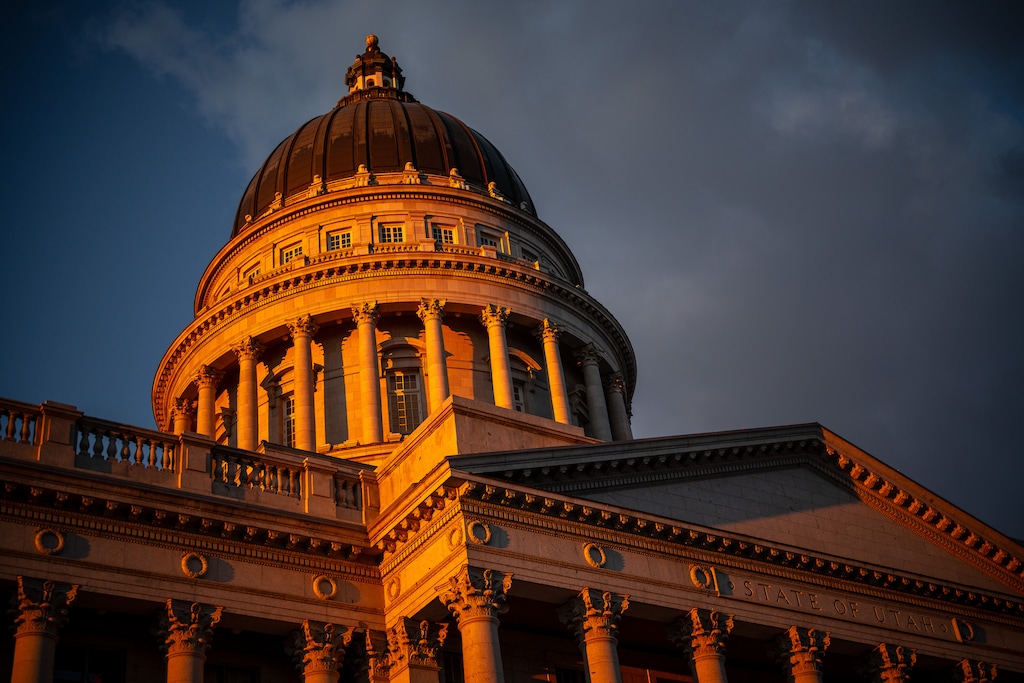
Utah lawmakers passed 541 pieces of legislation this past session, and a few of them have prompted Utahns to share concerns about how our judicial system, academic integrity and children’s safety are now at risk.
Savannah Eccles Johnston, an assistant professor of constitutional government, civics and law at Utah Valley University, and Robert Williams, a distinguished professor emeritus at the Rutgers University School of Law, say HB392 — which creates a constitutional court — puts “the grand principle of separation of powers and the integrity of Utah’s judicial system” in peril.
“When lawmakers attempt to reassign core constitutional functions through legislation, it is the duty of the people of Utah to push back,” they write in an op-ed. “Perhaps there are strong arguments for a new judicial body to hear issues related to the Utah Constitution or matters of serious public interest. If so, a new constitutional court ought to be created in the right way: via constitutional amendment. Until then, the ‘constitutional court’ established in HB392 is unconstitutional.”
Gregory A. Clark, an emeritus professor of biomedical engineering at the University of Utah, says HB204 — which allows Utah college students to turn down assignments based on “religious and conscience beliefs” — “compromises academic integrity.”
“As a matter of fairness, students of one religion (or none) should not be forced to complete assignments that students of another religion don’t have to. But under HB204, that will occur,” he writes in an op-ed. “Further, the world at large, including students’ future prospective employers, should be able to presume that a graduate has mastered a discipline as it exists — not one filtered through the lens of personal belief. Under HB204, they can not.”
And Thaddeus Wendt, a personal injury attorney, says that HB0178 and HB0024 — two bills that reduce penalties for dangerous driving in school zones — “send the wrong message.”
“Strong penalties aren’t just about punishing offenders,” he writes in an op-ed. “They’re about deterring reckless behavior before it causes harm. When lawmakers weaken consequences in school zones, they risk weakening the deterrent that keeps drivers vigilant.”
Do you have a perspective you’d like to share on an issue impacting Utahns? Learn how you can share it in an op-ed or letter to the editor.
Utah Voices
(Brian Maffly | The Salt Lake Tribune) In this 2015 photo, cattle graze on Garfield County's Aquarius Plateau in the Dixie National Forest in Utah.
Take a look at these op-eds and letters to the editor recently published in The Tribune:
How Trump is opening up federal land for ranchers in Utah.
The war in Iran almost left me stranded. Americans abroad and at home should not be an afterthought.
I study conservation and sustainability. Here are a few ideas for living amid drought.
Utah’s wildlife depends on private lands — and the people who care for them.
Why an ICE detention facility doesn’t belong in a ‘family-friendly’ state.
Share Your Perspective
(Trent Nelson | The Salt Lake Tribune) Housing in the Gabler's Grove development in Magna on Tuesday, Jan. 27, 2026.
I want to hear from you: What does sustainable growth look like for Utah? Share your ideas and concerns.
I’m always looking for unique perspectives, ideas and solutions that move our state forward. Learn more about our guidelines for an op-ed, guest essay, letter to the editor and more here, and drop me a note at voices@sltrib.com.