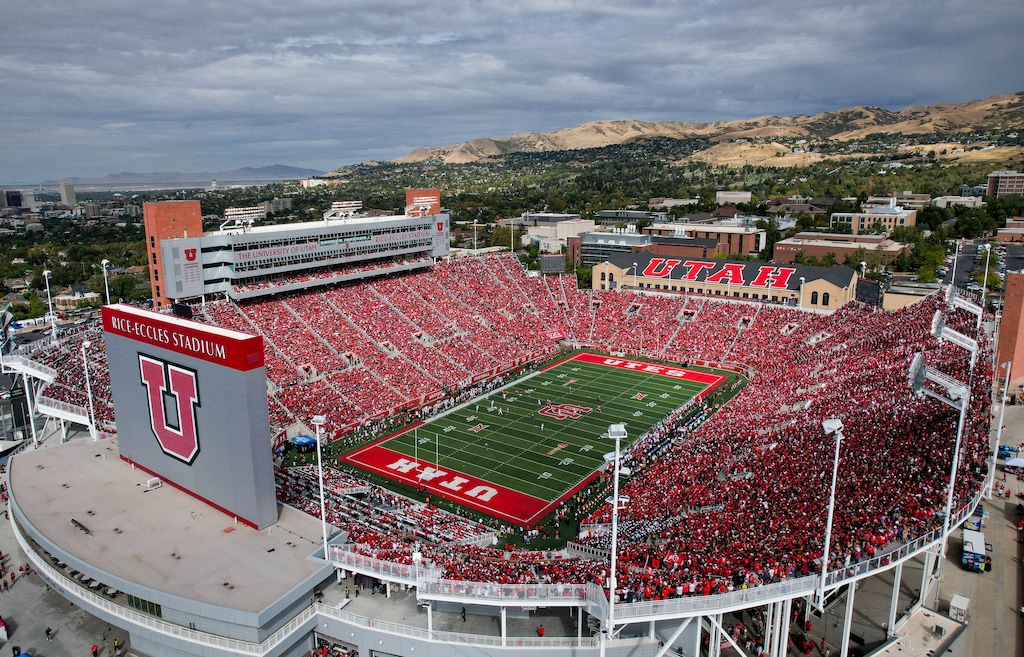
Who else was surprised to learn University of Utah football was for sale?
Utah taxpayers have invested millions of dollars into the institution over decades. We all own a piece of it, but we didn’t know we were selling. What’s next? The math department? The art department?
Before jumping headlong into a private equity arrangement that signs away a piece of its athletic future, the University of Utah needs to provide some clarity. If fans, students and taxpayers are going to be asked to accept higher costs, less transparency and a new class of private winners, they deserve clear answers about what exactly is being sold, who benefits and who carries the risk if this deal goes sideways.
If this type of agreement is to be the future of college sports, then it deserves more scrutiny, not less. Just because it’s never been done before doesn’t mean it can’t work. But I’m skeptical.
Perhaps this deal will help secure Utah athletics through this new era of player compensation and commercial pressure. But it could also shift more money out of the hands of a public university and into the hands of private investors.
Though I played for the rival football team, I care deeply about the University of Utah. When I need medical attention, I go to the U. When our son pursued his degree in English, he did it at the U. I want the state’s flagship university to be successful.
But I have questions. And I’m not alone. I haven’t found anybody who can explain exactly what the “equity” in this deal is. If private investors are putting money in, what are they getting back — and for how long?
The university’s defenders say this is about expertise and new revenue. Fair enough. But if the school simply needs business help, why not just outsource it? They could easily bring in consultants, advisers or experienced operators on contract, keeping the upside in-house. Why does a public institution need to give private investors a cut of future revenue in order to gain access to expertise that can be bought in the open market?
Are fans about to pay more for tickets, parking and concessions? Will more seats be moved into premium inventory? Will donors be asked to give more just to preserve the same level of access? Will the game-day experience improve, or will this simply become one more exercise in squeezing more money out of the people who already built the program? And what happens to the major legacy donors? Are they just left out of this whole equation?
More importantly, what happens if the projections don’t pan out? Private equity investors do not enter such deals out of the good of their hearts. They enter to make a return. If the returns are there, investors benefit. If they are not, who absorbs the disappointment? The fans? The university? The non-revenue sports? The students? The taxpayers?
That is why this cannot be brushed aside with promises of innovation, transformation or staying competitive. Those are not answers. They are slogans.
The University of Utah is not a start-up. It is not a hedge fund. It is not a private entertainment company. It is a public university, with public responsibilities, public trust and a mission that extends far beyond football.
Athletics matter. They matter a lot. But they should not be walled off from scrutiny simply because the business of college sports is changing. Who is in charge of the program now? The athletic director? The president of the university? The new private equity owners? Who do we even hold accountable?
I want the University of Utah to succeed. I want its athletic programs to compete at the highest level. I want the school to be able to adapt to a changing world. But I also want the public to know whether this is a smart partnership or a costly mistake.
When a public university starts doing business with private equity, the burden is on the university to show its work. Before signing away any piece of its athletic future, the University of Utah should slow down, come clean and make the case to the people who will live with the consequences long after the dealmakers are gone.
(Jason Chaffetz ) Jason Chaffetz represented Utah's Third Congressional District from 2009-2017.
Jason Chaffetz represented Utah’s Third Congressional District from 2009 to 2017. He is a current Fox News Contributor and host of the “Jason in the House” podcast.
The Salt Lake Tribune is committed to creating a space where Utahns can share ideas, perspectives and solutions that move our state forward. We rely on your insight to do this. Find out how to share your opinion here, and email us at voices@sltrib.com.