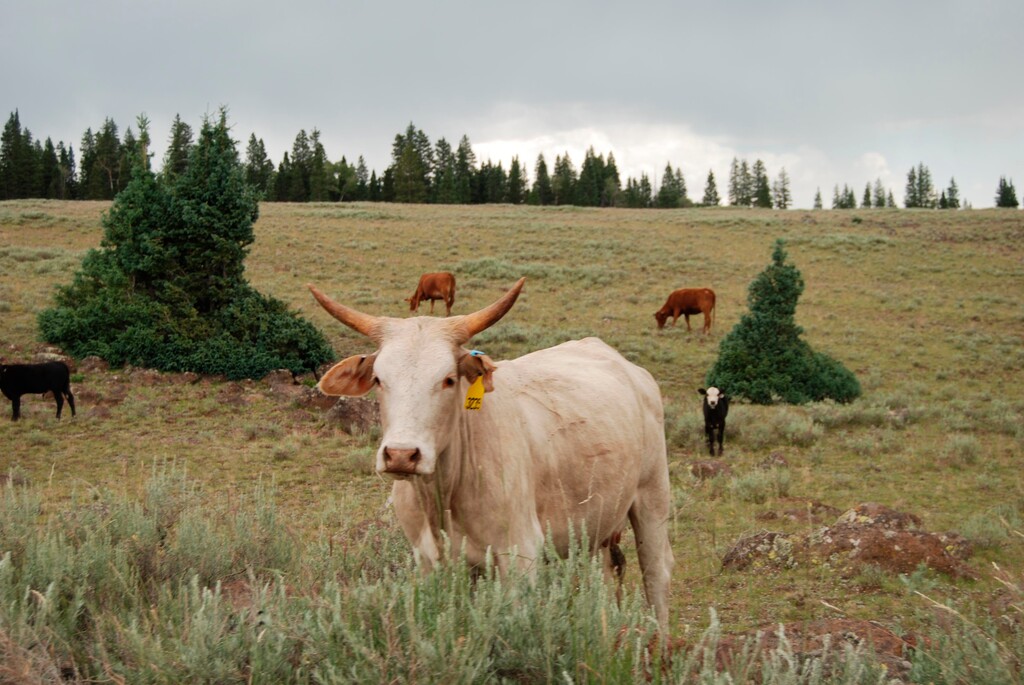
Under President Donald Trump’s guidance, we are taking decisive action to expand livestock grazing on federal rangelands across the country, a change that supports our hard-working ranchers and answers simple needs for American families: better food and greater trust in what ends up on our tables.
The path from grazing to plate is more than a supply chain. It is a direct connection between the men and women who care for the animals that feed us and those who rely on wholesome beef, bison, lamb and other livestock. And when that livestock is raised on open areas, the benefits reach far beyond the rangeland.
That’s why the Departments of Agriculture and the Interior — which we lead — are signing a memorandum of understanding that unleashes the full potential of federal lands.
Just months after releasing the Grazing Action Plan last fall, the Forest Service and Bureau of Land Management are already delivering. That kind of follow-through has been missing in Washington for far too long. Thanks to President Trump, promises are being kept, and action is replacing needless red tape.
This MOU affirms what America’s ranchers have always known: They are essential partners in stewarding our public lands. It directs federal agencies to work in true partnership with permittees and focus on keeping ranching operations viable and strong.
That includes equipping ranchers to meaningfully shape grazing reform. Ranch immersion programs will give federal employees firsthand understanding of the challenges ranchers face every day, and learning roundtables will ensure decisions are informed by the men and women who live and work on these lands — not just those sitting behind desks.
The new agreement also addresses one of the biggest frustrations ranchers have raised for years — a lack of transparency and predictability. By improving data systems and making grazing allotment information easier to access, we are giving producers the clarity they need to plan, invest and succeed.
At the same time, we are rolling out practical tools to get even more out of our public lands. Expanding targeted grazing to reduce wildfire risk, opening up vacant allotments and using technologies like virtual fencing will help lower costs and increase flexibility for permittees. These are real solutions that put American innovation to work where it counts.
The inclusion of Grazing Permittee Wildfire Liaisons is another important step forward. When disaster strikes, ranchers need clear communication and support, not confusion and delays.
And to provide them with the resources they need to thrive, we are committing to maintain grazing capacity wherever possible. Our goal is to avoid net loss of Animal Unit Months within allotments, consistent with the law. This is a clear acknowledgement that strong ranching operations are essential to strong rural communities.
This unprecedented partnership is about cutting through the bureaucracy, restoring common sense, rebuilding trust and making sure federal land management works for the American people again. Soon, our efforts to streamline agency processes will result in quicker approval of grazing permits, improvements and emergency actions.
By building civilization from wilderness, our ranchers not only keep America fed but renew our national inheritance of liberty for new generations.
As we prepare to celebrate America’s 250th birthday, the Trump administration is proud to expand access to federal grazing lands for those who live out and preserve our founding vision.
President Trump understands their vital role, and he is determined to put our great American ranchers first. After all, a win for ranchers is a win for all of America. And there are many more wins on the horizon.
(USDA) Brooke L. Rollins is the U.S. secretary of agriculture.
Brooke L. Rollins is the U.S. secretary of agriculture.
(DOI) Doug Burgum is the U.S. secretary of the interior.
Doug Burgum is the U.S. secretary of the interior.
The Salt Lake Tribune is committed to creating a space where Utahns can share ideas, perspectives and solutions that move our state forward. We rely on your insight to do this. Find out how to share your opinion here, and email us at voices@sltrib.com.