 Robert Gehrke
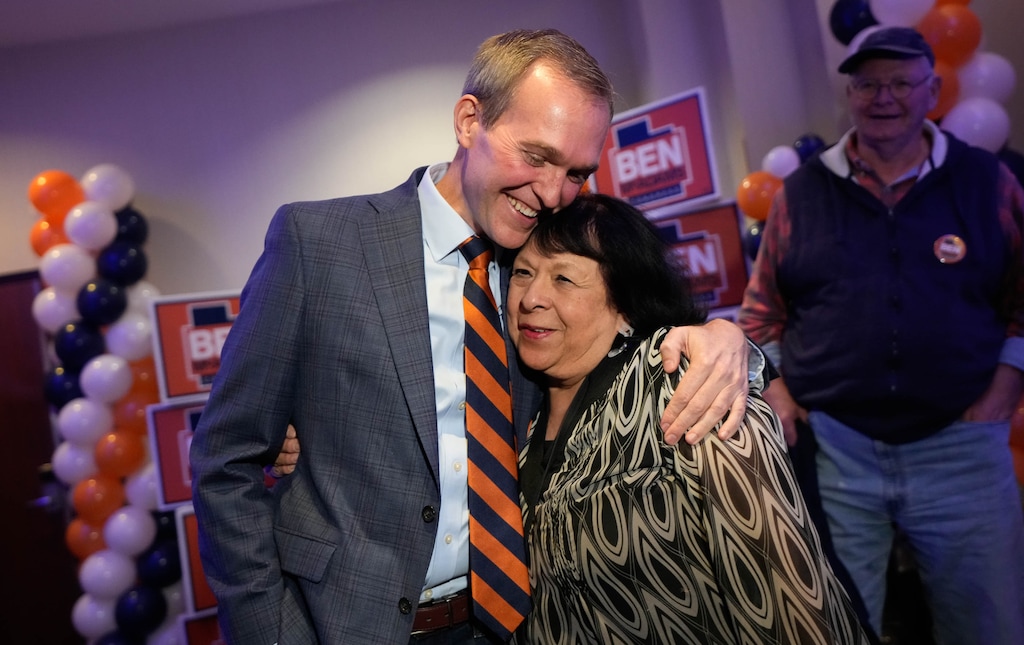
Democrat Ben McAdams will return to Congress six years after he lost his House reelection bid.
In early unofficial returns Tuesday, McAdams had opened a wide lead over Republican newcomer Riley Owen — 72% to 25% — and was headed to an easy victory in a newly drawn Democratic-leaning district.
On a night that Democrats were faring well in early election returns, McAdams will add to the tally of seats across the country slipping from Republican hands and swinging control of the U.S. House back to Democrats, who have been in the minority for the past four years.
After losing reelection in 2020, McAdams said during the campaign that he considered his career in politics — which includes serving as a state senator and Salt Lake County mayor — might be over.
Two factors pulled him back.
First, a court ruled in 2025 that Utah’s congressional boundaries had been illegally gerrymandered to help keep Republicans in power.
Third District Judge Dianna Gibson ordered state lawmakers to draw fair boundaries and, after ruling they failed to do so, chose a map submitted by the plaintiffs in the case that created the new 1st Congressional District, spanning most of Salt Lake County and favoring Democrats by as many as 17 percentage points.
Second, McAdams said in an interview, he saw the toll the skyrocketing prices of gas, groceries and healthcare were taking on Utahns.
“This country has given me a lot of opportunity, and I’m grateful for what doors have been open for me,” he said. “I don’t think those doors are open for my kids and their generation. I ultimately decided that if I could do something about the direction is heading in, I had an obligation to step in.”
McAdams squeaked out a win in 2018, defeating Republican Rep. Mia Love, but lost two years later to Republican Rep. Burgess Owens by 1 percentage point.
Owens opted to retire rather than seek a fourth term.
In his place, Republicans nominated Riley Owen, a 28-year-old naval reserve intelligence officer who has worked for a military drone startup and is managing director of a wildlife conservation foundation.
A newcomer to Utah — he moved to the state last year — Owen said, as a Gen Z candidate, he wanted to be a voice for younger Utahns and also focused his campaign heavily on issues of affordability.
“My generation wants to buy a home, raise a family, trust that our government is working for us and know that America will lead the future,” he said. “Those aspirations and concrete steps towards achieving them must be at the center of the conservative movement.”
Already facing an uphill battle in the Democratic-leaning district, the lesser-known Owen was outspent 17-to-1, with McAdams raising more than $2.8 million over the course of the primary and general election to Owen’s $164,000.
Indeed, the June primary will likely prove to be McAdams’ toughest test in 2026. The front-runner was attacked by his challengers — state Sen. Nate Blouin, Democratic convention victor Liban Mohamed and attorney Michael Farrell — for not being progressive enough to represent the newly created left-leaning district.
In that contest, McAdams pointed to his vote to impeach President Donald Trump, even though he knew it would likely cost him his reelection, as proof he was willing to cast hard votes.
The more liberal contenders split the progressive bloc, and McAdams won the race with 52% of the vote.
When he is sworn in come January, McAdams will become the third U.S. House member from Utah — and the first in more than 50 years — to serve nonconsecutive terms, following Democrat William King (1897-99 and 1900-01) and Republican Sherman Lloyd (1963-65 and 1967-73).
Note to readers • This is a developing story.