 Robert Gehrke
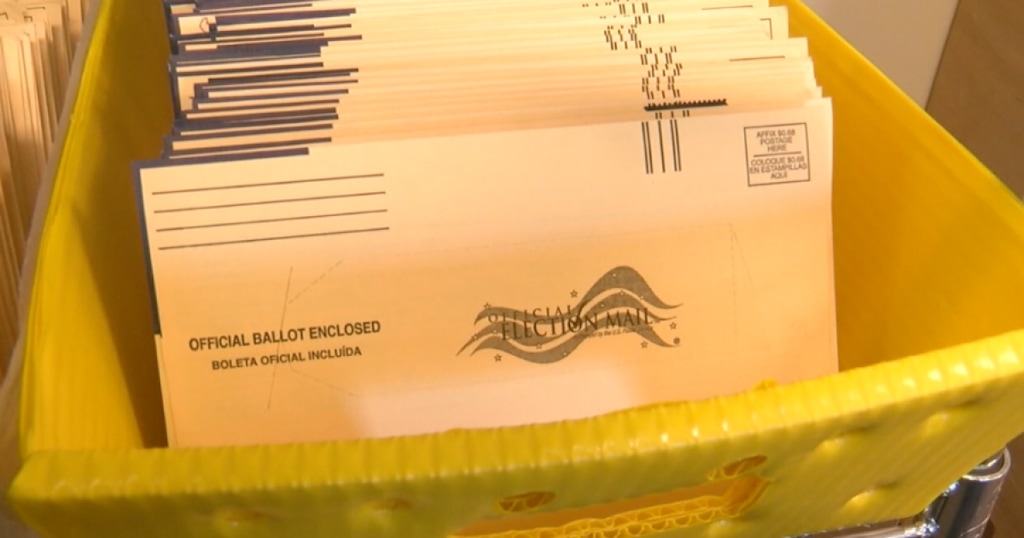
Scores of Weber County residents may have received voting packets with a little bonus inside — an extra ballot.
No, they don’t get to vote twice. But a mistake by the printer hired by the county meant that as many as 167 of the envelopes sent to voters contained an extra ballot inside.
A voter who received one of the double-stuffed voting packets alerted the clerk’s office to the problem not long after the ballots were mailed out, said Weber County Clerk Ricky Hatch. He said a miscalibrated envelope stuffing machine errantly slipped two ballots into the packets.
“[The printer] said they’ve never had this happen before. It was a minute adjustment or setting on their equipment that could have been prevented,” Hatch said. “We can’t give you an exact number [of double-stuffed envelopes], but this could not have occurred more than 167 times.
He added the “absolute worst-case scenario” would be 167 voters receiving a duplicate ballot in their envelope.”
The printer can pinpoint the number because there are supposed to be exactly the same number of ballots printed as there are registered voters. When batches are printed, though, they can end up short if a ballot is damaged in the process or, in this case, two ballots are put in the same envelope, Hatch said.
(Trent Nelson | The Salt Lake Tribune) Ricky Hatch at the Utah Republican Nominating Convention in Salt Lake City on Saturday, April 27, 2024.
This time, the clerk said, the print run came up 167 ballots short, meaning that would be the maximum number of double-stuffed envelopes. He suspects the actual number is “well below 100” but said he doesn’t have any information backing that up.
“For context, we mailed out 135,000, so we’re talking minuscule percentages,” Hatch said. “Granted, we want zero errors, but in every election you have challenges and this is a pretty small one.”
Hatch said voters shouldn’t return both ballots, but if they do, there are measures in place to prevent them from being counted.
The machines that process incoming ballots measure the thickness of each envelope and, if there are two ballots inside, would likely flag the envelope for staff to inspect, he said.
If the machines don’t catch the error, Hatch said, every ballot is opened by teams of three employees who would notice if there are two ballots in the envelope.
And if that fails, the error would be caught during the ballot reconciliation process, he said. At the end of the count, the number of total ballots has to match the number of envelopes received. If there is a discrepancy, there is a llabor-intensive process based on matching the bar codes printed on the ballots and the envelopes to identify the extra ballot.
So far, Hatch said, the county has processed 19,000 mail-in ballots and found four envelopes with more than one ballot inside. Two of the extra ballots were blank, and the other two were marked identically to the first.
It is not the first ballot mishap this cycle. In Utah County, the clerk’s office sent notices to more than 6,000 voters that, because they were first-time voters, they would have to include a photocopy of their identification if they intended to mail in their ballots.
It appears thousands of those voters received the notices in error. They had either provided the necessary identification when they registered to vote or had voted previously but were sent the notification due to a clerical error.