 Addy Baird
When AI company Joule Capital Partners proposed a new data center in Millard County last year, Tameron Williams and his mom, Brenna Williams, were concerned about the impact on his grandparents — her parents — who lived in the area. They worried about how quickly the center was going in, the intense energy demands and the environmental impact of both construction and operation.
Now Tameron and Brenna have deja vu: The Brigham City residents learned last month about a plan for a hyperscale data center project in Box Elder County.
“I fought this battle not long ago,” Brenna said in an interview. Now, she’s back at it again.
The data center, backed by celebrity investor Kevin O’Leary of TV’s “Shark Tank,” is expected to generate and consume more power than the entire state currently uses. In a matter of a few weeks, the plan was approved by the state’s Military Installation Development Authority — which passed a resolution that limited taxes for the project — and by the Box Elder County commissioners, who were met with massive public outcry against the plan.
The day after local leaders approved the plan, Brenna went into the county clerk’s office to file for a referendum, hoping to put the question of the plan’s approval on the ballot for voters to consider.
“A lot of women in the county who have children and are looking at our futures and our children’s futures — we just coalesced into a group, and we all felt the same,” Brenna said. “It needed to be done. There needed to be a fight here.”
At first, Box Elder County Clerk Marla Young turned them away, saying she had been told by the county attorney that the approval was a state issue, not a county one. But shortly after Benna left Young’s office, she got a call: It was possible, the clerk said, that the data center’s approval could in fact be subject to a county referendum.
Brenna was excited, she said, “and a little scared.” Young asked Brenna to come back and file an official application. She did, and the application is now being reviewed by the county attorney.
And then on Friday, Brenna said, she went back to the county clerk’s office to file another application, this one challenging 26-12, the other resolution passed by the county commissioners that approved an “interlocal agreement” between the county and MIDA. The second application had 24 sponsors, and the response to the proposed resolution from other people in the county was strong, she said.
“After I handed in our paperwork, I had 30 more people come and say, ‘I want to sponsor this,’” Brenna said.
(Rick Egan | The Salt Lake Tribune) Box Elder County Commissioner Tyler Vincent, right, warns the crowd during a commission meeting at the county fairgrounds in Tremonton on Tuesday, May 4, 2026.
Both Brenna and the clerk said in interviews that they thought it was more likely that 26-11 resolution — which officially gave county consent for the project — could be challenged rather than commissioners’ 26-12 resolution, but the answer to that question rests with county attorney Anne Hansen.
“We did it anyway because we already had the people,” Brenna said.
Hansen, in an email Monday, said she couldn’t comment on the referendum until her legal review was finished, but said her office is following state laws for local referenda, which give the county 20 calendar days from the date of the original application filings to give a response to the applicants.
As of Monday afternoon, it was still unclear which day exactly the 20-day clock started, but approval will need to come before the end of May.
After filing their application, Brenna, Tameron and the other backers of the resolution met to organize. They appointed leaders for the different parts of the county, because — if a referendum is approved — they will be required to gather 5,422 signatures across four different voter participation areas.
The project’s backers, meanwhile, say the data center will create thousands of jobs for Utahns and will clean and return the water it uses to the Great Salt Lake — but many residents say they don’t trust backers will keep their promises.
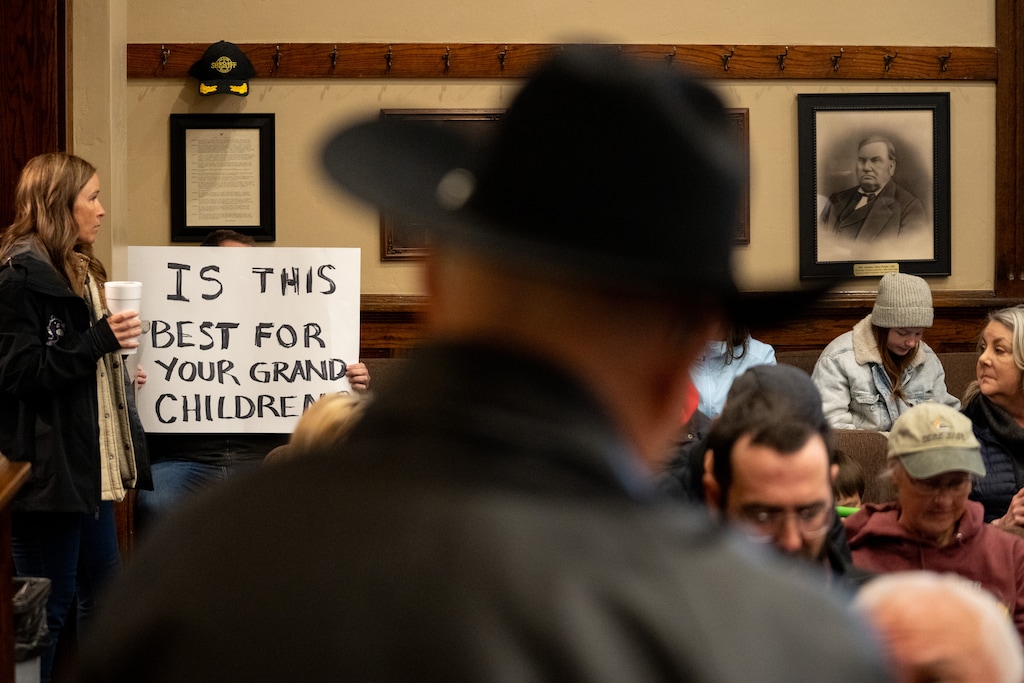
A Salt Lake Tribune review of the comments submitted to the county commissioners found that just 2% of people who commented were in favor of the data center.
“These are not just people of a certain political stripe,” Tameron said. “These are rural farmers and business owners and community advocates all alike, where they’re pretty unified in their opposition, saying we like our home the way it is, and we don’t want to risk it to some outside group who’s making promises that we don’t feel like they’re going to be able to keep.”
For now, the referendum backers — who are calling themselves Box Elder Accountability Referendum, or BEAR — are preparing for all possible outcomes, planning to collect signatures, researching other similar referendums, and looking into possible ways to address the approval of the data center plan on the state level if the referendum is not approved, Brenna said.
“People should have some commentary and some say into what comes into the state, in our county, especially where it’s right by the Great Salt Lake at 36% capacity and on life support,” she said.
Tameron said he is concerned about the impact on local wildlife, too.
“We live a stone’s throw away from the migratory bird refuge,” he said. “I grew up going there for field trips. We don’t want these areas to be harmed in any way.”
And while they wait for the legal review of their referendum, both said they have never seen the local community more engaged.
“This,” Brenna said, “is really waking people up.”