 Julie Jag
Note to readers • This story is an excerpt from the Open Lands newsletter, delivered to inboxes every week. For a sneak peek from the environment team about what we’re working on and news we’re following, sign up to have Open Lands delivered to your inbox.
Much like us, Utah’s wildflowers don’t know what to make of the weird winter the state has had, says Neal Dombrowski, a horticulturist at Red Butte Garden.
In the last week, the Salt Lake Valley has seen both a blizzard and 70-degree temperatures. While that’s not too unusual for spring, the lack of both snow and cold during the winter certainly is. And that’s throwing off the plants’ routines.
“There are some that are still on schedule, but very few,” Dombrowski said. “So, I think they’re just confused.”
Wildflower hunters can expect to be no less discombobulated this season.
Botanists and wildflower watchers across the state said they’re as unsure as the rest of us what to expect from Utah’s typically vibrant blooms. In some parts of the state, the blooming began early. Yet, just a few miles down the trail, they observed plants adhering to a normal schedule. Some expect fewer flowers, while one said she worries an early spring heat wave will keep plants from flowering at all.
“This would be the peak season for the widest array of wildflowers and the flowering shrubs,” said Kristen Comella, manager of Snow Canyon State Park near St. George. “But things look very stressed out there right now.”
(Julie Jag | The Salt Lake Tribune) Stands of beleaguered arrowleaf balsamroot line the Skyline East Trail near Red Butte Gardens in Salt Lake City. Horticulturists say wildflowers are as confused as we are about the warm winter of 2025-26.
Snowpack in the Southwestern Utah and Escalante-Paria basins are at 17% and 0% of the 30-year median, according to the Division of Natural Resources. Yet that’s not what did in the desert wildflowers, Comella said. Rather, it was an 11-day stretch in March in which temperatures blazed up to 30 degrees warmer than usual.
Comella said it’s likely some plants “gave up for the season” during that heatwave. That may affect next year’s crop of wildflowers. Or, it may not.
“Certainly, the seed base isn’t replenished,” she said, “but there should still be a seed base out there for future seasons.”
Plants near Park City also may stage a blooming boycott this season, but for a different reason. Margaux Klingensmith, a conservation and outreach assistant for the Swaner Preserve and EcoCenter, said wildflower-producing plants there may not have gotten the 30-60 days of cold temperatures and snow they typically require to germinate. Optimistically, though, she said that plants in Utah have gotten used to having a wide variety of weather conditions.
“There’s still hope that there will be flowers,” she said.
If you want to see them, though, you’d better hit the trails soon.
(Julie Jag | The Salt Lake Tribune) Pink phlox dots the Skyline East Trail near Red Butte Gardens in Salt Lake City. Wildflowers are showing up earlier, and in fewer numbers, this spring.
Dombrowski, Klingensmith and Comella all said that wildflowers are appearing much earlier than is typical for their species. The one exception Klingensmith said she’s seen is in wetland areas. However, Dombrowski said he’s observed blooms arriving about a month ahead of schedule on average, and in some places a month and a half.
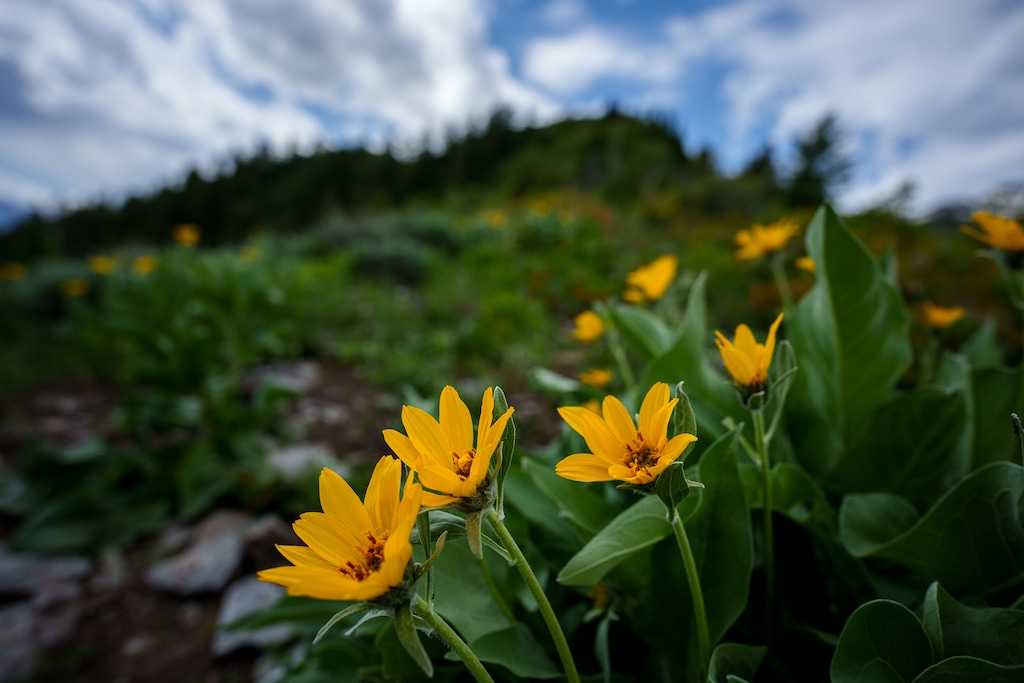
During an outing Sunday on the Red Butte Skyline Trail, cheery pink phlox and demure bluebells dotted the path. However, the stands of yellow arrowleaf balsamroot appeared to have been taken by surprise by recent freezing temperatures, looking bowed and shriveled.
If you feel like you’re seeing a particular flower earlier than usual, Klingensmith advised logging it on a community nature app like iNaturalist or Seek.
“I think that’d be super helpful,” she said. “I’m sure we’ll see more warm winters like this one, and it’ll be interesting to see how it impacts our bloom.”
(Julie Jag | The Salt Lake Tribune) Bluebells gather around the trunk of a tree along the Skyline East Trail near Red Butte Gardens in Salt Lake City. Wildflowers are showing up earlier, and in fewer numbers, this spring.
This certainly isn’t shaping up to be an outstanding wildflower hunting season. Still, if you hadn’t guessed it by the bumper crop of dandelions in your neighbor’s yard (certainly not in your own), these warm, dry conditions are beneficial for one type of plant.
Weeds.
“The weeds will have more of an advantage because they grow faster,” Dombrowski said, “and they’re able to flower and set seeds faster.”
In particular, he warned, dog owners should be wary of the early arrival of foxtail barley. The plants, whose seeds can burrow into pups’ paws and skin, have already bloomed and gone to seed.