 Sean P. Means
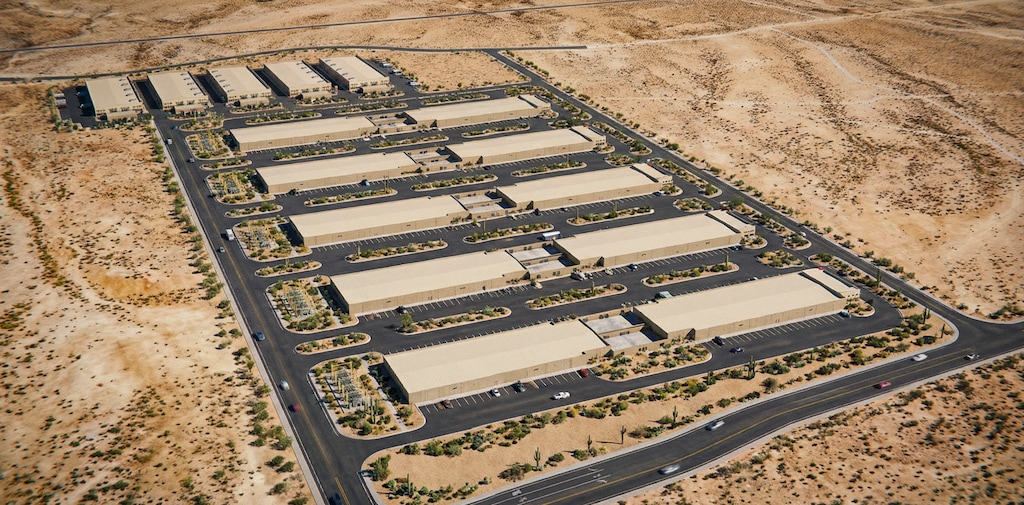
Iron County is moving ahead with new regulations for data centers in the southwestern Utah county — months after passing a temporary moratorium on the controversial projects.
The Iron County Commission unanimously approved the new rules during a meeting in Cedar City on Monday after hearing from residents for more than an hour.
Notably, the new rules do not set hard limits on water use for data centers. Instead, data center sites that would use more than 50,000 gallons of water per day would have to submit a plan to prove the additional water use won’t harm the aquifer.
Other rules for data centers under the new regulations include:
• Differentiating between smaller data centers, ones that carry a power load of less than 50 megawatts, and larger facilities.
• Setting a half-mile buffer between power plants that feed data centers and what are called “protected sensitive receptors” — a designation that includes residential areas, hospitals, schools, day care facilities, and assisted living or nursing facilities. The county’s earlier proposal only covered residential areas.
• Setting a smaller buffer, of just 500 feet, between those “sensitive receptor” areas and plants that use solar power.
In another vote Monday, the commission repealed the previous moratorium on data centers, with no debate.
Commissioners took public comment before voting Monday and heard from residents who were concerned about noise pollution, air quality, water use and the longtime environmental effect of data centers.
A notable objection came from leaders of the Paiute Indian Tribe of Utah, who said commissioners had “failed to conduct any real level of consultation or discussion” with the tribe, according to Laurel Yellowhorse, the tribe’s chairperson.
Such consultation, Yellowhorse said, “is a legal requirement.” Instead, she said, the county commission failed to respond to a letter from the tribe, sent by email and handed over in person, about the new ordinance.
“The tribe’s relationship to these lands predates arbitrary county boundaries and zoning designations,” Yellowhorse said. “Our relationship, our occupancy and our stewardship of this land is and will forever be continuous.”
Brian Penny, a member of the Iron County Rural Preservation Group, warned commissioners about the ever-shifting technology in the tech sector, and argued that “we’re not going to need [as much] data center space in five-to-seven years as we’re anticipating. … We’re building a house of cards here.”
Penny, who said he has attended meetings regarding data centers up and down the state, complimented Iron County commissioners for how they’ve handled their duties.
Penny praised “the amount of back and forth that we’ve had, the amount of civil discourse” in Iron County. He was on hand for a Utah County Planning Commission meeting last week, where a sheriff’s deputy threw a protester to the ground after a vote on data center regulation.
“I don’t know if you guys saw that one, but it was not good,” Penny said.
The Iron County Commission voted in June for a 180-day moratorium on permitting new data centers, while it developed the ordinance that the board passed Monday. That moratorium, the first of its kind in Utah, was set to expire Nov. 22.
The moratorium came after the county’s planning commission approved plans for the Antelope Data Center, which has been estimated to use between 10 and 20 acre-feet of water a year during construction, an initial 8 acre-feet for the closed-loop cooling system and 10.8 acre-feet per year for indoor use when the center is operating, according to the project application.