 Brooke Larsen
 Samantha Moilanen
A proposed data center near Cedar City that has sparked months of public debate in Iron County cleared a key hurdle Thursday.
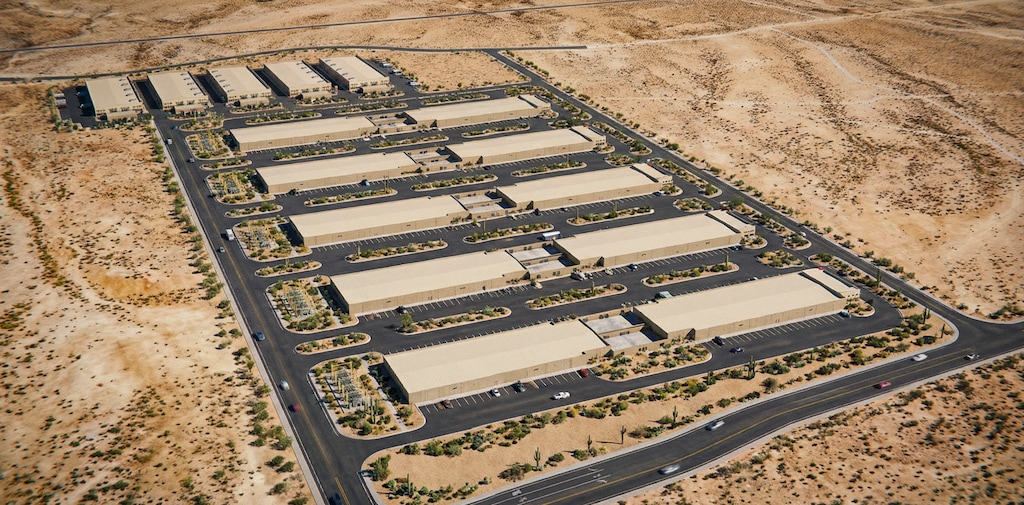
The Iron County Planning Commission on Thursday signed off on a conditional use permit for the Antelope Data Center, a proposed 1.5-gigawatt project that will include an on-site natural gas power plant in unincorporated Iron County roughly 15 miles northwest of Cedar City, according to the company’s application.
The vote followed a packed public hearing in March, where residents voiced concerns about the project’s potential impacts on water resources, noise, lighting and wildlife.
Planning Commission Chair Erick Cox told The Tribune on Friday that those concerns shaped the county’s review and ultimately led to dozens of conditions attached to the approval.
“We did our very best to protect the people in Iron County, and looking out for the long term,” Cox said, “while offering the opportunity for them to come in and build a business, and provide jobs to local people.”
A spokesperson for the developer said it has spent the last year hosting meetings with hundreds of people about the project.
“We’ve engaged directly with neighbors, residents, agricultural stakeholders, environmental stewards, and elected officials. I think it’s important to recognize that data center projects aren’t all created equal,” said Scott Cuthbertson, a spokesperson for Pronghorn Development, in a statement Friday. “When people have access to the facts, anxiety gives way to understanding.”
The project will not receive tax incentives or tax breaks, Cox said, and the developer will be responsible for all infrastructure and improvement costs associated with the project.
Construction, however, is also years down the line, Cox said.
Before Iron County can issue a building permit, the developer must secure approvals from state and federal agencies, including air-quality permits from the Utah Department of Environmental Quality.
While the project is slated for about 640 acres at the site, the county approval covers only a roughly 250-acre development footprint, Cox said. The remaining acreage will serve as a buffer between the project and surrounding land.
Residents have argued that the project’s impacts would be felt most directly by those living near the proposed site.
“This is being proposed in our literal backyard,” said Annette Nunes, a goat farmer in Iron County, during the March hearing.
“If at all possible please don’t put this in my backyard,” she added. “Remember that there are humans living up there, and we will be affected.”
The approval comes as Iron County officials reconsider how future data center and large energy projects should be reviewed.
The Iron County Commission voted last month to pause approval of any new and incomplete applications for data centers, power plants and utility-scale solar projects for the next six months.
Pronghorn Development had submitted all the needed documents, including application materials and technical studies to the county, before the moratorium was approved, so their application was deemed complete and not affected by the pause, Hamilton said.
While going through Pronghorn’s application, the county found that there was additional information, such as additional studies, they’d like to have that current state and county policies don’t require.
The conditional use permit is “not a permit to build, by any means,” said Brett Hamilton, the county’s planner. “It’s more a permit that lays out the framework and requirements that would have to be met prior to building anything.”
The county has put a three-year term on the conditional use permit, which Hamilton said is not a lot of time to acquire a building permit and begin construction.
The developer estimates it will complete the project in 2033, with the first 500 megawatts of power generation completed by 2028.
It also said that each combined data center and power generation building will support around 136 employees, for a total of 680 employees once complete.
Questions about water
The project will use a closed-loop water cooling system that will require a one-time fill of 8 acre-feet, according to the developer’s water feasibility report prepared by Jones & DeMille Engineering. The report also says the project will use about 10 to 20 acre-feet of water per year during construction, and nearly 8 acre-feet of water per year for indoor and outdoor water use once fully built out.
An acre-foot is equivalent to 325,851 gallons, or enough water for about two average Utah households.
The company says it aims to connect to the Iron County Water Conservancy District, recently renamed the Cedar Valley Water Conservancy, public water system.
One benefit of connecting to the conservancy’s system is the potential for better transparency, Paul Monroe, the conservancy manager, said.
“Within our own agreement we’d have with them, we’d provide monthly data and just host it publicly … so that everybody could see exactly what their water use was,” he said.
The Utah Division of Water Rights also requires reports of water usage, but that’s only reported annually, Monroe said.
“If they are going to come in, it’s better if they’re under an umbrella that can keep a closer eye on them,” he added.
The Antelope Data Center would be located in the Beryl Enterprise area, where the Utah Division of Water Rights required a groundwater management plan in 2012 after studies showed depletions exceeded how much water was recharging into the aquifer. Over the next 100 years, the division will reduce water rights in the area by 31,000 acre-feet.
The Cedar Valley Conservancy also uses water from the Cedar City Valley, where water depletions have also exceeded aquifer recharge. The division also required the area to adopt a groundwater management plan in 2021, and the division plans to cut nearly 30,000 acre-feet of water rights in the valley by 2080.
How Iron County is preparing for more data center proposals
The county’s 180-day pause on data centers and other large power projects will allow it to consider additional information they may want to require of future data center and energy project applicants.
Much of the unincorporated county is zoned in a way that would allow data centers and large energy projects. So, the county is also considering creating an overlay zone that will “shrink” the area that’s open for such projects, Hamilton said.
To add additional accountability, the county may also create new zoning districts entirely. That would mean a project would also have to go through a zone change process, which requires approval from the county commission as opposed to just the planning commission.
“A lot of the resident’s concern is that they feel like the decision should rest with the elected officials, so that’s one way of going about doing that,” Hamilton said.
The county plans to hold workshops over the next six months to get more feedback from residents about the changes they’d like to see in local policy.