 Paighten Harkins
Utah is one of the best states for business. It’s even earned a reputation as the “startup state.” Yet, overwhelmingly, women aren’t getting in on that success.
Here, only about 16% of businesses are women-owned —45th in the nation, according to a 2025 report from Utah State University researchers.
A Synchrony Bank-sponsored program aims to change that.
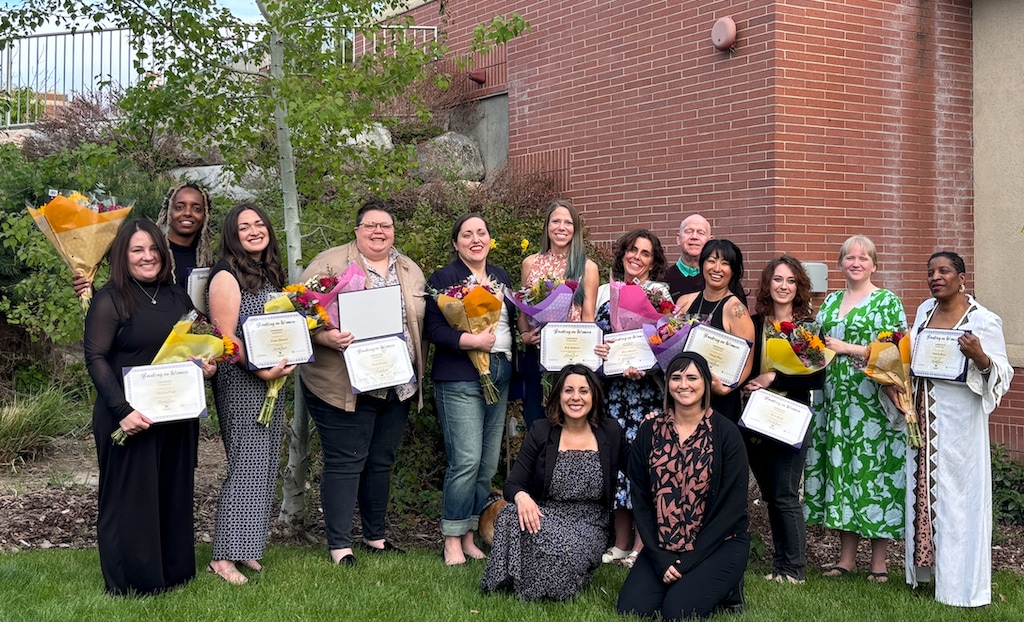
The “Banking on Women” program brings together two classes of women for a 15-week course to learn the skills, and gain the confidence, needed to start a business. In total, 30 spots are available per session, with two sessions a year.
So far, women from 23 of Utah’s 29 counties have participated, said Sara Day, program director with the Utah Microloan Fund, the nonprofit lending institution that coordinates the program.
Participants based in Salt Lake, Utah, Davis and Weber counties will take classes on Tuesday evenings at Westminster University.
Those who live anywhere else can join classes virtually on Wednesday evenings.
Together, they’ll learn how to write a business plan, do market research and understand their financials, Day said.
Program paved way for a ‘life that I only dreamt about’
(Halee Windley) Halee Windley, second from right, poses for a photo outside of Taste Spuds, the baked potato business she started after graduating from the "Banking on Women" program.
The program has been running since 2010, and has helped businesses like Mineral and Matter jewelry store in Salt Lake City’s Maven District, the mobile farmers market Rollin’ Harvest that helps get refugee-grown crops into the hands of more people, and the Park City-based outdoor therapy business Trailtalk.
Halee Windley, who is a medical assistant, said the COVID-19 pandemic zapped her enthusiasm for her job. She was looking for new opportunities and always wanted to open a food truck, but didn’t know where to start.
“I can start an IV, but I can’t start a business,” she joked about her previous mindset.
Then, she found the Banking on Women program. She graduated last year and now runs her potato catering business, Taste Spuds, which rakes in around $4,000 in revenue a month.
The holidays, she said, are an especially lucrative time. She sells a variety of baked potatoes, plus trays of different types of potato casseroles. (Yes, including the Utah staple funeral potatoes.)
Now, she said, “I’m creating this life that I only dreamt about.”
Her next step: Food truck. And making enough money to quit her day job.
What to know about the program — and how to apply
Why aren’t more business owners in Utah women?
USU’s Women and Leadership Project report outlined four areas that can stand in the way:
• Fair access to capital
• Childcare challenges
• Lack of mentors and connections
• Lack of awareness of business training and resources
“While women entrepreneurs in Utah benefit from its economic strength, there is a stark disparity between their experience and that of Utah men who are entrepreneurs,” the report said.
The “Banking on Women” program takes on at least three of those issues.
“We’re trying to provide that safe, inclusive environment for women to feel comfortable learning and collaborating and even commiserating, right? Because owning a business and trying to balance family and all your life obligations,” Day said, “it’s not easy.”
Applications for the “Banking on Women” program are due Oct. 30. The application, and more information, can be found online at utahmicroloanfund.org/bankingonwomen.
As many as 100 women apply each round, with two programs a year in the spring and fall. Day encouraged those interested to keep applying if they aren’t accepted the first time.
She added that the microloan office can also help participants with funding after the program is done.
Even if you don’t participate, the office can still help secure funding while in the early stages of starting a business, she said, unlike many traditional lending options.
“Most banks, they want you to have two years in business under your belt before they’re willing to even look at you or fund you,” Day said.
More information on those lending options and other classes and resources is available at utahmicroloanfund.org.