 Brock Marchant
Count Brigham City in.
The small northern Utah community’s leaders voted unanimously Thursday to embark on an ambitious plan to turn their town into the nation’s next hub for nuclear energy research and workforce training.
“We are thrilled to see this project developed in Brigham City,” said city spokesperson Cami Sabin in an email a few days before the vote. “The pathway for training, education, and careers in a good-paying industry will allow more of our local residents to stay here in the community they love.”
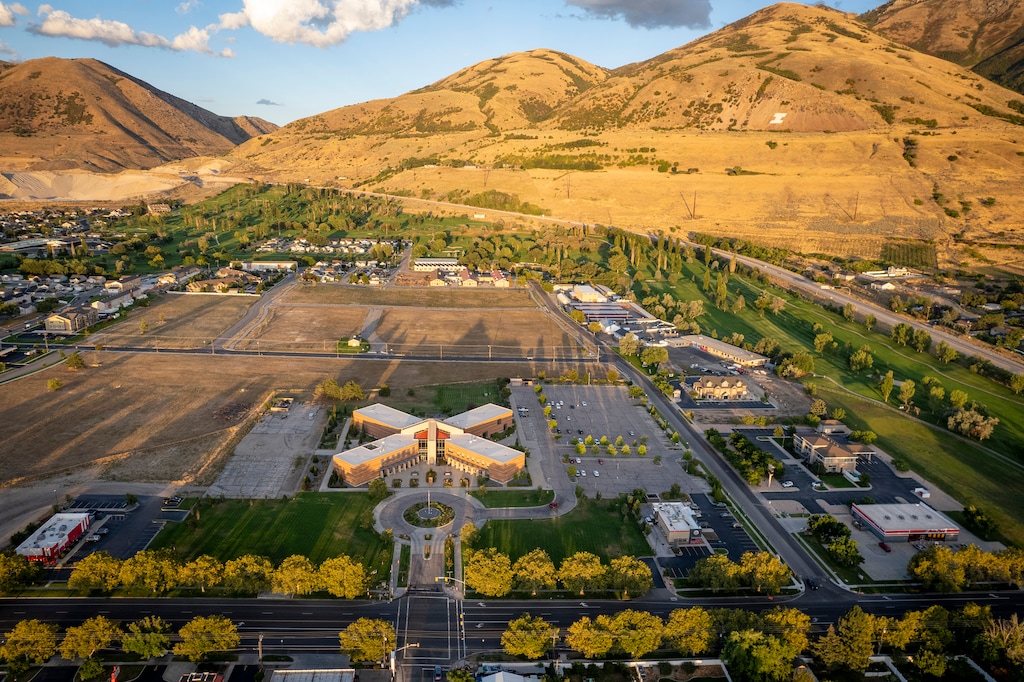
The City Council’s vote finalizes a pact with Utah State University and Beehive State-based nuclear company Hi Tech Solutions to develop a training and research campus on university-owned land next to the school’s Brigham City outpost.
(Christopher Cherrington | The Salt Lake Tribune)
“We’re obviously extremely excited about this proposition,” said Brigham City administrator Derek Oyler before Thursday’s vote. “The ground around Utah State University has been sitting vacant for many years, and it’s a prime opportunity.”
While there’s hardly anything legally binding in the accord — it’s more of a formal pinky promise to work together — it marks an early step in bringing a nuclear energy revolution to Utah.
[Read more: Utah wants a new nuclear sector to rise in Brigham City. What will it take to pull it off?]
Last year, Gov. Spencer Cox announced plans to roll out a full ecosystem for the industry in Brigham City — one meant to train a workforce, offer certifications, facilitate research and eventually manufacture components for a technology called small modular reactors.
Such reactors are a popular idea for electrical generation, though there are no commercial reactors operating in the United States.
Under the new pact, USU agrees to develop a curriculum, Brigham City says it will support the building plans and “regional economic development initiatives,” and Hi Tech Solutions says it will be the master developer and provide industry insight and expertise.
(Rick Egan | The Salt Lake Tribune) The proposed site for a Utah State University nuclear research and workforce training campus in Brigham City, Tuesday, Sept. 1, 2026.
The university intends to offer its land through a long-term ground lease, though the cost and other details of that arrangement were not included in Thursday night’s agreement.
USU spokesperson Amanda DeRito said a lease still needs to be negotiated.
Hi Tech Solutions didn’t respond to questions about the lease.
The new agreement also doesn’t spell out financial commitments, but a Hi Tech Solutions news release says the first phase of the campus would begin in 2028, using up to $100 million to build a 20,000-square-foot facility.
Future phases call for developing a manufacturing plant to build parts for the existing nuclear industry, and, eventually, getting into the business of building small modular reactors.
Note to readers • This reporting position is a partnership with Utah Public Radio, a division of Utah State University.
 I’m Brock Marchant, The Salt Lake Tribune’s Cache Valley reporter in partnership with Utah Public Radio. As a valley native, I’ve seen firsthand the issues that people face everywhere from Richmond to Avon — unaffordable housing, dwindling open space and a rapidly increasing population that has cities struggling to keep up. I want to explore local problems by reporting on the ground, not just quote elected officials and news releases. As residents work diligently to overcome challenges, I want to tell their stories and share their solutions. Smart, hard-working people have built the valley’s history, and I’m certain they will frame its future.
As a nonprofit newsroom we rely on donations from readers like you to make this work possible. Donate today to support this reporting.