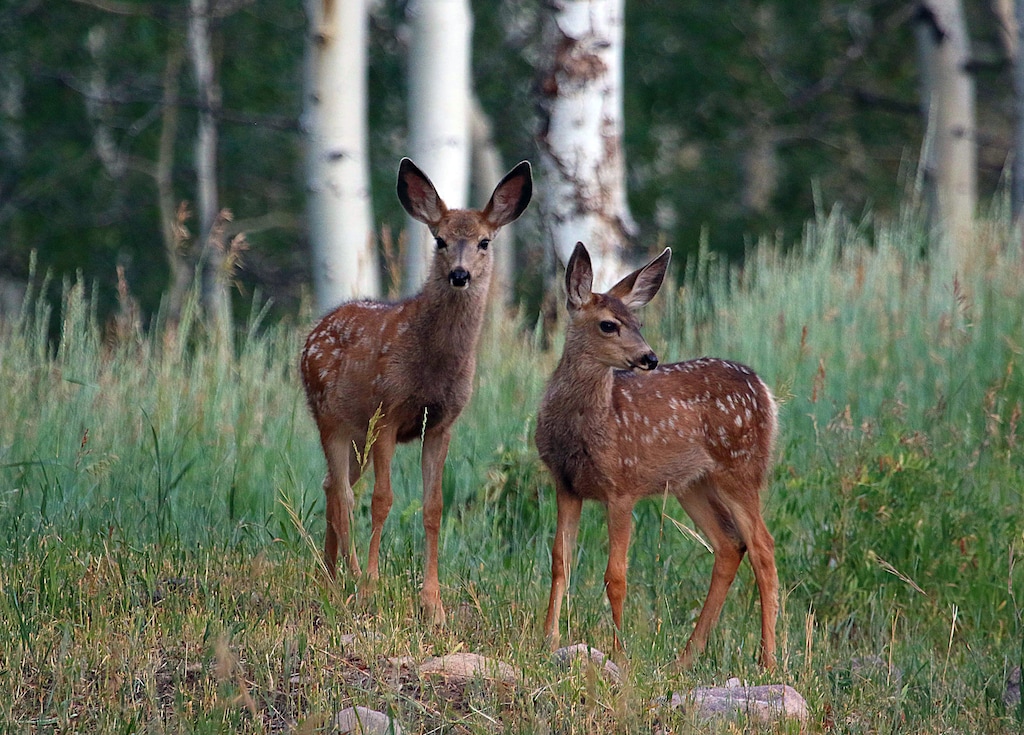
Mule deer are falling victim to Utah’s drought conditions, but the state is spending millions to help them rebound.
The Utah Division of Wildlife Resources’ goal for the state’s mule deer population is about 405,000 animals by 2030. That mark, set in 2024, has been one of the agency’s top priorities in recent years — and in 2025 it spent over $55 million on projects aimed at helping the species.
These projects will do more than just boost the state’s top hunting draw. Mule deer populations are also crucial to animals higher up the food chain, and benefiting these animals will create more stability for ecosystems throughout the state, wildlife officials said.
“Deer [are] probably our No. 1 game species by far, really important to people, and so what we’re trying to do is increase those populations as much as we can, where we can, so that we can provide as much viewing and hunting opportunity,” DWR big game projects coordinator Kent Hersey said. “It’s part of our heritage, and it’s just something people really like.”
Utah is about 80,000 animals away from its goal, according to the most recent numbers from the wildlife agency. Hersey is optimistic, but said the deer population is somewhat at the whim of weather conditions over the next five years.
(Utah Division of Wildlife Resources) Utah wildlife officials are working on projects to help mule deer populations statewide.
How drought affects Utah’s deer population
The winter of 2022-2023 saw the biggest reduction in deer numbers over the past 15 years after Utah received record-breaking snow. The wet winter followed nearly all of the state suffering from severe drought, and contributed to the deer population plummeting by nearly 57,000, according to state data.
Adult bucks are usually fine throughout hot and dry months, but fawns, which are typically born in the summer, can struggle if they aren’t fattened up come wintertime. Does rely on plants with high moisture content to produce the milk that helps the babies thrive, but that’s tough to do in dry conditions.
“You need to have a certain size and a certain weight of fawn to have a chance of surviving the winter,” Hersey said. “It all comes down to how much it affects the nutrition that the deer get, and how nutrition affects their ability to live.”
Fewer fawns surviving winter means fewer hunting permits issued in the spring.
Dwindling deer populations also affect other animals higher up the food chain. When deer are affected by drought, a University of Michigan study of Utah and Nevada populations found, impacts to predators like black bears and cougars are intensified.
“As deer decline, the reality is deer are cougar food,” Hersey said. “Anything that eats deer is going to have to work harder or switch to something else, so it can have effects on other species. If deer stay down for long periods, the things that rely on deer, they’ll eventually have to come down.”
Predators like cougars won’t immediately die off after deer suffer a population hit one winter, Hersey said. It’s often a more subtle effect, where cougars won’t produce as many kittens over the years after a consistent lack of a healthy deer herd to prey on.
Efforts to help the herd
Utah wildlife officials want to prevent that ripple effect of impacts before it happens. The state is planning to improve vegetation for mule deer on at least 600,000 acres of crucial range across the state.
So far, the agency has completed over 130 habitat restoration projects to boost deer populations. One of its main undertakings has been to reduce pinyon pines and juniper trees, Hersey said, because they use a lot of water and reduce vegetation that deer often eat.
“We do a lot of work in those habitats to try and get more sagebrush habitats, which are better for mule deer and for a bunch of other species as well,” Hersey said. “It also frees up moisture, and you can get springs flowing again, and it does some good things from a water side of things as well.”
Reducing thick coverage of cone-bearing trees is crucial for Utah’s higher-elevation habitats, which are often used as summer range for mule deer, Hersey said. Removing these trees to give room for more aspens to grow helps cut down on fire risk, and provides crucial habitat — and food — for mule deer, especially those who are raising fawns.
Since 2024, deer numbers have improved due to lighter winters in low-elevation winter ranges, Hersey said, helping fawns survive despite drought-ridden summers.
(Jim Shuler via the Utah Division of Wildlife Resources) Drought-ridden summers followed by extreme winters in Utah can make fawns less likely to survive.
While these conditions have provided short-term benefits, the ideal winter for Utah’s deer population does include some moisture in the mountains, he added, coupled with a rainy spring and decent monsoon season in the summer. These conditions must continue over multiple years to really help herds recover.
Wildlife officials won’t know what impact this summer’s drought will have on the animals until the fall. but they are concerned about the possibility of a harsh winter killing off skinny fawns that couldn’t get enough nutrition this year.
“That’s where we’ll see populations really take a hit,” Hersey said.