 Samantha Moilanen
As the nation’s two largest wildfires continue burning in Utah, forecasters are warning that heavy rain and thunderstorms over the weekend could bring dangerous flash flooding to burn scars across central and southwestern Utah.
The National Weather Service in Salt Lake City issued a flood watch Friday through Saturday evening, warning of heavy rainfall in normally dry washes, slot canyons and burn scars, including Cottonwood, Forsyth and Monroe Canyon.
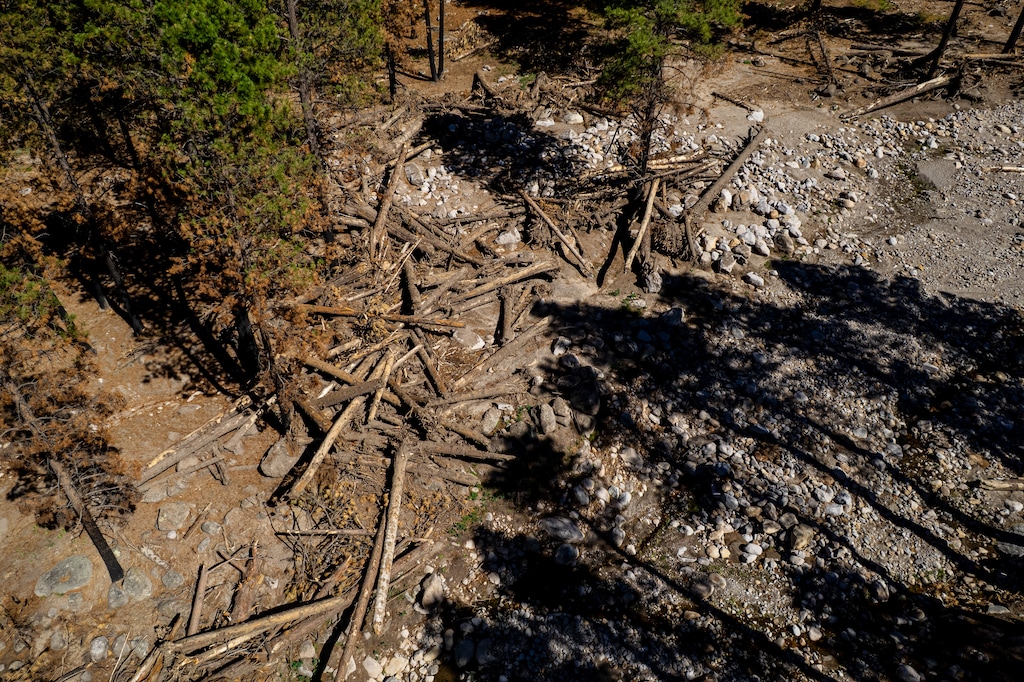
Burn scars are especially vulnerable during monsoon season because vegetation that once slowed rainfall and stabilized the soil has been stripped away. Instead of filtering into the ground, rain can rapidly collect and rush downhill, increasing the risk of flash flooding and debris flows.
That charred ground can repel water for up to five years after a wildfire, increasing the risk of flash flooding long after the flames are out, said Angela Lang, bureau chief with the Utah Division of Emergency Management. And Pine Valley residents near the Forsyth Fire burn scar, where communities are still rebuilding a year after the blaze, are once again preparing for the threat of flooding as monsoonal storms move in.
Some flooding has already occurred near the Cottonwood Fire outside Beaver. City officials said Thursday that muddy floodwater entered the area’s pressurized irrigation system, forcing them to temporarily shut it off.
The flash flood threat could continue into next week.
According to the Weather Prediction Center, much of Utah is under a marginal risk for excessive rainfall through Thursday, meaning isolated flash flooding is possible in vulnerable areas as monsoon moisture brings daily rounds of afternoon showers and thunderstorms.
Here’s what Lang says you should know, lightly edited for clarity and length.
What should people who live near burn scars do to prepare?
The most important thing is to look into flood insurance. Many homeowners and renters insurance policies do not cover flood damage, and flood insurance is separate. People shouldn’t wait until a storm is approaching because there is typically a 30-day waiting period before coverage begins.
Even if someone cannot get coverage in time for this weekend, it is still important to consider because fire season and monsoon season are not over, and the risk will continue.
Should residents near burn scars be prepared to evacuate?
Evacuations are determined by local jurisdictions, such as county emergency managers or sheriff’s offices. Residents should sign up for their county’s emergency alerts and follow official sources, especially accounts and websites with a .gov address, for accurate updates.
Is evacuation common during flash flooding near burn scars?
It’s difficult to predict because flash floods can happen very quickly and sometimes with little warning. You don’t have to be near a river, and the sky doesn’t have to look threatening for a flash flood to occur. It can be sunny where you are while a storm miles away is sending water toward you.
What else should people do to prepare, especially during monsoon season?
People should keep important documents in a flood-safe container so they are protected whether they need to evacuate or experience flooding at home.
They should also be weather aware and know before they go. That means checking the forecast before traveling or heading outdoors, and continue checking it throughout the day because conditions can change quickly.
People should also have a plan and a backup plan, know their route and identify where they can get to higher ground if flooding occurs.
What are the biggest safety concerns during flash flooding?
Never drive through flooded roadways or water. It takes very little water to become dangerous. Six inches of moving water can knock a person off their feet, one foot of water can carry away most vehicles, and two feet or more can carry away larger vehicles like trucks and SUVs.
Just remember that no destination is worth your life and to turn around and don’t drown.
Should people still be concerned on days when there isn’t an active flood watch?
Yes. The Weather Service does an excellent job issuing alerts, but conditions can change quickly. With the number of burn scars across Utah, ongoing drought conditions and monsoon season, there are many factors to consider.
People should hope for the best, but make sure they have a backup plan and share that plan with family members in case they lose cell service or cannot communicate.