 Jordan Miller
Subpar snowfall has turned Utah into a minefield for wildfires — and recent weather conditions are fanning the flames.
As of Monday, more than 270,000 acres had already burned in 388 fires across the Beehive State, and those numbers were poised to keep growing.
The blazes have forced Red Butte Garden in Salt Lake City to evacuate, sent Eureka residents fleeing from their small town southwest of Utah Lake, and have torn through a central Utah ski resort.
At this point last year, Utah had experienced 30 more wildfires, but only 57,749 acres had been scorched, said Kelly Wickens, a prevention and communications specialist with the Utah Division of Forestry, Fire & State Lands. That’s only about 21% of the land area that has burned so far this year.
There is still fire potential over the next several days, especially in southern Utah, but critical conditions like what was seen last week have subsided for now, forecasts show.
Here’s what to know about this year’s fire season:
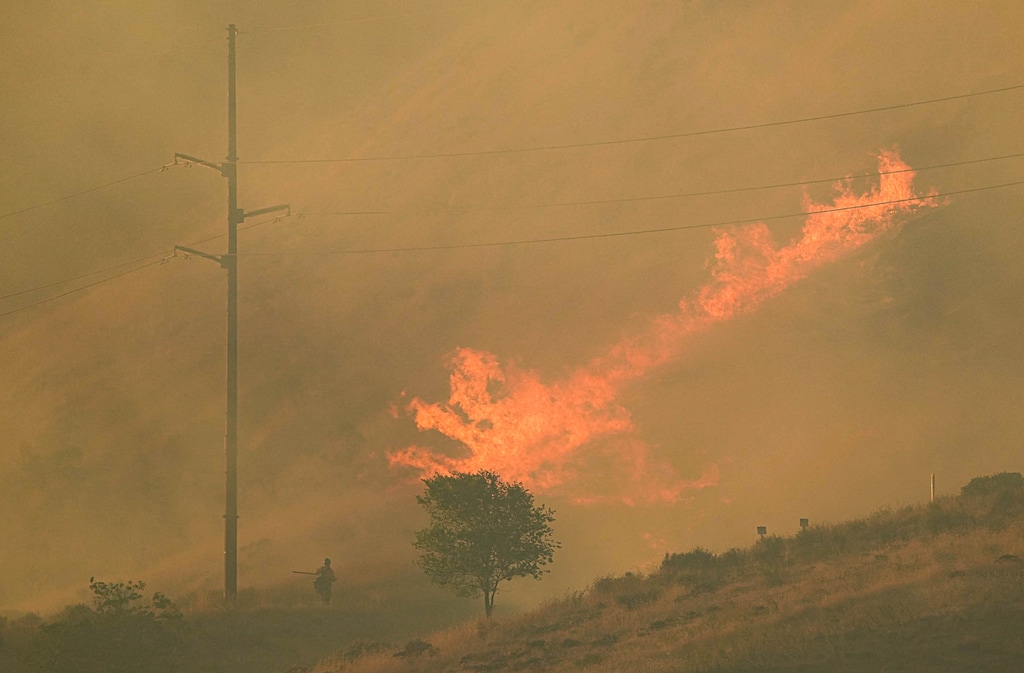
(Utah Fire Info) The Cottonwood Fire near Beaver, Utah, burns in Fishlake National Forest. It started Monday, June 22, 2026.
This year’s predictions
From June 19 through June 25, three fires alone burned over 120,000 acres in Juab, Tooele and Beaver counties, according to the state.
Grass and other plants — known in the fire world as fuels— are drier and more flammable than they usually are at this point in the year, which have contributed to these larger and faster wildfires, Wickens said.
Last year, snowpack in northern Utah was at a decent level, but after this year’s mild winter, all of Utah had “terrible” snowpack, making the entire state more vulnerable to wildfires, Wickens said. Usually, the southern and central regions are more at risk.
(Chris Samuels | The Salt Lake Tribune) A person walks a trail at the hillside above the University of Utah after the Bonneville Fire in Salt Lake City, Monday, June 22, 2026.
Some of the biggest concerns this summer are mid- to high-elevation areas, said Brad Washa, an assistant professor of wildland resources at Utah State University. Washa spent more than 20 years in fire science with the federal Bureau of Land Management, and at one point he worked for the National Interagency Fire Center, which coordinates fire responses across the country.
Areas of Utah that are 3,500 feet and higher — that’s most of the state — could be set up for a particularly big fire season because of the earlier snow melt and heavier fuels in forested areas, Washa said.
“We were preparing for a season that’s probably going to be hot, dry, and long,” Wickens said. “We’re still hoping we see some monsoonal moisture, but that’s one of those double-edged swords that, oftentimes, also brings dry lightning to the area.”
Typically, southern Utah bears the brunt of monsoon season, a pattern of thunderstorms and rainfall over the southwestern United States beginning in mid-July. Northern Utah usually gets “little remnants of moisture” that are less impactful, Washa said.
Monsoon season can also be unpredictable. Last year’s Forsyth Fire, sparked by lightning and stoked by strong monsoonal winds, burned more 10,000 acres near St. George.
(Trent Nelson | The Salt Lake Tribune) A plane makes a drop on the Cottonwood Fire, burning east of Beaver on Tuesday, June 23, 2026.
A monsoonal thunderstorm that dumps a half inch of rain for a day won’t do much to penetrate dry fuels — it would likely just disperse them, Washa said. What could actually reduce wildfire risk, he said, is lots of rain across several days.
This year is also an El Nino year, which means warmer waters cause the Pacific jet stream winds to move south — leading to weather that tends to be warmer and drier in the northern U.S. and wetter in the southeast.
Utah is usually caught in the middle of this phenomenon, Washa said, adding that it can occasionally bring lots of moisture to the state and help with Utah’s dire snowpack conditions come winter time.
How to prepare
With holidays like the Fourth of July and Pioneer Day right around the corner, Washa and Wickens urged Utahns to leave fireworks to the professionals this year.
Utah Gov. Spencer Cox announced last week that the state will restrict fireworks statewide from July 2-5, while allowing cities and towns to designate areas where fireworks may be used in consultation with local fire officials. A full list of firework bans can be found on the state fire marshal’s website, firemarshal.utah.gov.
“Anything we do, campfires, all of that, anything with a spark can easily start a fire right now,” Wickens said. “If we can prevent these wildfires, it’s going to benefit everybody in Utah.”
(Francisco Kjolseth | The Salt Lake Tribune) Crews battle a fire in the foothills above the University of Utah as it moves toward Federal Heights on Saturday, June 20, 2026.
Because of the widespread vulnerability across the state, everyone needs to be prepared for what to do if a wildfire ignites near them, said Genevieve Keys, spokesperson for the Utah Division of Emergency Management.
Utahns should be familiar with the “ready, set, go” mantra for fire season, which explains when communities should evacuate. The statuses are issued by state or local emergency management officials through the Federal Emergency Management Agency’s cell phone alert system, but can also found on official county websites, Keys said.
• “Ready” status means there is a wildfire active nearby. It’s not an evacuation order, Keys said, but it means nearby residents should prepare to leave and pay attention to the news.
• “Set” status means there is “pretty significant danger” and is when residents should pack up and get themselves ready to leave at a moment’s notice.
• “Go” status is for immediate evacuation — not when residents should just begin to pack their belongings.
Keys stressed that residents can leave at any time.
“This is not like a ‘you have to stay here,’” she said. “So if you feel unsafe, you don’t have to wait for an evacuation order to leave.”
Residents should prepare with an emergency kit that includes medications, water and anything their pets may need, Keys said. Utahns should also develop an emergency plan with their loved ones on where to go, what routes to take and where to meet up if separated, Keys said.
And even when returning to an area after an evacuation order has been lifted, people should be cautious and expect heavy traffic from emergency vehicles, she said. Residents should check around their property, report downed power lines and be prepared for intermittent power outages upon their return home, she added.
Although this year is more risky because of the low snowpack, Washa said it’s important to note that Utah has always existed with wildfires.
“I would anticipate to continue to see potential for large fires in the northern part of the state until we do get some sort of precipitation,” Washa said. “Fire is a natural part of these ecosystems, and these ecosystems have burnt long before we ever were here.”
Jordan is a breaking news reporter at The Tribune. She graduated from the University of Oklahoma and has written for the Houston Chronicle along with the Enid News & Eagle. When she's not reporting, she loves watching football, reading books and painting.