 Samantha Moilanen
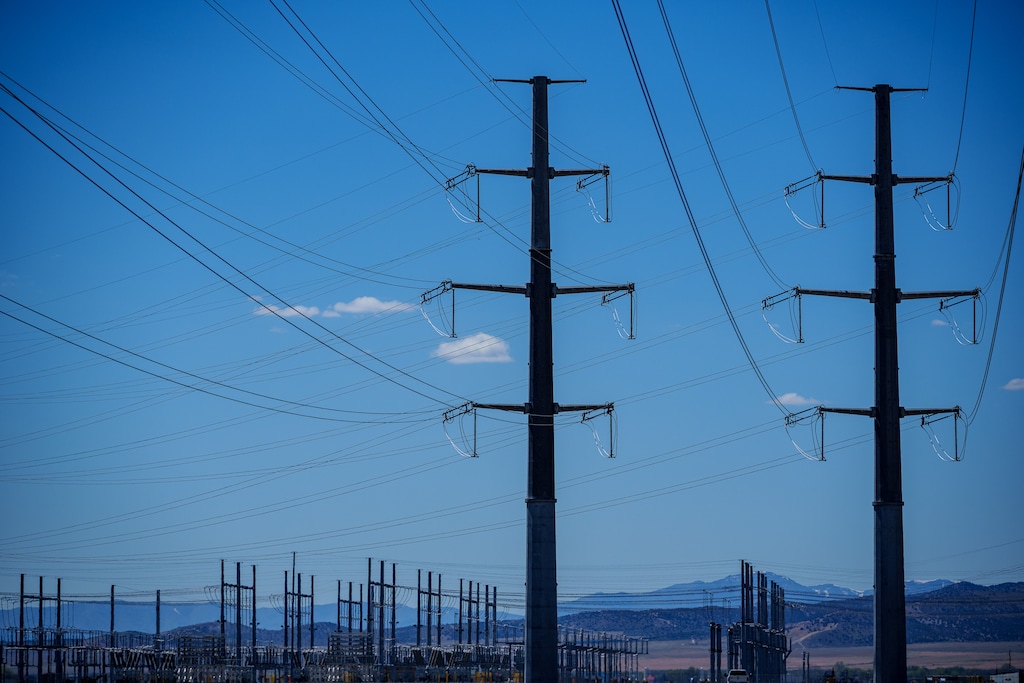
As wildfires rage across Utah, Rocky Mountain Power shut off electricity to thousands of customers in seven different counties to reduce the risk of new fire starts.
The utility began the public safety power shut-offs early Friday in parts of Beaver, Cedar City and Milford amid an alarming weather forecast that portended “very rapid fire spread.” Thousands more were warned they could lose power, too.
By Saturday afternoon, shut-offs were underway in Beaver, Garfield, Iron, Millard, San Juan, Grand and Uintah counties.
Power was later restored to all affected customers by Sunday afternoon, the utility announced.
“Public Safety Power Shutoffs are a last resort, and we understand the disruption they create for customers and communities,” Carrie Laird, Rocky Mountain Power’s incident commander, said in a Friday update, adding that “our responsibility is to put safety first.”
(Trent Nelson | The Salt Lake Tribune) The Cottonwood Fire burns above Beaver before sunrise on Friday, June 26, 2026.
On Friday, about 7,735 households, businesses and other customers sat within the active power shut-off area. Another 7,637 customers that day were located in the areas under warning.
The utility previously said it would only restore power once imminent wildfire risk is alleviated and crews are able to inspect power lines and assess any needed repairs.
“We take the decision to turn off power seriously, and Public Safety Power Shutoffs (PSPS) will be targeted, precise and informed by robust, real-time data about the situation on the ground,” Rocky Mountain Power’s website states.
Some customers lost power earlier than expected Friday as high winds blew through Utah. The utility opened community resource centers near affected areas, where residents could access information and support.
Over the weekend, wildfire activity continued to intensify across the state.
Outside of Beaver, the massive Cottonwood Fire had grown to roughly 93,607 acres as of Sunday, a bit bigger than the city of Philadelphia.
The blaze is considered 0% contained. A containment figure marks the percentage of a fire’s perimeter where crews feel confident flames won’t cross.
Southwest of Utah Lake, the separately burning Iron Fire, which ignited June 19 and previously forced Eureka residents to evacuate, had scorched about 40,000 acres as of Sunday. That’s right alongside the newly burning Cherry Fire, which sparked Friday and ballooned to about 30,000 acres.
The Cherry Fire is considered 0% contained, while the Iron Fire’s containment level sat at about 38% as of early Sunday.
The Cherry Fire’s rapid growth late Friday prompted evacuation orders for several nearby communities, including the town of Eureka again. By noon Sunday, residents of Eureka, Mammoth and Silver City were able to return home, according to Utah Fire Info, but they remained in “set” status (on a “ready, set, go” scale), reserved for “extreme threat.”
“Set” status asks residents to monitor fire conditions and official updates, check on neighbors, load supplies into vehicles and be ready to evacuate if ordered.
Gov. Spencer Cox, on X, described Friday’s weather as “some of the worst fire conditions in our state’s history,” noting whipping winds grounded firefighting aircraft and pushed several fires beyond the reach of direct attack.
On Thursday, Cox announced the state will restrict fireworks statewide over Independence Day weekend through an executive order, citing the particularly destructive start to this year’s wildfire season.