 Megan Banta
More than two dozen people who bought units in an unfinished condominium-hotel near Park City Mountain Resort’s Canyons Village allege a luxury brokerage marketed the project as a safe investment but failed to tell them the developer couldn’t finish it.
And now they are suing.
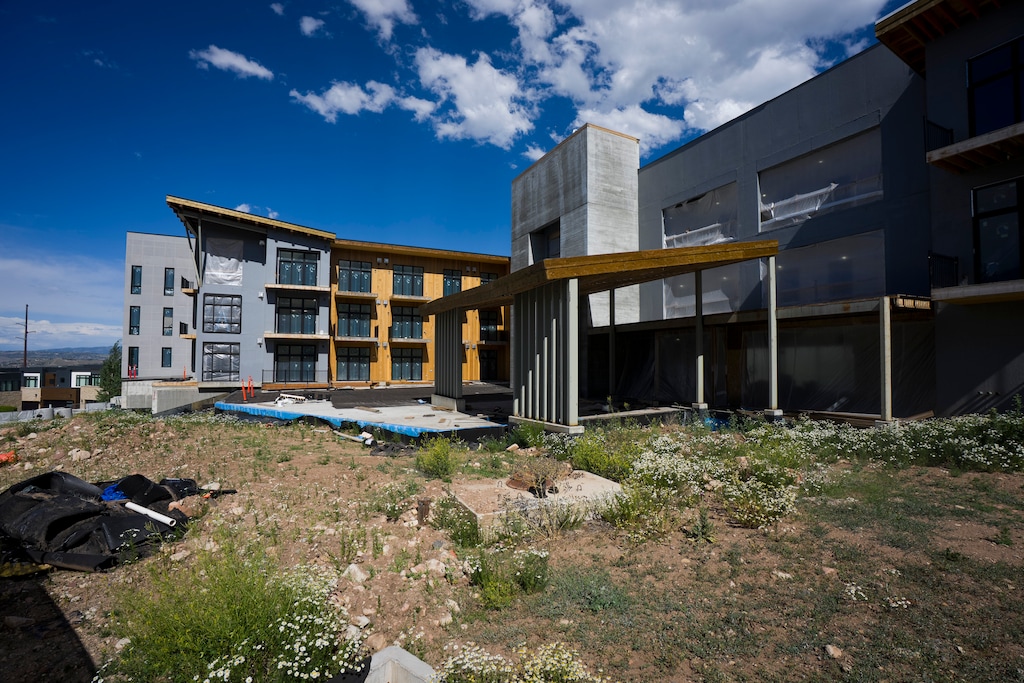
The Ascent Park City has been under construction for years and changed ownership twice, most recently to a private credit and specialty finance firm that bought it at a foreclosure auction.
Yet the 120-unit development in Frostwood Village sits unfinished, leaving investors out hundreds of thousands of dollars — and without the “reasonable expectation of profits” that Sotheby’s International Realty told them they could expect, argues a lawsuit filed in federal court in California.
For Bryan Edelman and others who bought units, the project seemed like a “sure thing”: They could make money off the units when they weren’t using them because Hilton would sell them as vacation rentals on their behalf under the flag of its Tapestry Collection.
Instead, Edelman is left out $200,000 after a separate lawsuit failed to stop the foreclosure — and he says he might as well have burned his money to keep the house warm.
“Literally anything would have been better,” he said.
Edelman and his brother, who bought a unit together, have joined with 26 others to sue Sotheby’s for marketing “securities disguised as condo-hotel units despite knowing the project was woefully undercapitalized and chronically behind schedule.”
Sotheby’s did not respond to multiple Salt Lake Tribune requests for comment. It does not yet have an attorney named in the lawsuit and has not filed a response.
OKOA Capital also did not respond to a request for an update on the project, but co-owner Ty Corbridge has previously said the company is focused on doing what the previous two owners couldn’t and finishing the project.
Hilton has indicated it remains committed to the development, Corbridge said over the summer. A website for the project says it will open in February 2028, another delay from the most recent expectation of October 2027.
The Hilton connection is central to the lawsuit. Plaintiffs argue Sotheby’s used the franchise backing when marketing the units as a surefire opportunity.
“Sotheby’s took full advantage of the Hilton association to market the Ascent project as a safe long-term investment,” the lawsuit argues, “in which personal use of a condominium unit was besides the point.”
The units were residences “in name only” because no one expected to live in them full time, the lawsuit asserts, and people essentially purchased what were “little more than investment contracts issued to them to bankroll part of the development costs of an insufficiently capitalized project.”
The brokerage also did not disclose information that “would have caused plaintiffs not to invest or to attempt divestiture” — an act the lawsuit alleges violates state and federal securities laws. The case is filed in federal court in California, which has some of the strongest and most active securities laws in the nation.
The buyers are asking a judge to grant them damages and interest but have not specified an amount.