 Jose Davila IV
Kat Hickey has been to a lot of protests in her life.
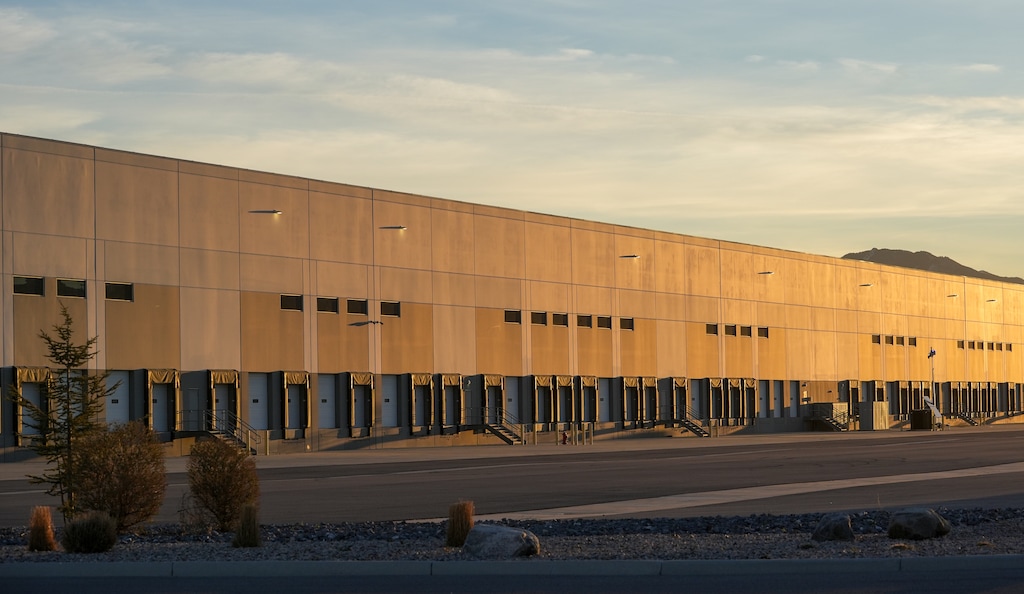
But last Saturday was the first time she had been to a rally in the recurring series of demonstrations at the massive warehouse on Salt Lake City’s west side that the federal Department of Homeland Security recently acquired to use as a immigration detention center.
It was also the first time she’s ever felt that police officers targeted people for protesting and filming. The multi-hour demonstration — which maxed out at about 40 people, attendees said — ended in a chaotic few seconds of officers tackling some protesters and arresting four on suspicion of interfering with police.
Salt Lake County District Attorney Sim Gill said Wednesday that his office was evaluating the arrests, but that he had yet to make a decision on filing charges against the demonstrators.
“It was so awful. It was so scary,” Hickey, who wasn’t detained, said through tears when recounting the end of the demonstration. “It didn’t matter what we did, comply, listen, follow directions. They don’t care.”
Hickey, who was recently hired as the organizing director on Millcreek Democratic Sen. Nate Blouin’s campaign for Utah’s new 1st Congressional District seat, said she feared officers would pull out their guns. (Blouin attended the protest earlier Saturday evening but was not present when the arrests were made. He has been critical of the facility and the Salt Lake City Police Department’s presence at the ongoing demonstrations.)
Department spokesperson Glen Mills said the actions of the officers at the protest were under internal review and said that the agency is “absolutely committed” to “protecting an individual’s right to peacefully assemble.”
Ever since the federal government acquired the gigantic warehouse at 6020 W. 300 South in mid-March with the idea of retrofitting it to hold between 7,500 and 10,000 detainees, protesters have shown up repeatedly to criticize the plan and U.S. Immigration and Customs Enforcement’s deportation campaign. Regularly scheduled protests happen on Wednesdays and Saturdays, and, besides an early demonstration that drew hundreds, generally see crowds numbering in the dozens, attendees said.
Saturday’s event
Carlos Samayoa has been a regular at the demonstrations and is part of an organization called We the Peoples Movement that’s active in protesting against ICE.
“It’s important to speak out and make sure people know that this is a system,” Samayoa said. “We can defund it. We can attack it and change it and abolish it in its entirety. And my recommendation is the latter.”
He said Saturday started off in the same way the protests usually do, with demonstrators parking their cars against the curb on the north side of 300 South, out of the way of traffic on the road.
Attendees then mostly stood between or on top of their cars and chatted with one another, Hickey said. For a little more than two hours, protesters waved signs, chanted and danced.
Hickey said there were about five police cars facing protesters in the building’s parking lot and about seven more parked around the back of the warehouse. The Police Department makes decisions about staging officers at planned protests based on an internal risk assessment, Mills said. He added that “it’s standard” for the agency to be at demonstrations it deems high-risk even if they are occurring at a federal building.
Hickey and Samayoa criticized the department for spending taxpayer dollars on protecting federal property, as they see it. The department says it has officers show up to protect protesters and nearby businesses.
As the protest wrapped up, attendees said they planned to all leave together for fear that officers would try to target one of them, but then one demonstrator drove off before the rest. Police cars followed the vehicle and pulled the driver over about one block east in a parking lot in front of a business.
Mills said officers believed the car did not have license plates. It turned out that the driver did have a temporary tag and was ultimately cited for a learner’s permit violation.
Demonstrators followed the officers to the traffic stop and moved closer to observe and film it. Samayoa said the protesters told police that they were not interfering in the stop and were standing back.
In a video Hickey posted to Instagram, one officer repeatedly orders demonstrators to move back by a tree near the corner of the property. Protesters questioned the order and the traffic stop.
The officer gives a final order, then tells the protesters to sit. Immediately after giving that command, the camera pans to show a protester running toward the tree and the officer chasing and tackling them.
It’s unclear from the video when the protester began running.
As other demonstrators filmed that encounter and shouted at officers, additional police tackled some of them after ordering them to move back to a sidewalk. Later, an officer points out Samayoa and arrests him as he was standing on a sidewalk near other protesters.
What comes next
Mills said the four arrests were on “interference-related charges.”
“They were just coming up on the traffic stop,” he said, “and the officers who were performing the traffic stop.”
Samayoa said police also arrested him on suspicion of obstruction of justice and failing to identify himself. No formal charges had been filed against him nor the other three people that were arrested as of Wednesday afternoon.
“We can confirm that we have received some screening packets related to the protest. No screening decisions have been made,” Gill, the district attorney, said. “Our team is still reviewing the submitted material as we do whenever law enforcement sends us their screening requests.”
Mills said officers’ actions on Saturday evening were under internal review, but that none of those involved had been placed on leave or currently face discipline. The department is reviewing the protest, traffic stop and officers’ use of force to see if it could have better protected protesters’ rights and if the first person tackled was, in fact, following the officer’s order.
Because the protests are regularly scheduled and draw some of the same attendees, the demonstrators and officers are often similar week to week, attendees and Mills said. Hickey theorized that familiarity partially led to the chaotic arrests. Samayoa disagreed in a separate interview.
Either way, Mills said the department was considering mixing up the officers dispatched to the protests and urged organizers to work with the agency to help create a safe environment for all.
He also said that the department does not coordinate with ICE on its response to the protests nor does it work with ICE to carry out immigration-related traffic stops. Officers don’t ask those with whom they come in contact about their immigration status. The agency does not have a formal agreement with ICE that deputizes officers to carry out immigration-related duties.
Mills said that, in some cases, when the department is apprehending a “violent criminal,” it will work with ICE to identify someone who is refusing to identify themselves. The agency does not have a policy, however, that prevents officers from reporting people to ICE if they are off-duty and not using city resources.
“I mean, you’d have to check with an attorney but I don’t even think we could [have that policy],” he said.
Demonstrators plan to keep protesting the facility near the Great Salt Lake, though, and the department’s focus on rallies there.
“I am covered in mosquito bites from the incident,” Hickey said. “And I hope the cops are, too.”
Jose Davila IV covers west-side communities and is a Report for America corps member. He previously worked for KUNR Public Radio in Reno, The Toledo Blade and the Yale Daily News. He appreciates tips on the west side's best food, great hikes across the state and pickup volleyball games. Es bilingüe y ama los tostones de su padre más que nada.