 Tony Semerad
Officials with U.S. Immigration and Customs Enforcement have confirmed they want to turn a newly purchased warehouse on Salt Lake City’s west side into a “mega-center” to house between 7,500 and 10,000 detainees, Mayor Erin Mendenhall said Monday.
A virtual conversation last week with ICE Deputy Director Charles Wall and Tim Kaiser, deputy chief of staff to the director, also revealed the federal agency expects to start work on converting the warehouse at 6020 W. 300 South into a major detention facility “in the weeks and months ahead,” the mayor said.
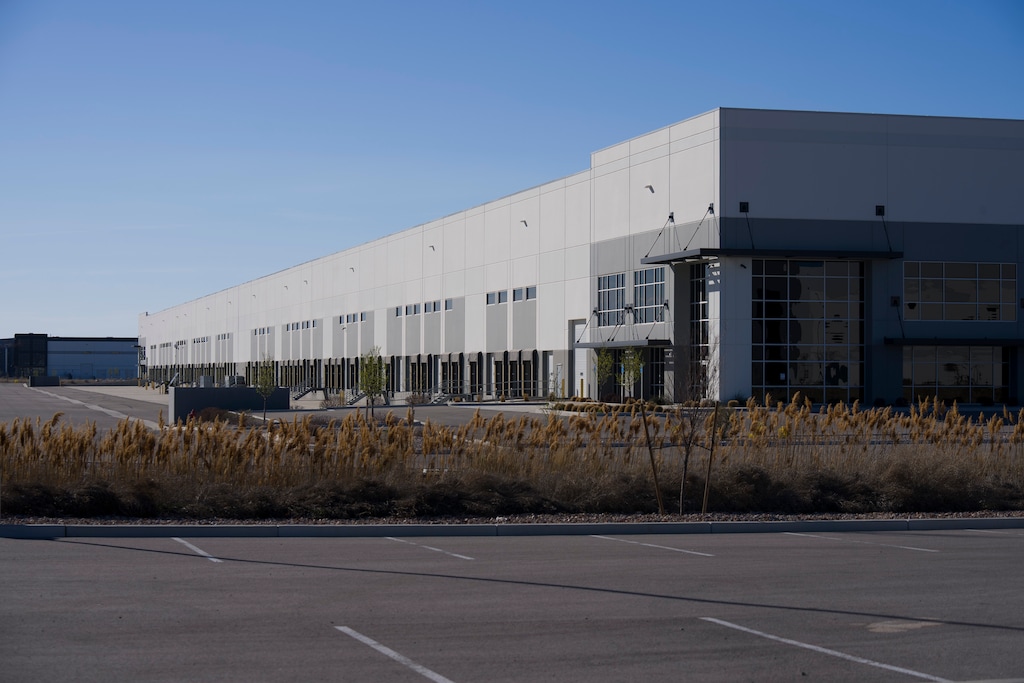
ICE purchased the 833,000-square-foot warehouse March 11 for $145.4 million for use as a detention facility. The building is slated to be part of a network of new centers to support stepped-up enforcement efforts across the county. At least until now, that process has gone on with zero consultation involving city and state officials in Utah.
Mendenhall said Monday that the facility, according to the 30-minute exchange with ICE leaders, would serve as “a hub” in what ICE officials describe as a “hub and spoke” model. ICE is still awaiting a “due diligence report” on the property near Interstate 80 and Salt Lake City International Airport, the mayor said, and had promised to share what it finds with the city.
“My position on this facility has not changed,” Mendenhall said in a statement. “I continue to share the deep concerns of many of our neighbors related to public safety, air quality, and potential impacts to the Great Salt Lake due to increased water use.”
When pressed on whether ICE would coordinate with Salt Lake City on retrofits to the building and “life and safety” measures the city typically enforces through building codes, Mendenhall said the officials said they planned to consult with the city’s fire marshal on these issues, “but did not commit to any other city review on the building.”
City Planning Director Nick Norris confirmed in a public meeting last week that under state law, federally owned properties within city limits are expressly exempt from city land use regulations.
Mendenhall said ICE is not offering details on exactly how it will coordinate with the city.
“They did not provide information about the anticipated environmental and traffic impacts to the area,” the mayor said, “nor did they have specific information on utility needs for the site.”
As part of tightening the city’s water conservation rules last week, the city has moved to impose consumption limits on nonresidential sites including such a future detention center, capping daily water use at 200,000 gallons. Mendenhall estimated last week the ICE detention facility would consume an estimated 1 million to 2 million gallons per day.
By comparison, she said, the warehouse had previously used about 5,600 gallons daily.
The move on water rules, passed swiftly Tuesday by the Salt Lake City Council, also eliminated a blanket exemption to the water consumption cap for all government facilities, revising city code to say only such facilities that “primarily provide social services” would now be exempt.
Mendenhall said in her statement that nearby business operators in that industrial neighborhood of what is also within the Utah Inland Port “understandably have serious questions about the strain such a facility would have in the area.”
The mayor promised to residents she would “continue to be transparent with you about the facts of this situation as I learn them.”
Tony covers growth and development issues for The Tribune. He is a former editor and politics reporter and has been with The Tribune since 1991.