 Samantha Moilanen
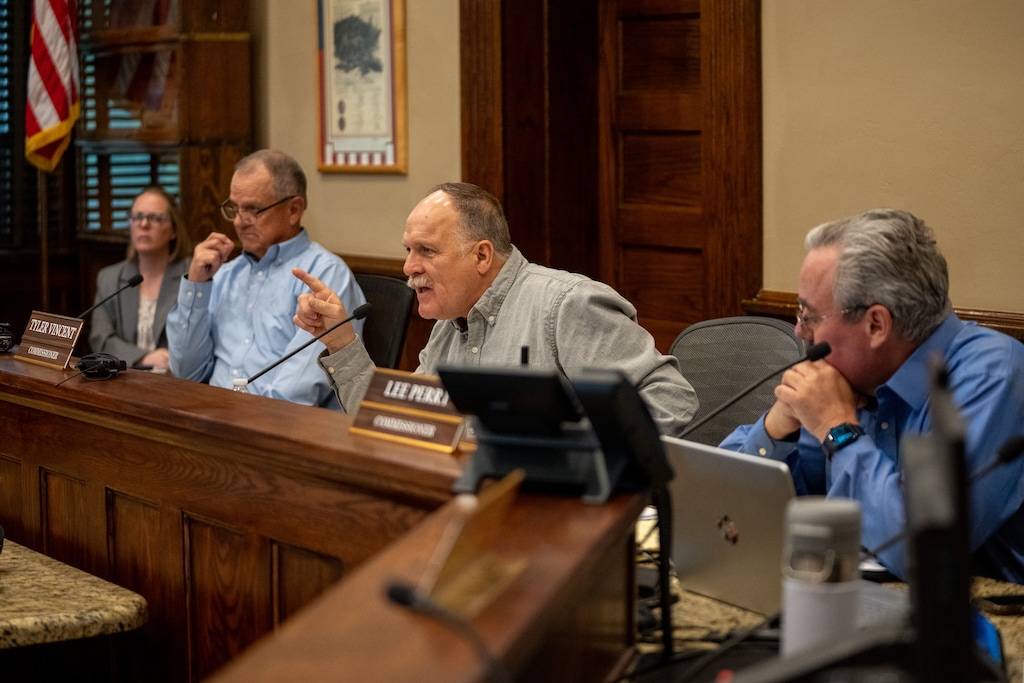
After Box Elder County’s three commissioners were handed details of a massive data center and energy proposal at the “last hour,” they brought in outside attorneys to help navigate the high-stakes deal.
The county hired the Salt Lake City firm Smith Hartvigsen PLLC to assist with negotiations surrounding the project, commissioners said at an April 27 meeting.
The project, dubbed Stratos by the Military Installation Development Authority, is planned as a sprawling “hyperscale” data center development that at full buildout would span roughly 40,000 acres in Hansel Valley, north of the Great Salt Lake. Celebrity investor Kevin O’Leary is leading the development.
Much of the legal work centered on drafting and revising the interlocal agreement between Box Elder County and MIDA — the document governing how the project area would be structured and how incentives and authority would be shared. The commission unanimously approved the agreement and the project area tied to the development at a May 4 meeting.
The county owes the firm about $20,000 for 63 hours of work in April, according to an invoice obtained by The Salt Lake Tribune on Wednesday through a public records request.
The billing covers work beginning April 15, a week before the proposal first appeared on the commission‘s agenda at an April 22 meeting, through the end of the month.
That work began before the county had a formal agreement in place with the firm, which wasn’t signed until April 28, according to the contract obtained through a records request.
The contract sets hourly rates for attorneys working with the county, including $355 an hour for Adam Long, the county’s lead outside counsel, and $305 an hour for attorney Claire Gillmor, with other partners and staff billed at rates ranging from $175 to $480 an hour.
At the May 4 meeting, Long told a raucous crowd that he specializes in economic development projects and local incentive agreements. He said his firm engaged in “furious negotiations” over less than two weeks on the interlocal agreement with MIDA.
“My involvement here has primarily been to make sure that the county gets essentially the deal that has been presented to it,” he said.
In the weeks leading up to the vote, the invoice shows county attorneys and the outside firm exchanged multiple drafts with county officials and MIDA representatives over several days in late April, often revising language after conference calls, meetings and email negotiations.
Other entries show research into water rights change applications and reviews of news articles and social media posts related to the MIDA project-area process as attention surrounding the proposal grew ahead of the vote.
Within the project area, Long said at the May 4 meeting, MIDA functions similarly to a municipality, with “essentially full control” over decisions typically handled by cities, including permitting, zoning and land use.
In the interlocal agreement, Long said the county sought to clearly define what it would be required to provide and what MIDA could do inside the project area.
That included limits on residential development, requirements for closed-loop cooling systems to assuage water concerns, delayed development along Highway 84 until a set amount of data center capacity is built and noise restrictions at the project boundary or nearest residence.
He said the county also sought to lock in the money it would receive from the project even if state tax laws change. The county is projected to see about $30 million in the initial phase and up to $108 million at full buildout, along with upfront payments of $5.4 million from the developer in each of first three years to help offset service costs.