 Palak Jayswal
Last August, multi-genre musician Alexis Harris was excited to perform on the VIP stage at Unity Block Party in downtown Salt Lake City.
Six months later, however, Harris’ tune changed as she took to Instagram to share a new video, warning people of color artists in Utah and elsewhere of the festival’s “exploitation.”
“For a festival that claims to uplift Black and brown voices in the community, the way artists have been treated tells a very different story,” Harris said.
Harris is one of 38 local and touring artists — including 2026 Tiny Desk Contest winner Cure for Paranoia — and vendors who have not been paid for their contributions to the 2025 festival, founder and organizer Michelda Castro admits.
Nearly a year later, Castro said she wants to pay the artists what she owes them. But she said her nonprofit and festival were hit hard by federal funding cuts and withdrawn sponsorships resulting from the Trump administration’s rollback of diversity, equity and inclusion efforts.
DEI funding cuts and lost sponsorships
More than a decade ago, Castro started her nonprofit, Versatile Image, which runs the festival, to address the very “pain point” she is now dealing with — making sure artists get paid for their work.
The first Unity Block Party was held outside Castro’s Salt Lake City apartment in the wake of George Floyd’s murder in 2020.
“I was just tired of crying, tired of Black and brown bodies being seen as disposable [with] no worth or value being attached to our stories,” Castro said.
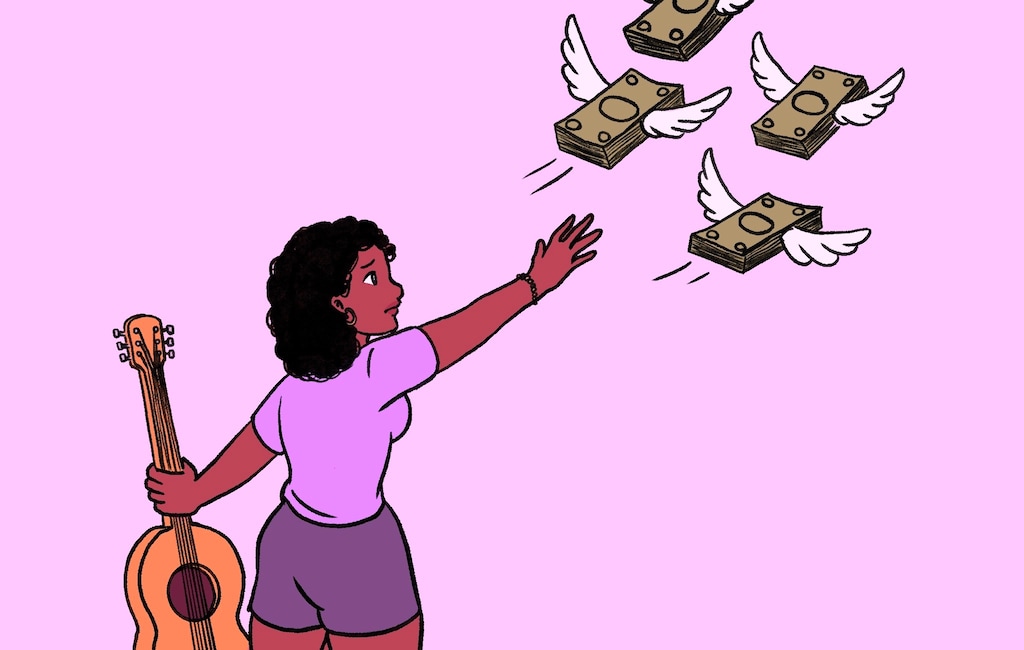
Now, Castro said she owes more than $107,000 to artists and vendors from last year’s festival because “the company literally doesn’t have the money to pay.”
Castro said the festival lost out on $250,000 of promised federal funding in April 2025 as a result of rollbacks on DEI programs. She told Forbes that she lost her full-time job as a result of the same anti-DEI orders.
Castro did not provide documentation to verify the amount of funding she had been promised. Her nonprofit’s tax filings show a drop in public support from nearly $130,000 in 2024 to just over $40,000 in 2025.
Meanwhile, Castro said the festival lost $75,000 in sponsorships. She did not disclose the names of the companies that pulled their sponsorships, but said they were in healthcare, tech and financial services.
In one redacted email shared with The Salt Lake Tribune, the writer told Versatile Image that they had “chosen to go in another direction” after deciding to shift “our community efforts towards things that better align with our overall goals.”
It’s a problem others in the state have faced. Last year, the nonprofits that host Utah’s two Pride festivals also lost sponsors because of DEI rollbacks, while a local theater company lost state funding.
This isn’t the first time the festival has run into financial issues. Castro said she “postponed” the 2024 Unity Block Party after predicting that ticket sales would not cover costs and spent the following year securing the funding to put the festival on in 2025.
(Michelda Castro) A screenshot of a sponsor backing out of the 2025 Unity Block Party, provided by Michelda Castro, the festival's organizer.
Castro also said she invested $76,000 of her own money as she struggled to find new donors.
“You go out and you’re trying to solicit donations from philanthropists. Well, Trump is in office. We’re in Utah. Those things really do become a determining factor when our programming is centered around Black and brown people,” Castro said. “There are a lot of small nonprofits that are struggling financially.”
At the beginning of last August, she also launched a GoFundMe, which raised $575.
Plans for the festival moved forward anyway.
Day of Issues
Several artists who performed at last year’s Unity Block Party said there were signs of problems early on.
Gavin Mulloy, manager of Cure for Paranoia, called Unity Block Party the “most unprofessional festival” he had ever seen. Despite the band winning NPR’s Tiny Desk Contest, he said the band has been “making up the loss” from the Utah festival all year.
In the middle of Harris’ performance, another group started a sound check on the main stage.
“No one could hear my set, so it was pointless. Everything was chaos,” Harris said.
Castro attributes the issues to a production company pulling out two days before the event. She said the company had tried to “strong-arm” organizers into paying ahead of time to set up instead of after the event.
Castro declined multiple requests to name the production company, citing “legal implications.” The Tribune could not find any open court cases involving Castro and a production company.
Utah-based Latin pop artist Detzany was excited to join the bill when she saw that Grammy award-winning artist Durand Bernarr was set to headline. But felt that the festival was “rushed and kind of put together last minute.”
Then came the matter of payment.
Miles Minnick, a Christian hip-hop artist, went looking for Castro because he had only been paid half of his fee, according to Faith Amin, the festival’s social media coordinator. “His managers were like, ‘If we don’t get payment, they’re not performing,’” Amin said.
Castro said that Minnick was supposed to be paid the other half of his payment before getting on stage, but it was “one of the details that fell between the cracks.”
After the festival ended, Amin, who still had access to the social media account, saw multiple direct messages come in asking about payment.
“We work hard for this, and we put our blood, sweat and tears into our art and music, and for that not to be compensated as promised is just disappointing,” Detzany said.
Amin also recommended a videographer friend for the festival who hasn’t been paid.
“It’s really disheartening. It feels almost like a setback in a sense,” Amin said about the festival’s stated goals and what ended up happening.
Promising payments
In September 2025, Castro sent out a mass email to those who hadn’t been paid, citing low ticket sales and funding troubles.
After months of complaints from unpaid artists, Castro sent an email on April 6 telling them that payments would start in the “first to second week of May” with final payments to be completed between the “end of June and the first week of July.”
Castro stated the July timeline is still her target, but said she experienced a “significant setback” with her bank.
“I take full accountability for how the cards landed, and I have every intention, as I’ve done in the past, to ensure that everybody is compensated,” Castro said.
Meanwhile, artists have been left in limbo by what they characterize as a lack of communication from Castro.
“Every month we get a new email, and Michelda has not been available to speak to anyone,” said Harris, who signed a contract that stated she would be paid $1,000 for her performances, no later than seven days after the event.
Another unpaid artist, Christina Leslie, whose stage name is Nubia Soul Goddess, is also down $1,000.
One member of Leslie’s band flew in for the performance, while another was local, and she hasn’t been able to compensate either of them.
“Their frustration is valid,” Castro said. She said the months without updates “could seem like ghosting”, but added, “Fundraising is something that doesn’t take a few days or weeks. It’s a process.”
She also said her mental health had suffered because of the situation. “The gaps in communication are because I physically wasn’t capable,” she said.
Castro said all 2026 programming for the Unity Block party has been put on hold until she can pay the artists and vendors what they’re owed.
“There’s no more that needs to be said outside of the fact that I’m doing everything humanly possible,” Castro said.
She maintains that the festival would’ve run smoothly without the DEI funding hiccups.
“It’s exactly what they intended to do when they issued those executive orders,” she said. “They wanted to dismantle progress that was happening for marginalized communities. They wanted to break people’s spirits, and they wanted people to be in situations where they had no choice but to close their doors.”