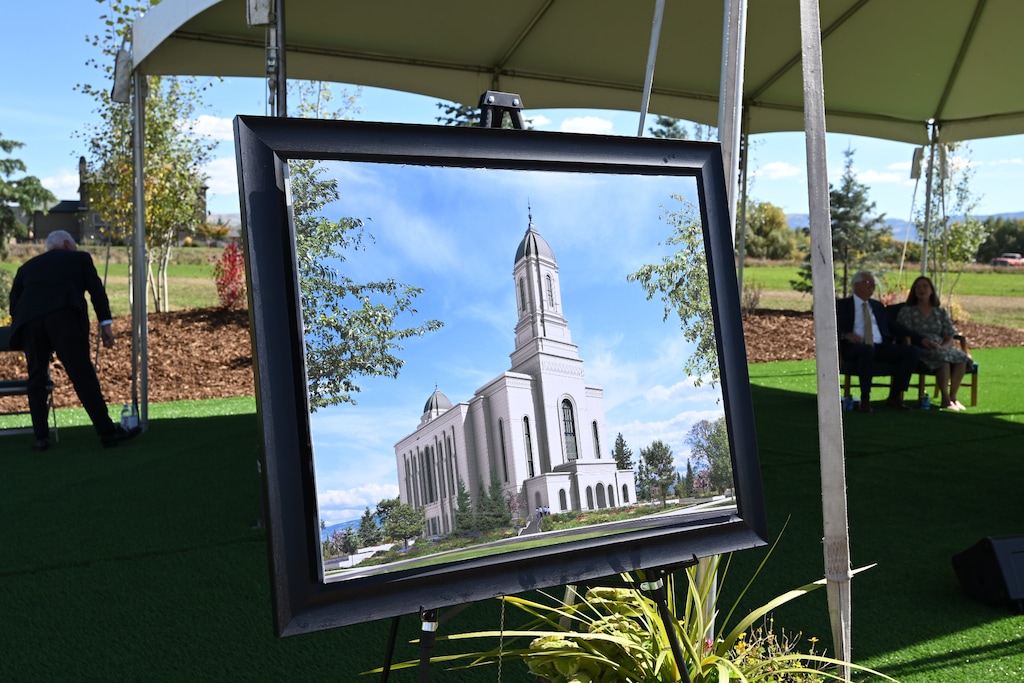
The Utah Supreme Court has waded into a contentious battle between a Heber neighborhood and Wasatch County over a planned temple for The Church of Jesus Christ of Latter-day Saints.
On Friday, the state’s top court heard arguments in a legal challenge to a zoning change that allowed the faith’s Heber Valley Temple to be built near these residents.
“We bought our homes in an area of Heber that had had long-standing zoning and it applied to blocks and blocks and blocks of the area we were,” said Bruce Van Dusen, one of the plaintiffs. “As a result of this, an 18-acre plot in the middle of that neighborhood where we bought our houses was magically determined to not have to obey any of the rules of the entire neighborhood.”
The residents have sued over Wasatch County’s decision to allow the church’s temple to go forward, despite not matching other zoning restrictions in the area. The residents have complained they will be negatively impacted by increased traffic, bright lights from the temple and other issues.
A lower-court judge sided with the county. The neighbor plaintiffs appealed and the case wound up before the Utah Supreme Court where the justices focused their questions Friday on issues like whether Utah law gives them the ability to challenge a decision under land use laws and if they have standing to file a lawsuit.
Lawyers for Wasatch County and the church argued that they do not.
Read the story at Fox13Now.com.
Note to readers • The Salt Lake Tribune and FOX 13 are content-sharing partners.