 Robert Gehrke
 Dylan Eubank
On a winter night earlier this year, Eric Layton and a friend gathered in an Orem apartment to take part in what they viewed as a religious ceremony.
Police saw it as breaking the law.
Layton — an avowed member of the Utah-based The Divine Assembly, which uses so-called magic mushrooms as part of its sacrament — was arrested, jailed and charged with possession of a controlled substance and drug paraphernalia.
The charges later were dropped, and Layton is now threatening to sue Orem and the intervening officers for allegedly violating his religious rights. He is demanding an apology and $1 million in damages.
“It does not matter whether Mr. Layton’s sacrament is magic mushrooms or bread and water,” his attorney, former state Sen. Steve Urquhart, said in a news release accompanying a letter notifying the city of the intended lawsuit. “It does not matter whether he worships in a temple ceremony or a mushroom ceremony, the law protects both equally.”
Urquhart is the co-founder of The Divine Assembly, which teaches that mushrooms, such as psilocybin, allow one to commune with the divine.
The city did not respond to a Salt Lake Tribune request for comment.
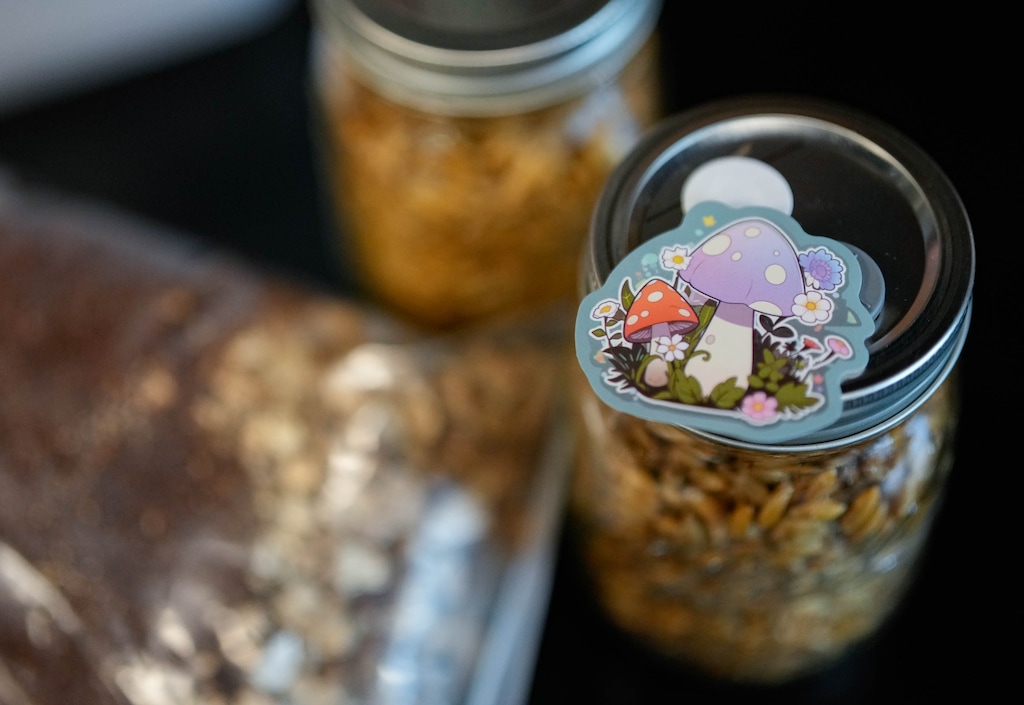
(Francisco Kjolseth | The Salt Lake Tribune) Former state Sen. Steve Urquhart, who helped start The Divine Assembly, unpacks a psilocybin, or magic mushroom, grow kit in 2024.
The bust
The dispute began Jan. 9, when the roommate of Layton’s friend called police to report that Layton and his friend were consuming psilocybin mushrooms, according to a police report.
The roommate recorded a video of them preparing a mushroom tea, the report states, and drinking it in a common area.
When officers arrived, the roommate who called police let them into the apartment. According to the report, Layton’s friend refused to let them search his room.
After obtaining a warrant, officers reported finding a grinder with a powdery residue on it and 78 grams of THC gummies.
Layton was carrying a card that identified him as a member of The Divine Assembly.
“The Divine Assembly (TDA) is a religious community that regards psilocybin mushrooms as a sacrament,” the card read. “As a member of the TDA, Eric William Layton, has the legally protected right to grow, possess, and partake of our sacrament as an element of worship. We request that all respect the free exercise of our religion.”
Nonetheless, Layton said, the officers kept them handcuffed for up to five hours, “mocked us and our religion and they booked us both into jail.”
Both men were charged with two misdemeanors, possession of drug paraphernalia and possession of a controlled substance.
The city dropped the charges against Layton in September. Urquhart said it was due to Layton’s religious exercise. The charges against the other man were dismissed Monday by the city.
Religious rights
Utah’s Free Exercise of Religion Act specifies that “a government entity may not substantially burden the free exercise of religion of a person.” And though psilocybin remains illegal under state law for recreational use, some religious groups, such as The Divine Assembly, assert they have a religious exemption.
State law requires anyone suing a government entity to issue a notice of claim before a lawsuit can be filed. Urquhart’s notice to the city said that, “no Utahn engaged in safe and sincere worship — whether that worship be a temple ceremony in a big, established religion or a mushroom ceremony in a small, minority religion — should face government molestation.”
The Yale Journal on Regulation addressed the topic in September, suggesting that case law on the topic is evolving and that groups may have avenues to challenge state and federal laws restricting the use of psychedelics.
The author, University of Texas law professor Elizabeth Sepper, noted that “combining big business and spirituality … seems likely to give courts and regulators pause.”
Note to readers • Dylan Eubank is a Report for America corps member covering faith for The Salt Lake Tribune. Your donation to match our RFA grant helps keep him writing stories.