The Latter-day Saint congregation my family attended in the late 1980s in West Jordan included a string of blue-haired widows, usually perched on the front row.
These women spanned anywhere from, by my memory, ages 100 to 150. They had spent the better part of the 20th century taking turns as the ward librarian, managing our building’s modest collection of flannel board Bible stories, Prohibition-positive pamphlets, VHS tapes of pro-abstinence short films that aged poorly before they were even released, and musty church-approved literature.
One of the widows took the job so seriously that she ended up donating much of her home collection of educational religious supplies for the ward’s use. She ran that library like a federal prison, documenting checkouts and returns with more rigor than the IRS. Her stern demeanor and caustic disposition earned her the nickname “The Bear” from my dad. (She always smiled when he called her that.)
I’m not sure how or why it happened, but around this time my mother became the ward’s resident widow whisperer. She had gone around collecting them all up like Pokemon Go or Beanie Babies. Mom took it upon herself to make sure none of these women, who all lived alone, ever had a Sunday dinner without company.
I don’t recall a Christmas Eve without at least one of these women joining us in our home. Sometimes it could be as many as four or five. They would bring my sisters and me modest gifts, usually handmade. The Bear, for example, sewed small trinkets or beads around the tops of white socks for us to wear. We lovingly referred to these as “jingle socks.” I don’t remember them ever being put to use, but our bedroom dressers were stuffed with them because we couldn’t imagine throwing out this widow’s mite.
Mom had a regular job, but she managed to find time to take many of these widows on errands (most of them couldn’t drive anymore). Too young to be left home alone, I attended many geriatric doctor appointments, learned how to persuade grocery store clerks to accept expired coupons for Depends, and became an expert on using and interpreting the blood pressure test kiosk at Shopko. I watched a woman negotiate down the price of a full gallon of rubber cement for the photos she planned to mass-distribute by slapping them onto cardstock in a scrapbook.
I caught up on “Days of Our Lives” while mom rubbed lotion on their feet in their living rooms. I listened to salacious gossip about ungrateful children asking for money the widows barely had. I watched mom iron doilies, rotate Life Alert batteries, demonstrate how to operate The Clapper (“Clap on! Clap off! The Clapper!”).
I don’t know why these women needed my mom to help them — why their families weren’t doing all these chores. Maybe they lived too far away. Maybe they were estranged. I don’t think my mother ever asked.
‘What a joy it was’
When I was a teenager, I walked into the house one day after school and found mom in the kitchen. She informed me one of the women she had helped for at least a decade had died that morning. I believe she was well into her 90s, and so the news was not a big surprise.
“Well,” I said, now to my eternal shame, “that’s sad, but at least you won’t have to take her on all those errands anymore.”
My mother whipped her head around and looked at me with an expression that suggested she hoped no one would ever credit her for raising me. She stared at me the way I think only mothers in the 1990s could. And she said, almost under her breath, “Eli, if her children had any clue what a joy it was to spend time with their mother, there never would have been an opportunity for me to do any of it.”
She has since explained how one of these women taught her to sew hooded bath towels that could fit over toddlers’ heads and wrap around their little wet bodies. How one of them would lead her into a fabric store only to buy 6 inches of ribbon and two buttons, never feeling like it was a trivial trip because the errand itself was treasure enough. How a woman witnessed one of my horrible tantrums and, with loving tears in her eyes, told my mom how much I reminded her of her own son who choked to death on a nickel during the Great Depression.
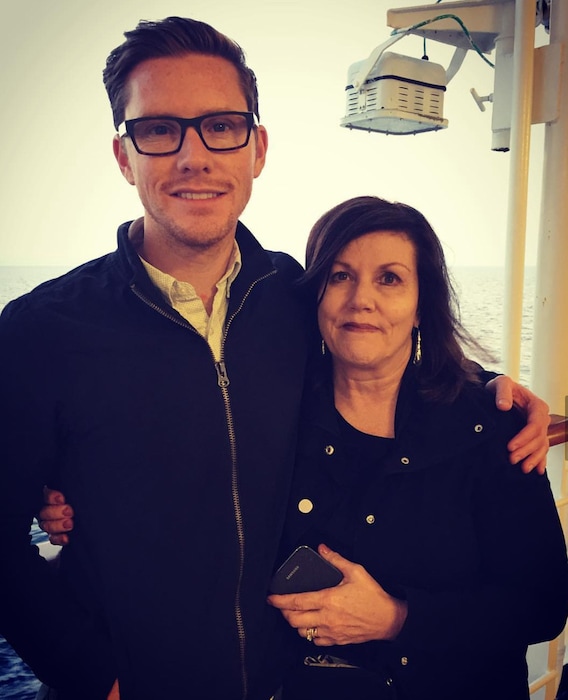
Mom has continued this selflessness through the years, befriending her elderly neighbors even as she has become closer to them in age. (Mother, if you’re reading this, and I know you are, you don’t look a day over 50.) There’s a realistic future scenario in which my 100-year-old mom is carting an 80-year-old to visit an optometrist. Mom will fail to recognize the age gap no matter which end she caps.
When I recently commended her for her efforts, she said, “It wasn’t like I was doing a service, Eli. Those women filled a need for me more than I ever did for them. They taught me how to be a mom when I was young and didn’t know what I was doing.”
‘I brought her lilacs from my backyard’
A year or two ago, one of mom’s closest friends, an elderly woman who lived down the street from her for decades, died after a long, sad battle with Alzheimer’s. Even toward the end, this friend still remembered my mother, often wandering down the street to find her because mom’s presence was comforting.
Mom was asked to speak at the funeral. I was out of town, but my husband, Skylar, offered to attend to support her. He called me with a frog in his throat as soon as the services concluded to tell me about something mom said during her eulogy that stood out to him:
“My dear friend’s favorite flowers were lilacs because they made her think of her mother. So each spring I brought her lilacs from my backyard, and I did this, year after year, until she couldn’t remember why she loved them anymore.”
“I can’t stop thinking about it,” Skylar said. “The way she said it was like she was trying to sum up how it feels to slowly lose someone you love.”
I confess it never really occurred to me, at least not explicitly, until that moment, that mom’s hobby or habit or whatever you call it, almost has inevitable grief baked into it. And I suppose that makes it all the more remarkable that she has chosen it again and again for the past 50 or more years. That she repeatedly invests in new long-term friendships with every bit as much purpose as any other relationship, even when the cruel nature of mortality suggests the relationship may not be long for this world because the friend may not be long for this world.
What I know for certain is that if I ever find myself widowed, alone, needing help, I’ll be hoping there’s a Cathie McCann nearby who notices. And if I find him or her, I’ll sew their children jingle socks until my fingers bleed.
(Sarah Baltz) Tribune guest columnist Eli McCann.
Note to readers • By the way, Tuesday, June 23, is recognized as International Widows’ Day. Eli McCann is an attorney, writer and podcaster in Salt Lake City, where he lives with his husband, child and their two naughty (yet worshipped) dogs. His new book is “We’re Thankful for the Moisture: A Gay Guy’s Guide to Mormon Faith, Family, and Fruit Preservation.”