 Tamarra Kemsley
 David Noyce
Since its founding, The Church of Jesus Christ of Latter-day Saints has tried — and usually failed — to convince evangelicals that its members are also Christian.
This was the fraught landscape into which the U.S. Department of Defense inserted itself recently when it withheld the “Christian” designation next to the Utah-based faith’s entry in a new list of religious codes used by its Chaplain Corps.
The department, led by conservative evangelical Pete Hegseth, has since issued a new directory, which removes the “Christian” label altogether, leading many in the Latter-day Saint community to declare victory.
But shouldn’t members of the church be equally outraged on the behalf of the roughly 180 faith identities culled from the tally entirely as part of the same process?
So asked Latter-day Saint convert Joseph DuWors, a retired Army major and chaplain, in The Salt Lake Tribune’s “Mormon Land” podcast dissecting the 200-year-old theological debate between Latter-day Saints and evangelicals.
Here are edited excerpts from that show featuring DuWors, a doctoral candidate in Mormon studies at Claremont Graduate University, and Nathaniel Wiewora, a Harding University professor and author of the 2024 book “Sins of Christendom: Anti-Mormonism and the Making of Antebellum Evangelicalism.”
What is this list of religious codes anyways? Who uses it and how?
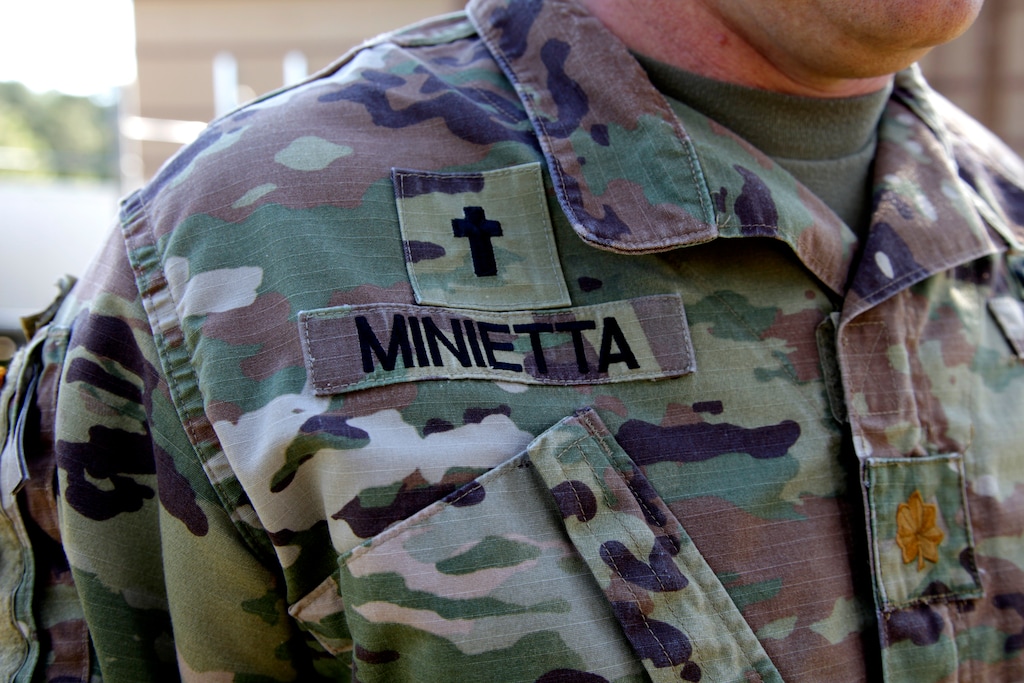
DuWors • The first time soldiers encounter this list is when they join the military and declare what their religious affiliation is, and that goes on to their dog tags. So it becomes a really important emblem of identity. And for the rest of their career, they may never interact with this particular list again.
Their chaplain, however, can pull a religious preference report that shows the breakdown of all the service members in their unit at any given time and they’ll be able to see that identification.
What was your reaction to the announcement of the changes?
DuWors • The question about who is and who isn’t Christian, that’s really not important to me. What is more important is why we are developing a solution in search of a problem. As a former chaplain who worked rigorously with this list, I’m very familiar with it. Sean Parnell, the spokesperson for the Department of Defense, framed the decision as trying to make the chaplain’s burden somehow lighter, which is not a concern I have ever experienced as a chaplain.
(Joseph DuWors, Nathaniel Wiewora) Latter-day Saint convert and retired Army major and chaplain Joseph DuWors joined scholar of American Christianity Nathaniel Wiewora to talk about the long-standing tensions between evangelicals and Latter-day Saints.
What was your experience as a Latter-day Saint chaplain? Was your faith ever viewed with suspicion?
DuWors • I would say yes, it was viewed occasionally by a soldier, occasionally by a fellow chaplain, with suspicion. But by and large, those are outliers. For the most part, I found the chaplain corps to be very, very professional.
What was the religion mix of the chaplains themselves?
DuWors • Speaking anecdotally, it tended to skew very evangelical.
What are the roots of this debate about whether Latter-day Saints are Christian?
Wiewora • It’s a question that has been really debated since the beginning of the church itself. Evangelicals in the 1800s were very interested in sussing out what this new religion was all about. They did very deep dives into the Book of Mormon and some of the earliest texts and practices.
It really kicked off when Joseph Smith and the Latter-day Saints established Nauvoo in Illinois. It’s one of the largest cities in Illinois. The Nauvoo Legion, led by Smith, is an army that’s about half the size of the U.S. Army. So for many Americans and many evangelicals, in particular, it’s like, look, there’s this theocracy, and it’s a threat.
Where it then picks up again is really in the latter half of the 19th century, particularly surrounding polygamy. You’ve got seemingly everyone going to visit Utah at the moment to see what this whole community was about.
Over the 200-plus years of this debate, there have been times when evangelicals very much pushed Latter-day Saints outside of orthodoxy and then moments when they adopted a begrudging acceptance. In the 21st century, those times would include 2008 with Proposition 8 banning same-sex marriage in California, or when Mitt Romney became the GOP presidential nominee in 2012.
(Chris Samuels | The Salt Lake Tribune) A Christus statue is on display at the Temple Square Visitors' Center. The debate over the Pentagon's list of recognized religions has largely focused on the question of whether Latter-day Saints are Christians.
What are some of the theological differences between the two groups?
Wiewora • Evangelicals view the Trinity as a Father, a Son and a Holy Ghost as one God, while Latter-day Saints would say it’s three distinct beings.
Many evangelicals take issue with this claim of continued revelation — that revelation didn’t stop back with the apostles in the first century, but that it was picked up in New York in the 1820s and continues to the present.
Besides theology, there have been differences in worship practices, particularly the rituals and rites that take place in Latter-day Saint temples, and social practices, as with polygamy.
DuWors • The way Latter-day Saints governed themselves as a theocracy in the 19th century was very problematic as well.
But let’s not forget, Joseph Smith came out swinging. His comments about Christianity from the very beginning were antagonistic. He didn’t do himself any favors by basically saying, “Look, all the other denominations are messed up and need fixing, and I’m here to do that.”
(Trent Nelson | The Salt Lake Tribune) A painting of Joseph Smith in the Joseph Smith Memorial Building in Salt Lake City. His revelatory claims have rankled Christians through the years.
How do you see the two sides talking past each other?
DuWors • I just think Latter-day Saints need to be very honest with themselves. We’re not trying to fit in with other Christian traditions that have emerged from early Christianity. We are distinctive. I think that’s very clear. I just think we need to be comfortable with that and not be offended when somebody uses their definition of Christianity to push us to the side.
When did this use of the word cult come into play?
Wiewora • I would imagine it’s a mid- to late-20th-century development because that’s when the whole study of cults sort of became really, really popular.
You know, it’s interesting. There was a Pew study back around the time of the Mitt Romney campaign that asked evangelicals what they thought about Latter-day Saints. And like the two most popular things were something to the effect of they’ve got really great families and they’re really patriotic — and they’re also a cult.
It’s a way to label Latter-day Saints as outsiders, to say, “They are not like us. They’re fake.”
How would you advise the church and individual Latter-day Saints to respond when this Christian question arises?
DuWors • This is possibly a concerning indicator about the direction that religious freedom may be headed within the Department of Defense. It may be nothing, but what we need to do is not focus so much on Latter-day Saints as Christians or whether they get the spelling correct.
What we need to be speaking about is religious freedom for all those who were taken off the list. Universal Unitarianism was removed. Wiccans were removed. Atheists and deists were removed. We can’t stop the conversation once they sort of satisfy and appease the Latter-day Saint concern. We need to be thinking bigger as members of a global church.
Wiewora • If I could speak to the evangelical part. I teach a class on The Church of Jesus Christ of Latter-day Saints, and it’s a really engaging class. The students are really interested. And one of the things I try to tell them on the first day of the class is that before you can do any sort of critical analysis, you have to be able to describe the church in a way that a member would feel is accurate.
Note to readers • To hear the podcast, go to sltrib.com/podcasts/mormonland. To receive ad-free “Mormon Land” episodes, along with our complete newsletter and access to all Tribune religion content, support us at Patreon.com/mormonland.