 Peggy Fletcher Stack
 David Noyce
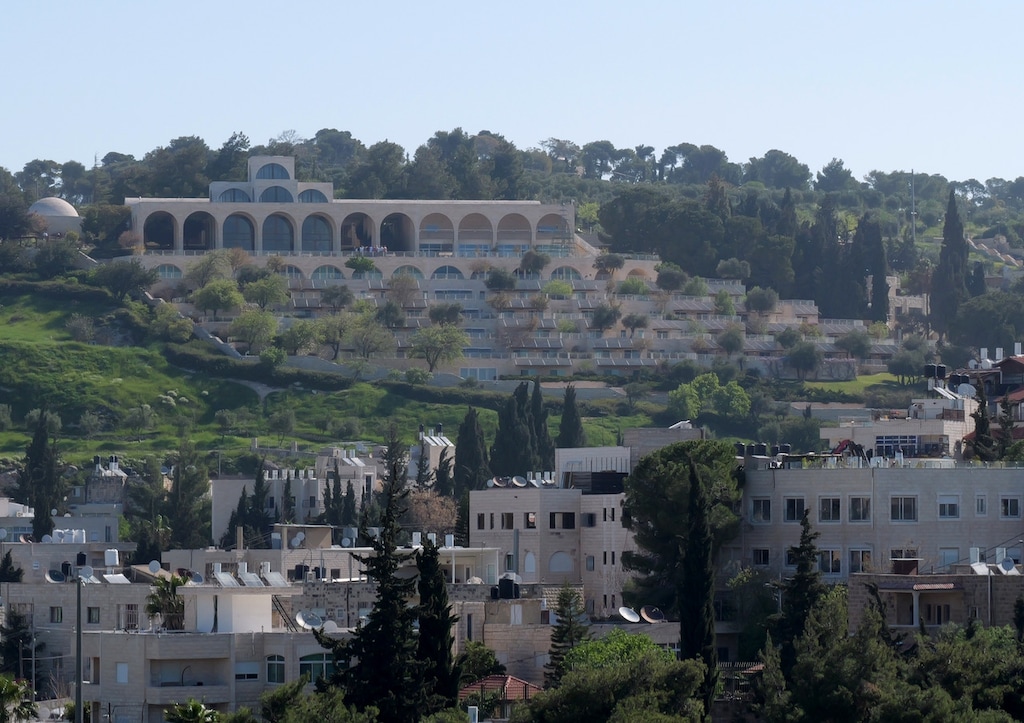
Amid the missile strikes in Iran and neighboring nations, the U.S. State Department has generally urged Americans to evacuate from the region, but The Church of Jesus Christ of Latter-day Saints is having its members, including those at Brigham Young University’s Jerusalem Center for Near Eastern Studies, hunker down where they are.
“Because of the specific circumstances of our members in the region, church leaders believe sheltering in place currently offers the safest and most secure option,” the Utah-based faith said in a statement Friday. “Consequently, there are no plans for a general evacuation of students, faculty, church staff, and service volunteers at this time, though the church is facilitating travel for those who wish to depart and are in a position to do so safely.”
Officials at BYU’s Jerusalem Center reached a similar conclusion.
“We believe of the options available to us at the present (evacuate by buses to either Cairo or Amman or shelter in place),” the center said Wednesday on its website, “that by far the least risky option for students and expat personnel … is to remain at the center, which is in a safe area of Jerusalem and which has extensive security protections and easy access to within-center shelters and safe rooms.”
The statement added: “Doing so also facilitates [student] studies.”
The center noted that U.S. Ambassador to Israel Mike Huckabee also has urged Americans there to shelter in place.
“While the U.S. Department of State has made a general recommendation for Americans to evacuate,” the church pointed out Friday, “government officials have also noted that where departure is not safe or feasible people should shelter in place.”
Still, many of the thousands of Latter-day Saints living and working in the Middle East either have left or may be trying to flee, and the church is working to help them do that.
“Church members in the region are making individual decisions based on employer requirements and personal circumstances,” the faith said. “...We are grateful to report that all students, faculty, church staff, and service volunteers are accounted for and safe.”
Citing “serious safety risks,” the U.S. government advised earlier this week that Americans depart from 14 countries: Bahrain, Egypt, Iran, Iraq, Israel, the West Bank and Gaza, Jordan, Kuwait, Lebanon, Oman, Qatar, Saudi Arabia, Syria, United Arab Emirates and Yemen.
Because none of these countries allows proselytizing, the number of Latter-day Saints there is relatively small, said independent demographer Matt Martinich, who tracks church growth around the world.
The United Arab Emirates has the most members — about 1,800, Martinich said. “Half are Westerners and the other half are Filipino.”
That mostly Muslim country has six congregations, he said. The church also announced plans in 2020 to build its first temple in the Middle East in Dubai.
Ground has not yet been broken on that temple.
The second biggest Latter-day Saint population is in Saudi Arabia, but Martinich could not give exact numbers, he said. Qatar is third and Kuwait is fourth.
Egypt has between 300 and 400 members, the demographer said, in two small congregations — one English speaking, the other Arabic speaking.
The church reaffirmed Friday its statement from the past weekend, saying that it “cares deeply about the safety and well-being of everyone in the Middle East.”
Hired in 1991 to cover Utah's various faiths, particularly Mormonism, Peggy has talked forgiveness with Archbishop Desmond Tutu, nearly fainted waiting for the Dalai Lama, fasted with Muslims during Ramadan — and has reported on 50 consecutive semiannual LDS General Conferences.
David is a managing editor at The Tribune, where he has worked since 1984. He oversees coverage ranging from local government and west-side issues to growth, development and housing. In addition, he directs religion reporting, co-hosts the award-winning “Mormon Land” podcast and writes the Mormon Land newsletter.