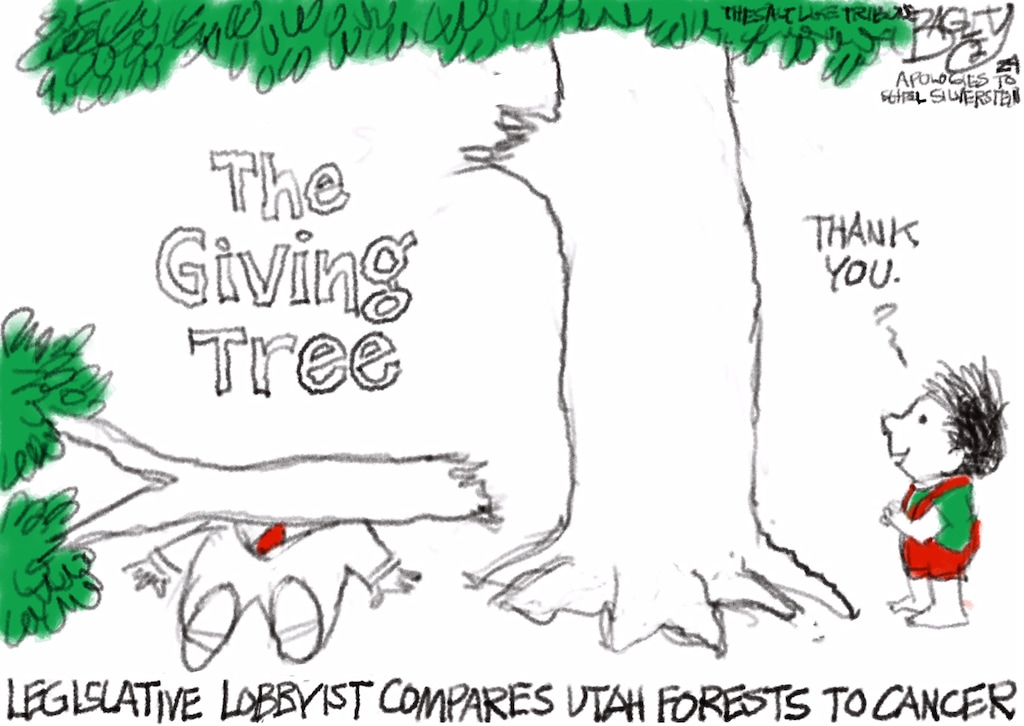
The Fix Our Forests Act is a disturbing bill that, for me, echoes lessons from childhood. I remember my mom reading Shel Silverstein’s “The Giving Tree” to me and asking her why the story made her cry. She explained that taking everything from trees for yourself hurts the tree and other animal that depend on it. The Fix Our Forests Act is this story, albeit with wider implications.
Forests worldwide are already imperiled, largely due to human activities, from increasing CO2 to poor water management and everything in between. The associated changes in forest composition spiral into altered species distribution, which then generates cyclical imbalance. It’s clear that our forests are not at fault for the dramatic increases in wildfires. The wildfires are a natural response to decades of cumulative resource mismanagement.
Arguably, the Fix Our Forests Act is little more than an opportunity to expedite logging practices. It restricts opportunity for public comment and permits logging to proceed even in circumstances where courts reject proposals. Again, wildfires are a symptom of profound mismanagement. The only reasonable remedy is to target the issue at its source—reckless overuse and human activity.
“The Giving Tree” concisely suggests that the end of the main character’s life coincides with that of the tree. The same is true for Americans and our forests. From the base of the food web to its apex, life in the U.S. and the planet overall, depends on the natural cycles that forests facilitate. Disrupting this core pattern is a bottle neck for the future of humanity and life itself. It’s not our forests that need fixing; it’s our political system. We must loudly oppose the Fix Our Forests Act and vote like our lives depend on it. Because they do.
Rachel Engar, Bountiful