After the Republicans’ massacre in last week’s midterms, Vice President JD Vance identified four issues that the party must confront if it wishes to win back popular support: the war in Iran, the affordability crisis, the Trump administration’s failure to “put America first” and Washington’s love affair with Israel.
This list falls short of an honest reckoning. Even in the face of a historic defeat, there are some problems members of the administration like Mr. Vance will not touch. There is a real chance that neither the Republican Party nor its pundits will admit to, much less analyze, the deeper causes of our defeat.
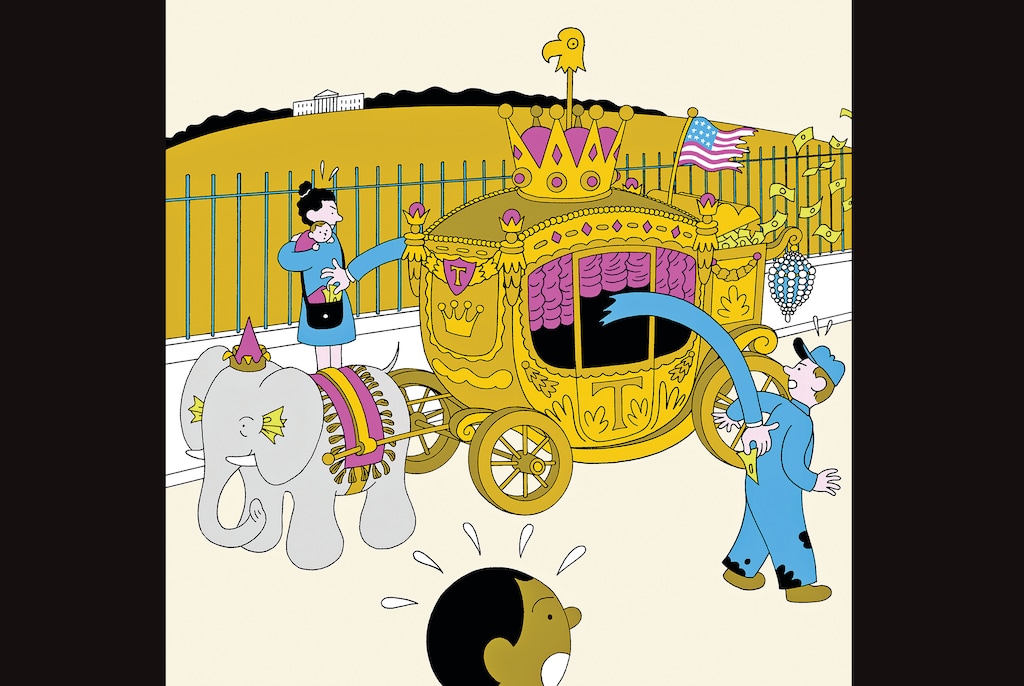
Chief among these unacknowledged causes: plain, old-fashioned graft. The importance of corruption to voters has risen steadily during President Trump’s second term. Right up to Election Day, Republicans failed to grasp the potency of the issue.
Their surprise is astonishing: Mr. Trump ran as a populist. In giving Mr. Trump a second chance, the American people expected him to act like one. They did not expect a parade of millionaires and billionaires cashing in at their expense.
We Republicans betrayed our mandate. Neither the platform that Mr. Trump ran on nor the electoral coalition that brought him to power can survive this betrayal. This must be the first lesson Republicans learn from our defeat.
Few Democrats will be surprised that public fury over corruption plays a decisive role in national politics — after all, they spent much of 2026 rousing voters with this issue. This was the engine that powered Senator Jon Ossoff’s 18-point victory in Georgia. In rally after rally, he claimed the populist mantle for his party, decrying the “Mar-a-Lago mafia” who “spent most of last year trying to cover up for the world’s most famous pedophile while the crook president and his crook family raked in billions.” While you bore the cost of inflation, he told voters, “your tax dollars were put to work backing Trump’s businesses.”
This was a winning message. It was also, as seen in multiple national polls by early October, the leading issue for the American voter. Yet outrage over corruption has caught the right unprepared. This was not the case with the other core issues of this election — the fighting in the Persian Gulf and economic unease.
On Iran, we have barely staved off a full schism within our own ranks. But no internecine debate on corruption threatens to tear the G.O.P. apart. So slow were conservative pundits to perceive this new wave of public anger that we still have not fashioned stock talking points in response to it. Mr. Vance’s remarks confirm the omission.
How did we find ourselves responding to this pressing issue so feebly? There are many plausible answers to that question. It is poor politics — especially in an election year — to call attention to your party’s underbelly. Those who did see the electoral consequences of corruption looming on the horizon might not have had the courage to say as much to the president. Even if he were warned, he might not have listened.
In my discussions with Republicans great and small, I have been surprised, and dismayed, by how quick the right has been to dismiss the force of this issue. The temptation is to write off the whole business as AstroTurfing, or as displaced economic discontent, cleverly channeled by Democratic activists into a platform for prosecution.
There is logic to this skepticism. It springs from a lesson that Republicans drew from Mr. Trump’s 2024 victory, which was understood as the final repudiation of “resistance” liberalism. In the Trump era, progressives vilified him as a threat to the rule of law, America’s civic norms and the integrity of America’s republican institutions. They elevated this critique to a central theme of the 2024 election, which was framed by Democrats as a contest that pitted them, independents and mainstream Republicans committed to saving democracy against MAGA Republicans committed to destroying it. The electorate chose Mr. Trump.
Republicans drew a particular lesson from that: The concerns of America’s educated liberals were not the concerns of the wider electorate. Ordinary Americans just do not care much about the procedural integrity of America’s hallowed institutions. To the average voter, those are airy abstractions. The educated liberal will vote on abstractions; the ordinary American will not. And it is the ordinary American, not the educated liberal, who has the power to elect presidents and senators.
Here the American right correctly clocked the defining weakness of American liberals: They conflate rules with results. After the election, it was fashionable for young rightists to express this idea by quoting the film “No Country for Old Men”: “If the rule you followed brought you to this, of what use was the rule?”
Democrats deified rules — and lost. Mr. Trump would not repeat their mistake. He would bend the rules. Republicans understood that the president and his party would be judged on what he did for his nation, not on how he did it. For the right, this was the lesson of Mr. Trump’s victory: In American politics, outcomes are all that matter.
There is merit in this view, but also danger. It blinded otherwise perceptive Republican operatives to the political risks caused by Mr. Trump’s grift and graft. They heard how the liberal commentariat framed the problem: a crisis of criminal malfeasance, a breach in the rule of law, a degradation of the presidency. And they dismissed it as warmed-over resistance rhetoric — just with dollar signs thrown in.
That is where Republicans erred. They misjudged what corruption means to ordinary American voters. These voters do not care about corruption for the reasons liberal columnists tend to, but they are no less angry. These voters see corruption for what it is: rich men getting richer at their expense. Americans hate — really, truly hate — to play the patsy: Corruption makes a patsy of us all.
Of all men, Mr. Trump must know this. After all, he was the one who told us that the United States had been compromised by an insular elite that freely used the power of the federal government to enrich itself and its clients. He was elected to change that.
Having bought a populist vision, the American people expected a populist president. They might forgive Mr. Trump for bending democratic procedure on their behalf. They will not forgive him for tolerating, much less promoting, the very behavior he was elected to flush out.
A new wave of red state Democrats understands this. Democrats are poised to swamp Washington with an endless series of hearings and investigations. In this environment, Republicans will be tempted to defend the rot rather than root it out. That road ends in a permanent minority.
The only question is whether the American right is prepared to face this reality. Our opponents have already rendered their verdict. As Senator Ossoff put it on the stump, “They are literally the elites they pretend to hate.”
Tanner Greer is an essayist who frequently writes about politics and international affairs at The Scholar’s Stage. This article originally appeared in The New York Times.