 David Noyce
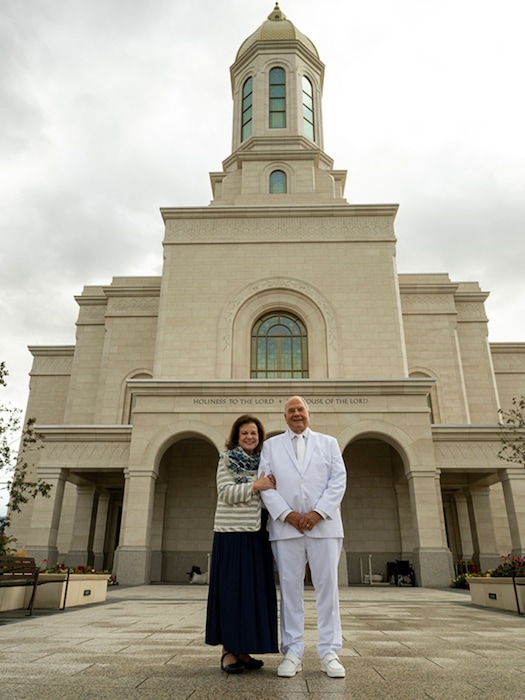
Ephraim is a rural college town, complete with dorm rooms, coffee shops, burger joints, pizza takeouts and now a Latter-day Saint temple.
On Sunday, apostle Ronald Rasband, a high-ranking leader of The Church of Jesus Christ of Latter-day Saints dedicated the Ephraim Temple and pointed out the presence of Snow College in the central Utah city.
He said the edifice, just blocks away from campus, will allow the Latter-day Saints among Snow’s 5,500 students to participate in the “gathering of Israel” by performing proxy ordinances in the nearby temple for those who have died and filling full-time missions in a quest for converts across the globe.
“We gather Israel on both sides of the veil,” Rasband said in a news release. “We gather them on the other side through the work we do in the temple. And we gather them on this side of the veil by missionary work. And that’s what role they [young students] are going to have, let alone getting married, having children, having families.”
(The Church of Jesus Christ of Latter-day Saints) The Ephraim Temple, near Snow College, towers over the town.
Snow College student Katelyn Perry said she is eager to take a break from her college studies and feel the peace she finds in the temple.
“It is my favorite place to be,” she said in the release. “To be calm and to just get away from the world and know that God is there.”
(The Church of Jesus Christ of Latter-day Saints) The Celestial Room of the Ephraim Utah Temple.
Rasband, whose great-great-grandparents settled in Ephraim in 1850 after leaving Denmark, called the temple’s location “sacred ground.”
“In the temple,” Rasband said, “we become more Christlike, more kind, forgiving, repentant, patient and holy.”
The two-story, 40,000-square-foot building includes two towers, the taller one soaring nearly 160 feet, without the golden Angel Moroni statue found atop many of the faith’s temples.
Seven miles to the south, the Sanpete Valley hosts another Latter-day Saint temple, the pioneer-era Manti Temple, which Rasband’s great-grandfather helped build. Having two “Houses of the Lord” so close together in a sparsely populated farming region is unusual.
It came about in 2021, when the Utah-based church unveiled plans to renovate the Manti Temple and remove its murals, including the renowned World Room painting by celebrated Latter-day Saint artist Minerva Teichert.
(The Church of Jesus Christ of Latter-day Saints) Ordinance room in the renovated Manti Temple displays the restored and brightened Minerva Teichert mural.
The proposal ignited widespread protests, petitions and phone calls. Within a couple of months, the church reversed course, revealing plans to retain and restore the murals, and announcing construction of the Ephraim Temple.
The Manti Temple reopened to the public in March 2024 to widespread praise from preservationists.
Of the two temples, the brand-new Ephraim edifice will be the “workhorse” and the historic Manti structure “will be the show horse,” Latter-day Saint Michael Austin, Snow’s provost and vice president for academic affairs, said in a previous interview.
(The Church of Jesus Christ of Latter-day Saints) The Manti Temple is one of 32 existing and planned temples in Utah.
Both buildings are part of the faith’s 32 existing or planned temples in the Beehive State.
Unlike the church’s more common meetinghouses, temples are where the devout participate in their faith’s highest religious rites, such as eternal marriage.