As people of faith and conscience, we believe every person bears inherent dignity.
This conviction does not depend on citizenship status, political affiliation or where someone was born. Instead, it is rooted in our deepest moral traditions and in the values that have long shaped Utah communities. Across our faith traditions, we are called to love our neighbors and to welcome the stranger among us.
For that reason, we oppose the proposed construction of a massive immigration detention facility in Salt Lake City.
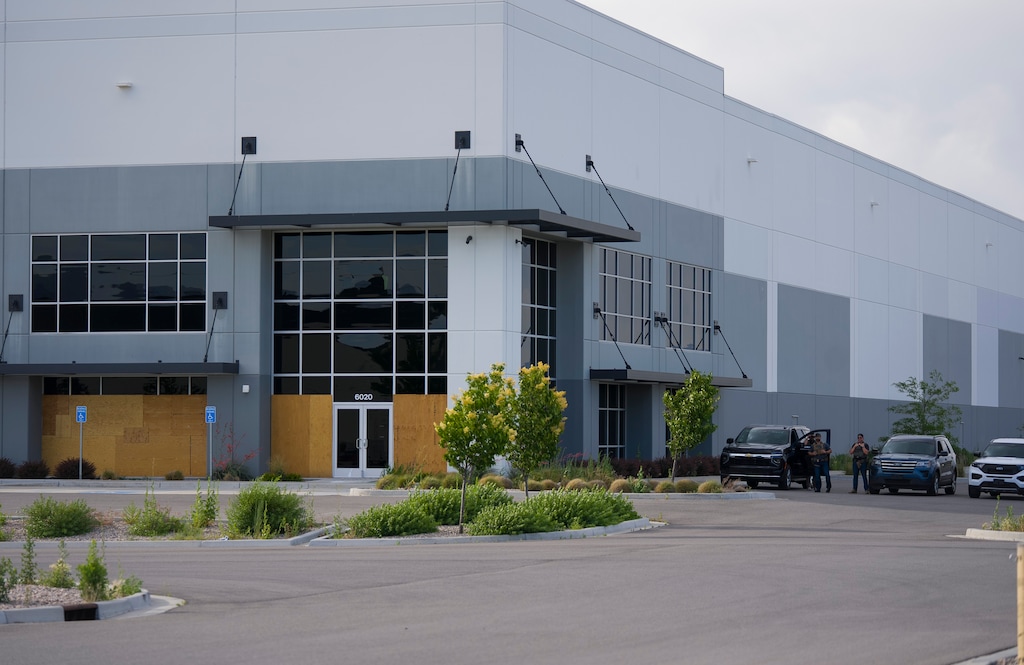
Reports indicate that federal officials are considering converting an 833,000-square-foot warehouse on the west side of the city into an immigration detention center capable of holding between 7,500 and 10,000 people. If built, it would be among the largest immigration detention facilities in the United States and would serve as a major detention complex for immigration enforcement across the Intermountain West.
Every nation has both the right and the responsibility to manage its borders and maintain an orderly immigration system. The question before us, however, is whether a detention facility of this scale advances both of those goals.
We believe it does not.
Utah is home to about 340,000 foreign-born residents, or nearly one in 10 Utahns. They are our neighbors, coworkers, business owners, healthcare workers, educators and members of our congregations. Immigrants contribute significantly to Utah’s economy and comprise more than 12% of the state’s workforce. They strengthen our communities and help meet critical workforce needs across the state.
The reality of immigration in Utah is complex. According to recent estimates from the Migration Policy Institute, around 138,000 Utah residents currently lack permanent legal status, or live in some form of immigration limbo, including asylum seekers, DACA recipients and others awaiting legal resolution.
Reasonable people may disagree about immigration policy. Regardless of where one stands politically, we should be able to agree that a warehouse designed for logistics and freight movement is not an ideal, nor an ethical, model for housing and transporting thousands of human beings.
Local officials have raised concerns about the facility’s impact on infrastructure, transportation, public services, economic development and community wellbeing. Questions remain about costs, oversight, detention conditions and the long-term effects on the surrounding area. These concerns deserve serious consideration before Utah becomes a model for national detention strategy.
We are also concerned about the message such a facility sends. A detention center of this scale risks defining Utah’s role in immigration policy through confinement rather than constructive solutions.
As faith communities, we believe public policy should never lose sight of the people whose lives it affects. In the Gospel of Matthew, Jesus teaches, “I was a stranger and you welcomed me.”
That call does not relieve governments of their responsibility to enforce the law, but it does remind us that every policy touches the lives of human beings. Public policy should reflect both accountability and humanity. We can uphold the rule of law while also insisting on dignity, transparency and proportionality.
There are better paths forward. Investments in immigration courts, case management programs, legal representation, workforce authorization systems and orderly legal pathways have demonstrated success in improving compliance. These approaches recognize both the legitimate interests of government and the humanity of those navigating the immigration system.
We therefore urge federal officials to abandon plans for a mega-detention facility in Salt Lake City and instead pursue solutions that are effective, accountable and consistent with the values we share as Utahns.
We also encourage our fellow residents to remain engaged. Not everyone can attend rallies, organize campaigns or become a full-time advocate. Everyone, though, can participate in civic life by informing themselves.
Learn about the proposal. Speak respectfully with neighbors. Contact elected officials. Support organizations serving immigrant families. Pray, reflect and consider how our shared values should shape public policy.
The future of Utah will be determined by the choices we make together. Let us choose a future that upholds the rule of law while honoring human dignity, strengthening communities and reflecting the compassion, wisdom and courage that Utahns have long demonstrated.
That is the Utah we hope to build.
(Episcopal Diocese of Utah) The Rt. Rev. Bishop Phyllis Spiegel is the Twelfth Bishop of the Episcopal Diocese of Utah.
The Rt. Rev. Bishop Phyllis Spiegel is the 12th bishop of the Episcopal Diocese of Utah.
(Episcopal Diocese of Utah) The Rev. Dr. Meghan Johnston Aelabouni is the Bishop of the Rocky Mountain Synod of the Evangelical Lutheran Church in America.
The Rev. Dr. Meghan Johnston Aelabouni is the bishop of the Rocky Mountain Synod of the Evangelical Lutheran Church in America.
The Salt Lake Tribune is committed to creating a space where Utahns can share ideas, perspectives and solutions that move our state forward. We rely on your insight to do this. Find out how to share your opinion here, and email us at voices@sltrib.com.