Gov. Spencer Cox declared June “Fidelity Month,” calling on Utahns to recommit themselves to faith, family and country, replacing the Pride Month declarations he issued in previous years.
I agree June should be about fidelity. If fidelity means being loyal and steadfast to foundational values, I wholeheartedly agree.
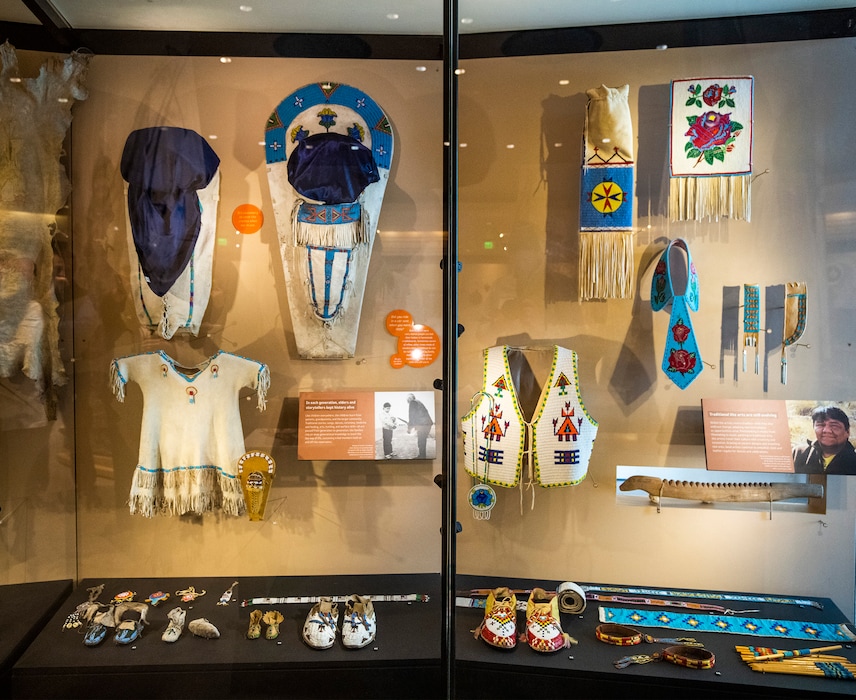
We should absolutely recommit to the values the people who lived on these lands long before Utah was a state practiced here for thousands of years.
As a Licensed Clinical Social Worker dedicated to helping our community live and love well through both community nonprofit work and counseling support, I am deeply committed to social justice and the awareness of systemic structures and practices that help or hurt our community. In addition to my professional outlook and experience, Indigenous values of community, gratitude and inclusion inform my personal and familial practices. My immediate family members include citizens of the Muscogee (Creek) Nation, currently headquartered in Oklahoma and previously driven out of the Southeast in the Trail of Tears.
Many Indigenous cultures practiced values that seem increasingly absent from modern American life: caring for the collective rather than elevating radical individualism; honoring elders; sharing responsibility for children; respecting the earth as a living relative rather than a commodity; and making decisions with future generations in mind.
These traditions were grounded in reciprocity, stewardship and kinship — principles embodied in Wahkohtowin, a Cree word meaning our lives are interconnected and our responsibilities extend beyond ourselves to our families, communities, the natural world and those yet to come. Many Indigenous cultures emphasized cooperation over competition, stewardship over ownership and community accountability over personal gain, encouraging people to ask not only what benefits themselves, but what strengthens the whole.
Earlier this year, Utah lawmakers slashed funding for the Utah Women and Leadership Project and A Bolder Way Forward, statewide initiatives making huge strides in strengthening the impact of Utah girls, women and families.
At a time when women in Utah continue to face significant challenges in representation, safety and equality, the steep cuts send a troubling message about whose voices, experiences and leadership Utah’s lawmakers consider essential to the future of our communities.
Many Indigenous nations understood strong families and strong communities depended on women’s wisdom, leadership and authority. In “The Sacred Hoop: Recovering the Feminine in American Indian Traditions‚” Paula Gunn Allen describes communities in which women held significant social, political and spiritual influence and argues that colonialism often replaced these systems with more patriarchal structures.
If fidelity to family is truly the goal, we should elevate women’s voices rather than diminish them. Communities are strongest when the collective recognizes that every member has something valuable to contribute and we share leadership, insight and responsibility.
Many Indigenous nations also recognized and honored individuals who embodied both masculine and feminine spirits. Today, many Native people use the term “Two-Spirit” to describe identities that existed long before modern political debates about gender and sexuality. Rather than treating difference as a threat to family or community, many Indigenous cultures understood that diverse identities and expression held a valued and respected place within the tribe.
If we are concerned about the decline of community, perhaps we should look to traditions that centered on belonging rather than exclusion.
If we are concerned about faith, family and community, we must measure fidelity by more than declarations. It must reflect it in the choices we make and the policies we support.
Recently, Utah lawmakers approved tax cuts while reducing or eliminating funding for several social programs and community services. If fidelity to family is truly a guiding value, surely it requires investing in the well-being of children, supporting vulnerable families, caring for elders, addressing mental health needs and ensuring communities have the resources they need to thrive.
As historian Roxanne Dunbar-Ortiz documents in “An Indigenous Peoples’ History of the United States,” displacement of Indigenous peoples, violence, treaty violations and efforts to suppress Native cultures accompanied the nation’s growth. If we are concerned about morality, perhaps fidelity means more than commitment to family, to include commitment to honesty and candor about the histories of the state and country.
If we are concerned about faith, perhaps fidelity means humility enough to recognize spiritual wisdom did not begin with European settlement and vibrant faith traditions on this continent have sustained communities for thousands of years.
And if we are concerned about family, perhaps fidelity means supporting all families, all children and all members of our communities — not just those who fit a rigid mold.
So yes — let’s talk about fidelity.
Fidelity to community.
Fidelity to the land.
Fidelity to truth.
Fidelity to accountability.
Fidelity to caring for those who are struggling.
And fidelity to the principle that every person deserves belonging, dignity, and respect.
Those seem like values worth being faithful to.
(Camille Van Wagoner Hawkins) Camille Van Wagoner Hawkins is a Licensed Clinical Social Worker with experience in Utah nonprofit and community settings since 2007. Her husband and son are citizens of the Muscogee (Creek) Nation.
Camille Van Wagoner Hawkins is a Licensed Clinical Social Worker with experience in Utah nonprofit and community settings since 2007. Her husband and son are citizens of the Muscogee (Creek) Nation.
The Salt Lake Tribune is committed to creating a space where Utahns can share ideas, perspectives and solutions that move our state forward. We rely on your insight to do this. Find out how to share your opinion here, and email us at voices@sltrib.com.