Utah has one of the youngest populations in America. We pride ourselves on being a state where young families can put down roots, build businesses and build wealth. But for many of our children, that path is slipping out of reach.
When people talk about Utah’s housing affordability challenges, they usually point to interest rates. Rates matter. But even if they fall, affordability won’t return in many communities unless we confront a harder truth: In city after city, local land-use policy is making attainable housing impossible to build.
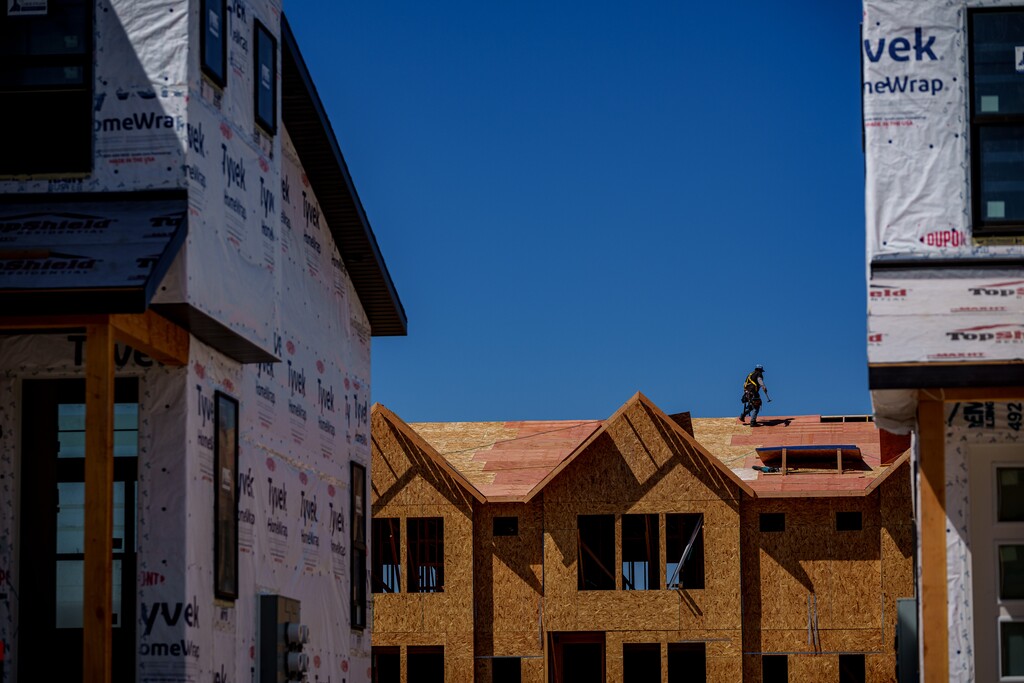
My company, J Thomas Homes, has spent more than 20 years building entry-level homes and townhomes across Utah, Idaho and Arizona. These are the homes first-time buyers depend on. Over the past several years, they have become the hardest homes to deliver.
Everyone says they support affordable housing. City councils adopt resolutions. General plans use the word “attainable.” Yet too often, the same cities adopt zoning codes and design mandates that restrict supply, inflate costs and ensure that only higher-priced housing ever gets built.
This is not a market accident. It is a policy outcome.
The city of North Logan provides a clear example of how this can go wrong.
In 2024, North Logan ranked among the slowest-growing cities in Utah, with population growth turning negative. Unlike many built-out communities, it still has developable land and strong regional demand. Yet recent land-use decisions have made delivering attainable housing there extraordinarily difficult.
Since the preparation and 2025 adoption of a new form-based code, I know of at least four housing projects — totaling roughly 500 units — have been halted or abandoned because they could not comply with the new requirements while remaining economically viable. These projects included both rental and for-sale housing that would have helped ease supply pressure in Cache Valley.
When hundreds of homes disappear from the pipeline, prices don’t fall. They rise.
Several elements of the new code illustrate a broader problem that extends beyond one city.
In certain areas, the code effectively mandates three-story townhomes rather than two-story units. Adding a third story adds tens of thousands of dollars in cost while creating smaller bedrooms and additional stairs, limiting appeal for families and older buyers. In dense urban cores, that tradeoff can make sense. In a largely suburban or rural community, it simply forces buyers to pay more for less.
The code also encourages condominium product in a market where condos can be difficult to finance and insure, particularly for first-time buyers relying on conventional mortgages. Treating condos as an entry-level solution without accounting for financing realities reflects a disconnect between planning theory and market conditions.
Layered on top of these structural requirements are “New England” aesthetic mandates: prescribed architectural styles, minimum brick percentages, roof pitch standards and detailed design elements. Each may appear minor. Together, they add significant cost without increasing functionality or livability.
The housing market is not theoretical. It runs on supply and demand. When regulations increase cost without increasing value, one of two things happens: prices rise or housing doesn’t get built.
The consequences extend beyond individual developments. Homeownership remains the primary way middle-class families build wealth. Realtor.com recently reported that the average homeowner is now 43 times wealthier than the average renter.
When local policy restricts entry-level supply, it limits not just housing choices but wealth-building opportunities for the next generation.
Utah has historically taken a pragmatic approach to growth. We’ve understood that a strong economy depends on housing availability for teachers, first responders, young professionals and working families. But if local codes continue to prioritize aesthetic theory over economic feasibility, we risk importing the very affordability problems that have plagued coastal states for decades.
If we are serious about keeping Utah a place where young families can thrive, we need greater accountability in housing policy.
First, cities should require independent economic feasibility analysis before adopting major zoning or form-based code changes affecting residential development. If no attainable housing product can be built under the proposed standards without subsidy, that is not an affordability policy — it is a supply restriction.
Second, success should be measured by outcomes: units permitted and units constructed. If housing production declines after a code change, policymakers should reevaluate those regulations.
Third, when projects meet clearly defined affordability benchmarks, cities should provide a streamlined, by-right approval path. If attainable housing is truly the goal, discretionary design review should not become the barrier.
Utah cannot solve its housing challenges by waiting for interest rates to fall. As long as regulations quietly prevent attainable homes from being built, affordability will remain out of reach for many young families.
If we want our children to afford homes in the communities where they grew up, we must ensure that our land-use policies allow those homes to be built.
(Morgan Cox) Morgan Cox is the CEO of J Thomas Homes.
Morgan Cox is the CEO of J Thomas Homes. He has a bachelor’s degree from the Jon M. Huntsman School of Business and an MBA from the Stanford Graduate School of Business.
The Salt Lake Tribune is committed to creating a space where Utahns can share ideas, perspectives and solutions that move our state forward. We rely on your insight to do this. Find out how to share your opinion here, and email us at voices@sltrib.com.