On Feb. 4, a proposal quietly introduced in the Utah Legislature could have far-reaching consequences for some of our state’s most vulnerable residents. Senate Joint Resolution 7 (SJR7) calls for a “transparent redesignation process” to review whether the Utah Disability Law Center (DLC) should continue as Utah’s federally designated Protection and Advocacy (P&A) agency.
On the surface, this may sound like routine government oversight. But make no mistake — this move risks dismantling one of the most critical safeguards for the rights of people with disabilities in our state.
As a member of the Disability Law Center’s Board of Trustees — and as someone who has spent more than 25 years working alongside individuals and families navigating disability — I have witnessed firsthand the indispensable work the DLC performs every day. The DLC ensures that people with disabilities can live, learn and work in the communities of their choice, free from abuse, neglect and discrimination.
To understand what is at stake, it helps to understand why P&A agencies exist. In the 1970s, after horrific, neglectful, and inhumane conditions in state mental institutions were exposed in the media, federal law mandated the creation of an independent P&A organization in every state and U.S. territory.
These organizations were explicitly designed to serve as independent watchdogs. Their job is to protect the civil and human rights of people with disabilities, whether they live in institutions, group homes or the broader community. To do this effectively, P&As must have the absolute independence to challenge public agencies and state policies when those rights are violated.
The Utah Disability Law Center has served as Utah’s P&A agency since 1978. Its authority flows directly from federal statute — not from state appointment, not from state funding and not from political goodwill. This design is intentional: It ensures that advocacy decisions are driven by the rights and needs of individuals with disabilities, not by political pressure or government convenience.
The DLC is highly accountable — both to its federal funders and to the public. Each year, it submits detailed performance reports, undergoes stringent federal audits and holds open meetings for community input. The DLC’s most recent financial and impact reports for the past five years are publicly available on their website.
Some arguments put forth by policymakers and some members of the public suggest the DLC should answer more directly to the state, or that it should serve “all disabled persons equally.” These claims, while well-intentioned on the surface, demonstrate a fundamental misunderstanding of how federal P&A programs are designed to work.
By federal mandate, P&A agencies must practice triage. They are required by law to prioritize individuals with the most significant needs — specifically those facing abuse, severe neglect or unnecessary institutionalization. Funding streams, such as the federal PAIMI program, are strictly designated for targeted advocacy among the population of people with mental illness where the risk to human life and liberty is greatest. Trying to dilute limited P&A resources to serve every Utahn with a disability equally would not only be logistically impossible, but it would also directly violate the legal requirements of federal P&A funding.
If a P&A agency could be removed whenever its work made powerful interests uncomfortable, independent rights-based advocacy would cease to exist. The DLC’s willingness to challenge restrictive guardianship laws, discriminatory institutional practices or government agencies that fail people with disabilities is not partisan — it is precisely what Congress envisioned when these programs were created. Advocacy that must avoid controversy to survive is not advocacy at all.
Reopening Utah’s designation process outside of federal criteria doesn’t just threaten the DLC. It threatens every person with a disability in Utah who may one day need someone to stand up for them.
Utah’s leaders have a choice. Rather than casting doubt on an agency that has served Utahns faithfully for nearly five decades, they can reaffirm this state’s commitment to the independence, accountability and dignity that people with disabilities deserve.
Protecting the Disability Law Center’s independence is not a partisan issue. It is a promise — Utah’s promise that no one will be left without recourse, no matter how little power they have.
Let’s keep that promise.
We encourage every Utahn — and especially every policymaker — to take the time to understand what the DLC does and why it matters. Visit disabilitylawcenter.org. Attend a public hearing or board meeting. Read the annual reports. Talk to families whose lives changed because the DLC had the independence and the courage to stand up for their rights, and most importantly, if you feel that the DLC could help you and your family, please reach out for help.
People with disabilities are not abstractions. They are our neighbors, our family members, our colleagues and our friends. They deserve advocates who can fight for them, support them and ensure that their rights and dignity are protected.
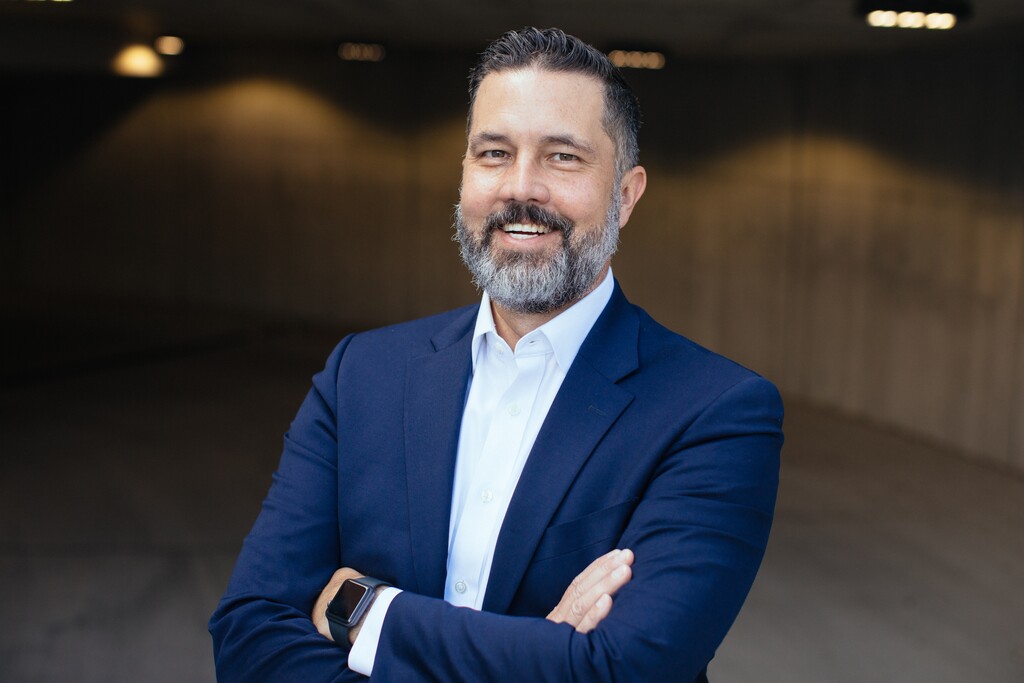
(Matthew Wappett) Dr. Matthew Wappett is a member of the Board of Trustees at the Disability Law Center. He is also the Executive Director of the USU Institute for Disability Research, Policy & Practice and has worked on disability policy and programs issues for over 25 years in Alaska, Idaho and Utah.
Dr. Matthew Wappett is a member of the Board of Trustees at the Disability Law Center. He is also the Executive Director of the USU Institute for Disability Research, Policy & Practice and has worked on disability policy and programs issues for over 25 years in Alaska, Idaho and Utah. The opinions in this editorial reflect his personal opinions and do not represent the position of the Disability Law Center Board of Trustees as a whole, or his employer, Utah State University.
The Salt Lake Tribune is committed to creating a space where Utahns can share ideas, perspectives and solutions that move our state forward. We rely on your insight to do this. Find out how to share your opinion here, and email us at voices@sltrib.com.