 Robert Gehrke
Utah officials who spent more than a year exploring whether the state should build a spaceport to support projected growth in rocket launches have an answer: Prepare for liftoff.
The home base for the projected $260 million project would be mostly on state and federal land near one of two Utah towns — Delta or west of Green River — under recommendations from the Spaceport Exploration Committee, which was created last year by the Legislature to study the feasibility and identify prime locations for the port.
Committee members are scheduled to present their recommendations to lawmakers Wednesday.
Their report identifies significant potential for growth in the space launch market. It cites projections by the U.S. Space Force of annual launches increasing from 183 last year to 497 by 2035. And, the report notes, President Donald Trump signed a National Security Presidential Memorandum in August with a goal of 1,000 annual launches and reentries by 2030.
The anticipated demand in launch capabilities, as well as tourism at the facilities, could generate as much as $117 million and create up to 590 jobs at Delta and up to $124 million and 610 jobs at Green River, according to consultants’ assessments.
The cost of the proposed spaceport, though, gave some members of the committee pause.
Rep. Jake Sawyer, R-West Haven, said at the committee’s final meeting recently that, if the state is putting up the full $260 million to build the facility, it wouldn’t break even on the project until 2065. And the number of jobs created, he said, would be a “very, very small portion” of the state’s overall economy.
Other members of the committee — like Aaron Starks, CEO and president of 47G, an aerospace and defense company — said taxpayers would not be expected to cover the full cost of the port.
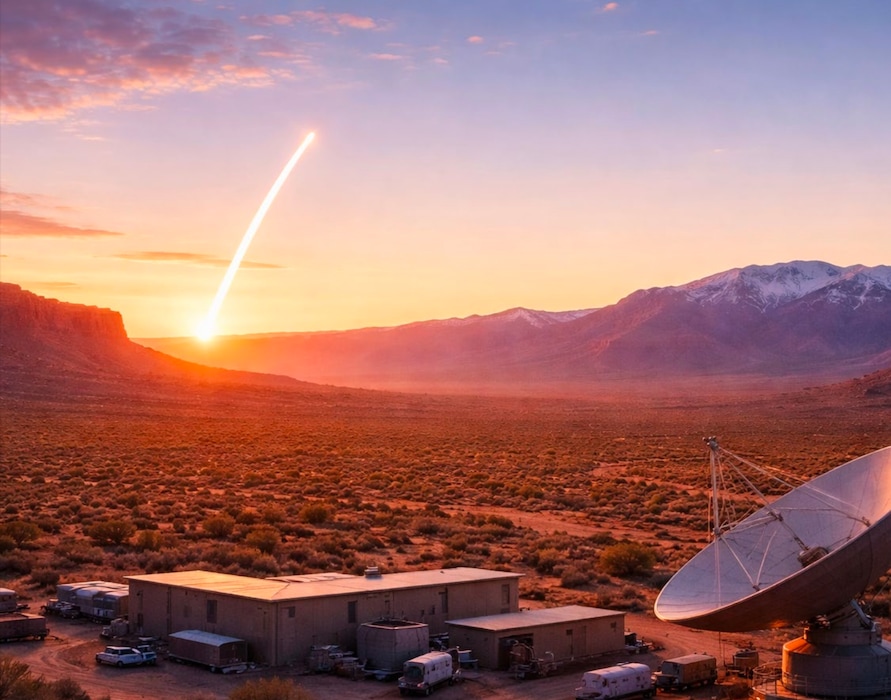
A Utah committee has recommended that the state consider Delta and Green River for a possible spaceport.
The committee is asking the Legislature for $3 million to pursue the necessary federal licensing and land rights. If, after that, there is demand for the launch facility, private financing and federal funds could help pay for the project.
The Utah Department of Transportation, potentially through a new Division of Astronautics, would spearhead the efforts.
“The intent here is not to have taxpayers pay $260 million,” Starks said. “We should not communicate that, because that’s false.”
Last month, the U.S. Federal Aviation Administration published a request seeking information on locations it should consider for a new launch facility. The committee put forward the Delta and Green River choices for consideration.
The spaceport committee looked at a total of seven sites around the state, including Wendover, Promontory, Bluff, Kanab and Vernal before settling on Delta and Green River as the preferred options.
Delta’s advantage was, in part, its proximity to the Air Force’s Utah Test and Training Range to the north and the restricted airspace that comes with it. It’s also near major highways and a rail line, and there are Bureau of Land Management and state lands where the port could be built. A planned 100,000-acre National Guard training range would “complement site operations.”
Green River was the most affordable to build and nearer to population centers. It was once home to a Cold War missile testing site and also close to highways, a rail line, and BLM and federal lands.
There are also disadvantages at each site. Sonic booms from launches at the spaceport would be more disruptive to population areas at Delta and to natural areas along the Green River location, including in Arches National Park. Green River’s proximity to its namesake river also means there are more protected species around that site than in Delta.
Neither site has known archaeological resources — like burial sites or rock art — although an on-the-ground assessment would need to be done to proceed on either location.
In the early 1970s, Utah was among the states competing to be the home of NASA’s space shuttle program. Then, as now, the proximity to the Air Force training range and Hill Air Force Base were key selling points.
But with no feasible location for the shuttle’s solid rocket boosters to splash down, NASA opted to locate the launch center at Cape Canaveral, Florida.