 Addy Baird
 Emily R. Anderson
For the first time in modern state history — and possibly ever — Utah will have unaffiliated lawmakers among its legislative ranks after two independent candidates won seats in the state House.
Sergio Sotelo, treasurer of a local electricians union, and Patrick Belmont, a Utah State University professor, won upset victories over GOP incumbents earlier this month. When the new lawmakers are sworn in early next year, Sotelo will represent the West Jordan area, and Belmont will represent part of Logan and Cache County.
Both said their victories reflect a remarkable shift in Utah politics and voters’ frustration with both local and national leaders.
“People are actually sending the message to the politicians that they need to get their act together and be a true representative,” Sotelo said in an interview Wednesday.
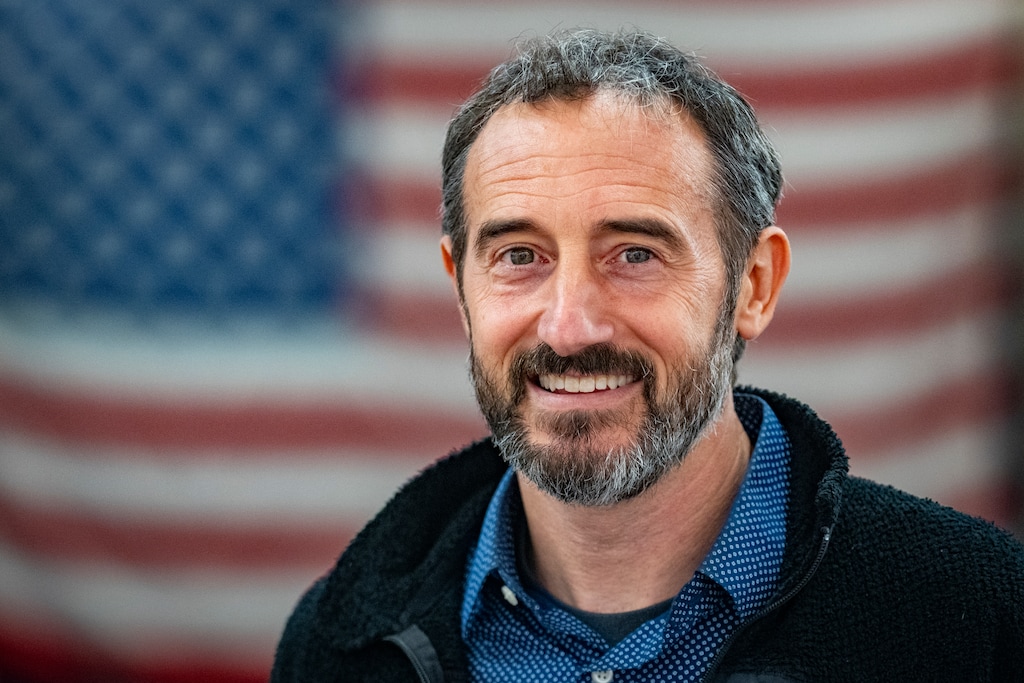
Sergio Sotelo, who will represent the West Jordan area in the Utah House as an unaffiliated lawmaker, talks to voters during his campaign for District 38.
Leaders of both parties in Utah say that message has been received.
“We had a repudiation election of Democrats two years ago, and now a repudiation of Republicans two years later,” Gov. Spencer Cox, a Republican, said during his monthly news conference on Monday. “That certainly would seem to mean that people are hungry for something different.”
“I’ve said for a long time, there’s a market failure in both parties,” Cox added, “and that neither party is being responsive to what people want, and we’ll see if either party figures that out.”
Utah House Minority Leader Angela Romero, a Salt Lake City Democrat, said she was shocked voters chose two unaffiliated candidates.
“I never thought I would see that in my lifetime,” she said in an interview with The Tribune last week.
She credited their wins to voters’ concerns about transparency, corruption and partisan politics influencing legislators’ decisions.
Legislative records don’t show historic unaffiliated candidates
It’s difficult to pin down when — or if — Utah last had an unaffiliated legislator. Brigham Young University political science professor Adam Smith looked back to 1934 and couldn’t find a confirmed unaffiliated lawmaker in the Legislature. It’s possible, he said, that Belmont and Sotelo are the first.
Reporters at KSL pointed to B. Spencer Young, who served one term beginning in 1933. He is listed in a historical database on the Legislature’s website, which includes incomplete party affiliation information, as being “Forward,” but newspapers from the time describe him as a Democrat. A separate record on the Legislature’s website lists no party affiliation for Young.
Young could not have belonged to the modern Forward Party because it was founded in 2021.
A Tribune review of available legislative records also turned up no confirmed independent lawmakers.
The state Senate does, however, currently have a third-party legislator. Sen. Emily Buss is a member of the Utah Forward Party representing District 11, which covers parts of Salt Lake, Tooele and Utah counties. Buss took office last year after Sen. Daniel Thatcher — a longtime Republican who left the party to join the Forward Party — resigned.
Her time in the Legislature may come to a close next year.
She was behind by about 400 votes in a tight race with Republican Brooks Benson as of Friday morning. While she appears likely to lose, all three counties are still curing ballots.
Running independent ‘felt much more authentic’
(Rick Egan | The Salt Lake Tribune) Patrick Belmont participates in a panel discussion at Utah State University, on Wednesday, Nov. 11, 2026.
Belmont, who ran as a Democrat in 2022 despite concerns about the two-party system, said he found while campaigning that voters respond very differently to independent candidates than to those from either major party.
“I’d been independent most of my life up to that point, but I really felt like I needed a party behind me,” he said of his campaign four years ago. “But I also didn’t like the box that just immediately put me in, and there were people who they didn’t want to talk to me because I was a Democrat.”
Running as an independent this year, he said, “felt much more authentic,” and voters responded: “I immediately felt there were so many more people who were open to talking with me.”
Voters raised concerns about transparency and government accountability again and again, he said, particularly about the independence of Utah’s courts and the process for approving data centers in the state.
“The processes by which those [data centers] are being brought forward are deeply concerning to a lot of people, and there are a lot of people who are just really deeply concerned about the bigger questions about what we are doing with all this AI infrastructure,” he said. “How are we going to make sure that this technology serves life and isn’t just a whole new level of extraction and exploitation and surveillance?”
Sotelo agreed and said he had many similar conversations on the campaign trail.
“There’s obviously some frustration at the national level with where our current leadership is taking things with our economy, with our country overall, but you see that here locally as well,” he said. “You see people being unhappy with our current governor. You see people being unhappy with the current supermajority that the Republican Party has held here for years.”
But, he added, people are frustrated with Democrats, too, and want to see candidates outside the two-party system succeed.
“People have been upset at the two-party system and the conditions across the nation that … [unaffiliated] candidates have to hurdle through to get themselves on the ballot,” he said.
His and Belmont’s success overcoming the difficulties most unaffiliated candidates face without party backing is evidence of how strongly voters feel, he said.
Notably, neither Sotelo’s nor Belmont’s races included a Democrat in the general election. Cox speculated at his news conference this week that a Democrat might have won either race if one had been on the ballot.
(Scott G. Winterton | Deseret News | Pool) Gov. Spencer J. Cox takes part in the PBS Utah Governor’s Monthly News Conference, broadcast from the Eccles Broadcast Center, at the University of Utah on Monday, Nov. 9, 2026.
“If you look at this as a repudiation election, then it doesn’t matter as much who’s on the ballot,” he told reporters. “In those races, I think if there was a Dem on the ballot, the Dem probably would have won.”
Logistical challenges ahead
Sotelo and Belmont now face some difficult choices in the Legislature — and some logistical challenges.
“The way you have impact in the legislative body is typically by working through a party,” Brown, the BYU professor, said in an interview with The Tribune, “That’s how you negotiate committee seats. That’s how you work together with others to push things.”
As of Wednesday, Belmont said he was still waiting on information from House Speaker Mike Schultz, a Republican, about how the chamber will handle committee assignments for both unaffiliated lawmakers. Typically, party caucuses have made committee assignment decisions. (When Buss was appointed to Thatcher’s seat, she inherited his committee assignments.)
A spokesperson for Schultz told The Tribune that lawmakers will be able to provide their committee preferences and that official assignments will be made in the coming weeks.
Romero, meanwhile, said she’s invited them to join her party’s caucus.
“If they want to caucus with the Democrats, I’ve opened the door to them,” she told The Tribune. “But I’ve left it up to them.”
So far, neither candidate has decided.
“I’m not going to make a commitment to caucus with one party or the other right now,” Sotelo said. First, he said, he wants to assess both parties’ legislative priorities as well as his own goals at the Capitol.
Sergio Sotelo won a seat in the Utah House of Representatives as an unaffiliated candidate. He'll represent the West Jordan area.
“That will allow us to make a conscious and educated decision,” he said.
And he’s aware, he noted, that Utahns will be watching him and Belmont closely as they decide whether it was the right decision to send unaffiliated lawmakers to the Capitol.
“My hope is that this wasn’t just a hype,” Sotelo said, “and that people start considering that there are options.”