 Addy Baird
Utah is making another investment in artificial intelligence, as the state prepares to divvy out $5 million in funding for “pro-human” AI projects over the coming months.
The state officially launched the project last week and began accepting applications over the weekend. The window for applications will be open until October 15, and the winners will be announced in December.
The goal, the program’s administrators say, is to find ways to use AI to benefit the people of Utah.
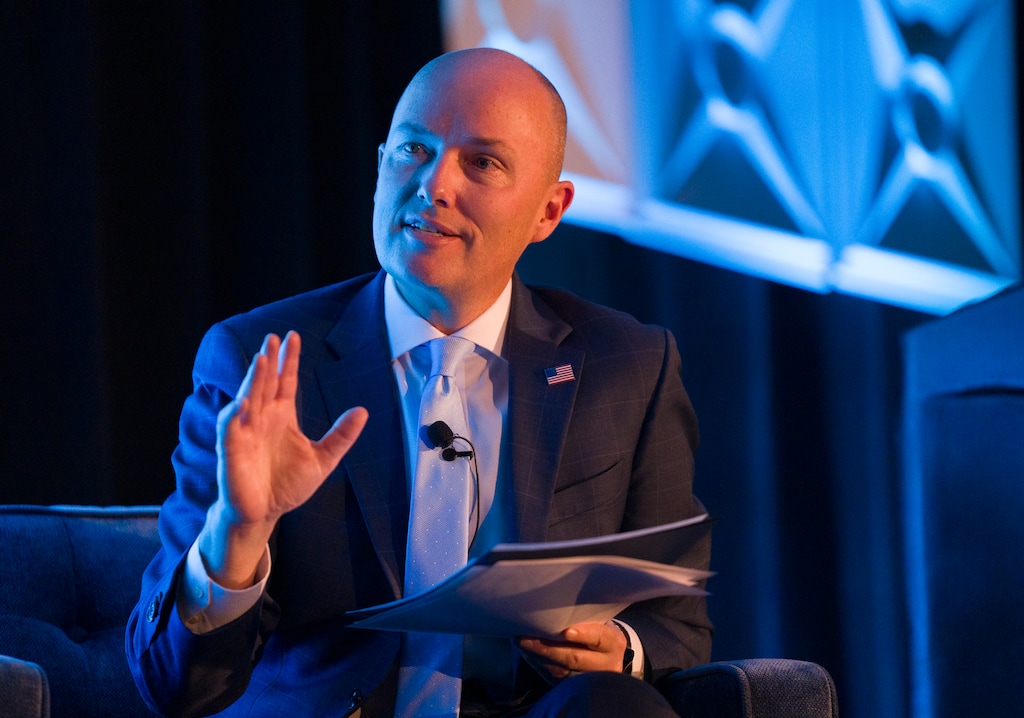
“In Utah, we believe that technology should reflect our heart and our values,” Gov. Spencer Cox said in a video announcement last week. “As we embrace the potential of artificial intelligence, we are dedicated to ensuring these tools serve our families and neighbors in meaningful ways.”
The program is being administered by The Nucleus Institute, an organization that is part of the Utah System of Higher Education, and the funding was allocated during the most recent legislative session as part of the Higher Education Research Funding Pilot Program.
The money is set to be allocated in twelve awards: Four will receive $1 million in funding, four others will receive $200,000 in funding, and a final group of four will receive $50,000 in funding.
“[With] the million-dollar grants, we want to see these big moonshot ideas,” Angela Smith, the Nucleus Institute’s managing director, said in an interview Friday. “The $200,000 grants are helping to further research that just needs to get across the finish line, and the $50,000 grants, we really want to see students and different types of groups getting involved.”
What research will the grants fund?
But what exactly those grants will fund is an open question.
“We want to make sure it’s Utah-centric,” Smith said. “Are you solving a problem that impacts everyday Utahns?”
That could include addressing water or pollution issues, or treating incurable diseases, she said.
University presidents across the state will first review applications and make recommendations for which to prioritize. The winners will ultimately be determined by a panel of AI experts and researchers selected by The Nucleus Institute, and they will be paired with a researcher at one of the state’s public universities to assist with the research as part of the grant.
Though Utah has historically been keen to regulate social media and big technology companies, the state has largely embraced artificial intelligence in recent years, siding with President Donald Trump when he pushed back against the lawmaker’s proposed AI regulations earlier this year.
Smith said the fund administrators understand that AI is a complicated field, and that they have been thinking about the “pros and cons” that come with the technology. Even as they look for potential “moonshot” ideas to address environmental concerns, she said, they understand that AI has an environmental impact.
“Our role,” she said, “is how do we harness technology for good, for the good of humans across Utah?”