 Robert Gehrke
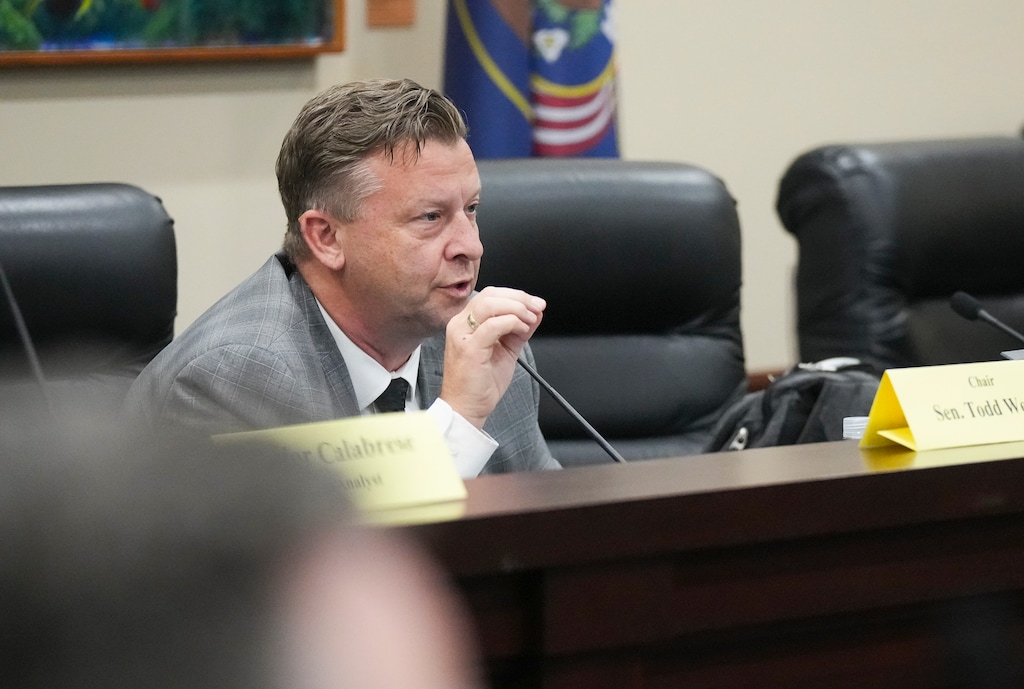
State Sen. Todd Weiler has accepted the job running the Sutherland Institute, a conservative think tank and advocacy group that is among the most active organizations lobbying for legislation on Capitol Hill, causing some to question if the new job creates a conflict of interest.
Weiler, who will take on the title of Sutherland’s new president and CEO, said nothing about the new job will change how he votes.
“Sutherland advocates for faith, family and freedom, and those are things I’m on board with already,” the Woods Cross senator said in an interview. “If there is a conflict between what I believe is best for my constituents and what Sutherland is saying, then I will side with my constituents 100% of the time.”
Weiler said during his interview with the board at Sutherland, he offered to resign his Senate seat, but the board declined. “They said they believed serving in elected office is a civic responsibility,” Weiler said.
The senator said he also consulted with legislative attorneys about the move and they did not object to his new job. Sutherland currently has five registered lobbyists at the Capitol, according to lobbying disclosures. Weiler said he would not be registering as a lobbyist when he moves to the new role next month.
The arrangement doesn’t sit well with Democratic Sen. Nate Blouin. The Millcreek senator said it raises the question of what information Weiler would use to make decisions.
“When you’re acting on behalf of an organization that comes before the Legislature, even if you’re not a registered lobbyist, but especially if you’re the executive director, you still have an interest in promoting their values and representing them in your advocacy,” Blouin said.
It is unusual for a lawmaker to be at the helm of an advocacy organization, but it is not unprecedented.
(Bethany Baker | The Salt Lake Tribune) Sen. Nate Blouin, D-Millcreek, speaks before the Senate Judiciary, Law Enforcement, and Criminal Justice Committee about SB136, a bill that looks to ban law enforcement, including federal immigration officers, from wearing face coverings in Utah, at the Utah Capitol in Salt Lake City on Thursday, Jan. 22, 2026.
For years, former Sen. Howard Stephenson was the president of the Utah Taxpayers Association, which lobbies lawmakers for business-friendly tax policy. In his role, Stephenson registered as a lobbyist because, he said at the time, he occasionally lobbied the governor’s office on tax policy.
During his first term in the Utah House, former Rep. Tim Hawkes was the director of Trout Unlimited, a group that advocates for fishing access and waterway conservation. At the time, anglers were involved in a court battle over access to privately owned rivers.
“As a citizen Legislature,” Weiler said, “we all have conflicts.”
Rep. Val Peterson, R-Orem, is the chair of the House budget committee and is also vice president for administration at Utah Valley University, a state-funded college. And Rep. Karen Peterson, R-Clinton, recently took a job as an assistant to the president of Southern Utah University overseeing government relations and strategic partnerships, according to an updated conflict of interest form filed last month.
Many legislators have interests in real estate development or rental properties. Republican lawmakers have pointed to Democrats who are educators and help make education policy.
Weiler said he would rather see conflicts that are clearly disclosed rather than not.
When he was a senator, Curt Bramble was paid $1.4 million over five years by two groups pushing for states to adopt favorable policies regarding kratom, a plant extract advocates say can ease pain but critics have called “gas station heroin.” Bramble, at the time, was not identified in legislative records as a representative of the industry, and, under Utah law, did not have to disclose the consulting payments to his business.
The Utah Legislature, earlier this year, banned kratom sales in gas stations and created additional restrictions.
In 2023, Sen. Jake Anderegg resigned his seat after forming a consulting business that included promising to help government clients get funding from the Legislature for transportation projects.