 Emily R. Anderson
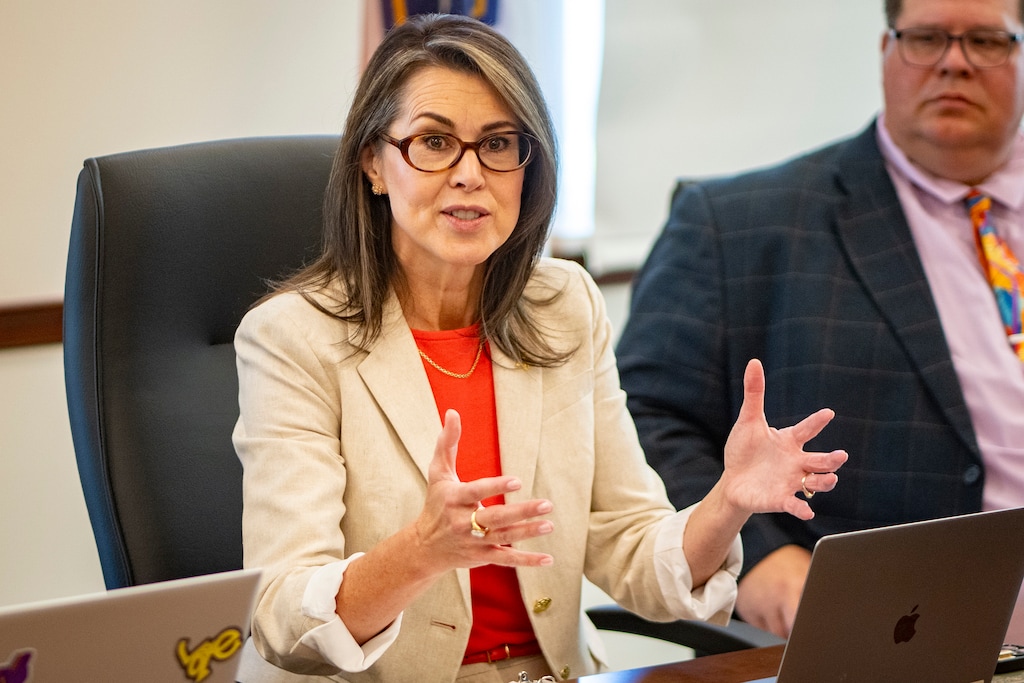
A comprehensive audit of Utah’s voter database found the vast majority of people registered to cast a ballot — 99.72% — are verifiable U.S. citizens, Lt. Gov. Deidre Henderson announced Wednesday.
But her office, which oversees elections in the state, confirmed that approximately 27 alleged noncitizens — out of the 2,069,640 voter records it reviewed — were on voter rolls. All of them have been removed.
“The goal is none, right?” Henderson told reporters during a news conference. “That’s the goal, but this aligns pretty well with what other states who have taken this task on have found, and certainly doesn’t show widespread problems.”
Although Utah County is the state’s second-largest, it had registered the highest number of noncitizens: 11.
The lieutenant governor announced in April 2025 that it would probe voters’ citizenship. It published preliminary findings in January, at which point it had identified one of the 27 alleged noncitizens.
According to the audit, approximately 13 of those individuals cast ballots.
The audit also found 25 “probable noncitizens” who are registered to vote. They will have 30 days to provide proof of citizenship before their registration is canceled.
According to the audit, nearly all of the 52 noncitizens or probable noncitizens are lawful permanent residents or individuals who were brought to the U.S. as children and remain in the country under the Deferred Action for Childhood Arrivals — commonly known as DACA — immigration policy.
Just six were not listed in the Department of Homeland Security’s Systematic Alien Verification for Entitlements database.
Henderson’s office was unable to confirm another 5,007 voters’ citizenship status. Election officials believe those individuals registered to vote prior to the state requiring either a driver license number or the last four digits of a Social Security number, which would prove their citizenship, and have remained active voters.
A disproportionate number of those voters live in Utah’s most rural counties, where populations skew older.
Both the lieutenant governor’s office and county clerks will reach out to those individuals before a new state law requires that all voters provide documentary proof of citizenship to vote in state elections.
Beginning in November, Utahns who haven’t yet shared that proof — including the 5,007 voters whose citizenship will remain unconfirmed if they do not furnish requested information — will only be able to vote in federal elections, which include upcoming congressional races.
The sponsor of that bill, Rep. Cory Maloy, R-Lehi, told The Salt Lake Tribune in a statement that following the review, he is satisfied with how his law is working.
“HB209 does what it is supposed to do — protects eligible voters while enforcing citizenship requirements," Maloy wrote.
It is already illegal for noncitizens to vote under both state and federal law.
“Whether or not anyone gets prosecuted — that is someone else’s job, that is not my role,” Henderson said. “But there are really significant penalties for this.”
Noncitizens who are convicted of having illegally cast a ballot become ineligible for future citizenship.
The state audit findings come amid a Justice Department lawsuit against Henderson, attempting to compel her to share Utah’s entire voter database. She has so far pushed back against President Donald Trump’s administration, saying it has no legal basis for the demands and complying would violate state privacy laws.
Congress, meanwhile, has been weighing a federal proposal that would implement much stricter documentary proof of citizenship requirements. The SAVE America Act is being pushed by Utah’s U.S. Sen. Mike Lee, and is backed by Trump.
Henderson told reporters that her office’s review demonstrates that noncitizens are not voting en masse, and that states are capable of managing their own voter databases.
“It does beg the question of: What is the purpose of the federal government trying to get their hands on all this private data?” Henderson said.