 Addy Baird
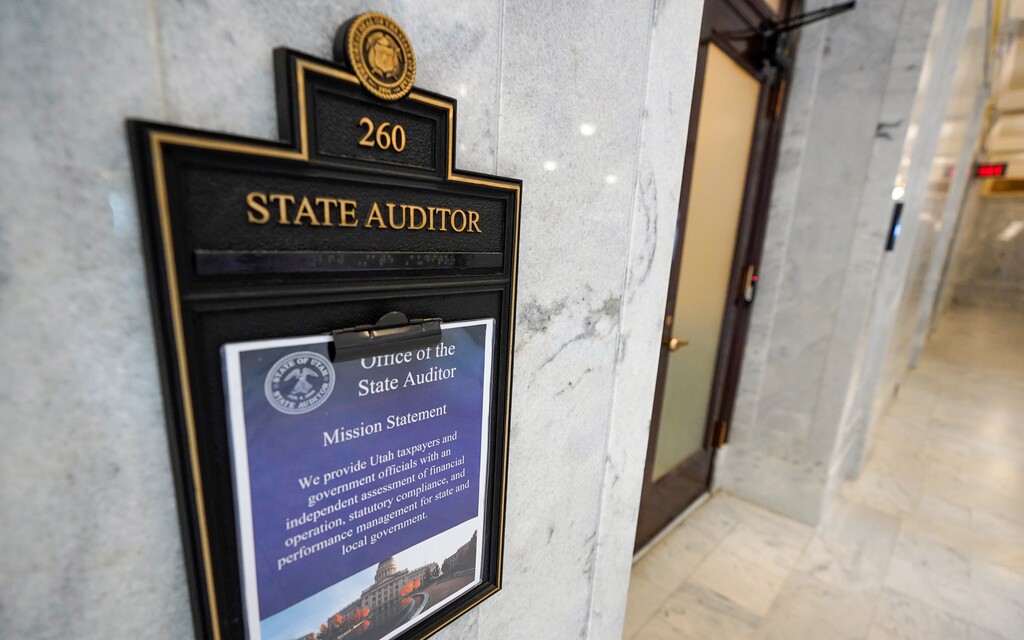
Nearly half a billion dollars in federal Medicaid funds intended for patient care in Utah health facilities were instead used on administrative fees, according to a report from the state auditor.
The report highlighted issues with a Skilled Nursing Facility Upper Payment Limit (SNF UPL) Medicaid program, a “gap” program that allows states to make supplemental payments to some nursing facilities up to the Medicare rate, which is higher than Medicaid rate, in an effort to cover Medicaid costs.
The funding for the program is managed by “Non-State Government Entities” (NSGEs) — municipal programs affiliated with hospitals — which pledge “seed money” to the state while they await federal funds.
That money is then supposed to be passed along to nursing facilities, but according to the report from Utah State Auditor Tina Cannon’s office, most of it never was.
Between 2016 and 2024, Utah’s three largest NSGEs — Beaver Valley Hospital, Gunnison Valley Hospital and Kane County Hospital — managed more than $922 million in upper limit payments, but only about $450.5 million of that money was actually used for patient care, the audit found. The rest — $471,794,805, or 51% of the funding — was kept by the hospital groups.
“These are Medicaid funds,” Cannon said in an interview Thursday. “Money is not fungible. It cannot be used for a different program, and this money is intended to be used in nursing facilities, not as administrative fees.”
Typically, Cannon said, her office has found that administrative expenses in Medicaid and Medicare audits are between about 1% and 3% in Utah.
“We’re way beyond reasonable,” Cannon said. “51% that just magically gets left behind every time? Come on.”
Moreover, she noted, the contracts for the SNF UPL program between the state Department of Health and Human Services and the NSGEs stipulate that 100% of the supplemental Medicaid payments are supposed to be deposited into operating accounts accessible to the nursing facilities.
Whether the issue of the misuse of funds is prosecutable, the auditor said, is a federal decision, as the funds in question are federal money. It’s a conversation she hopes to have with federal officials, because, she said, “how do you actually balance a budget if you have this kind of waste, fraud and abuse in all of your federal programs?”
Cannon’s report did not look into how the money retained for administrative fees was used or whether the loss of those funds impacted patients. Those issues, she said, went beyond the scope of the office’s compliance audit, which was done at the behest of lawmakers concerned about allegations that Medicaid funds were being misused.
But it’s an issue that Cannon said she has personal concerns about.
“You can talk to anyone who’s had a parent in a skilled nursing facility to talk about whether or not they think they’re funded appropriately,” she said. “Because having just lost my mother in January after a very long year of nursing homes, I would argue [they are] probably not fully funded.”
Cannon’s audit concluded that the funding issue stemmed from a lack of DHHS oversight over the program, and recommended, among other things, that the state Medicaid plan include set amounts or percentages of funds allowed for administrative expenditures and that DHHS more closely monitor NSGEs.
The audit includes a response from a law firm representing the three NSGEs, in which the hospitals’ legal representative argues that “100% of all SNF UPL Program funds received from DHHS are actually and literally deposited directly by DHHS into nursing facility operating accounts via Medicaid remittances.”
This process, he argued, is “in compliance with state and federal law, with the State Medicaid Plan, and with the State UPL Contract that governs the program.”
Cannon argued that the response from the firm does not take into account established legal precedent in Utah or governmental accounting standards “where funding is restricted for its intended use.”
The auditor’s report, released Wednesday, came on the same day that Gov. Spencer Cox announced the appointment of a new inspector general of Medicaid services, assigning Nate Checketts to the role.
Cannon said the appointment was not coordinated with the release of her report, though she cheered the move.
“Hallelujah,” she said. “I applaud anytime there is additional oversight. We get a little tired being the only ones.”