 Sean P. Means
Carbon County leaders will get their first official chance Thursday to decide on — and set conditions for — an ambitious, controversial plan to build and operate dozens of small nuclear reactors, fabricate nuclear fuel and store it once spent on state trust land, as opponents are asking the county to slow down.
The Raceway Energy Campus proposed by Valar Atomics Inc. would include a natural gas plant to power manufacturing, labs and data center buildings until future reactors come online. Then the plant, with transmission lines, battery storage and substations, would provide energy as a back-up or for new uses or peak periods.
Valar Atomics says its energy and industrial campus is a “conditional use” allowed under the “mining and grazing” zoning that the county placed on its site, about 640 acres leased from the Utah Trust Lands Administration near Wellington. That means the county can set conditions on how the project operates, to mitigate impacts on issues such as health, safety, water use and the environment.
The company’s application for a conditional use permit seeks broad approvals beyond the current plans it describes. Valar wants the county to confirm that it agrees with the company’s reasoning for why all of its planned activities are allowed, and that changes within that outline — such as reactor designs or the number of reactors or buildings — would still be covered by the permit.
The Salt Lake Tribune obtained the application through an open records request. The permit is the one significant agenda item at a special meeting called by the Carbon County Planning Commission for Thursday, starting at 6:30 p.m. Opponents say they plan to show up in numbers.
So far, there’s been no opportunity for residents and others to comment to government entities about Valar’s plans, because the company hasn’t requested any official action before now.
The permit application provides details — from plans for 40 to 120 reactors to the expected heights of buildings — for the state trust lands site. It does not describe Valar’s separate proposal to place data centers and hundreds of small reactors on adjoining federal land, which the company said is under separate review by the Bureau of Land Management.
Valar’s mitigation plans
(Valar Atomics, Trust Lands Administration) The section of land that includes the property Valar Atomics has leased from the state Trust Lands Administration is outlined in red. This is an excerpt from a map included in a presentation to the TLA's board of trustees on Aug. 20, 2026.
At the Carbon County site, Valar would use “zero local water, including for construction, initial fill, and steady state operations,” it said. The reactors are expected to use helium circulating in a closed loop to cool their cores; the data centers will use “closed-loop systems that are filled once and topped up periodically,” Valar said.
Some water would be needed, however, for fire protection, plumbing for employees, construction, manufacturing and other uses. The amount used would be “established and secured in the water right or supply contract process,” the company said, before a building permit “for the first permanent building for human occupancy” is issued.
Valar included the limits on the project’s demand for water among the conditions it proposes to mitigate impacts. Other include road improvements, restrictions on the hours of pile driving and blasting, and other measures to limit noise, dust and light.
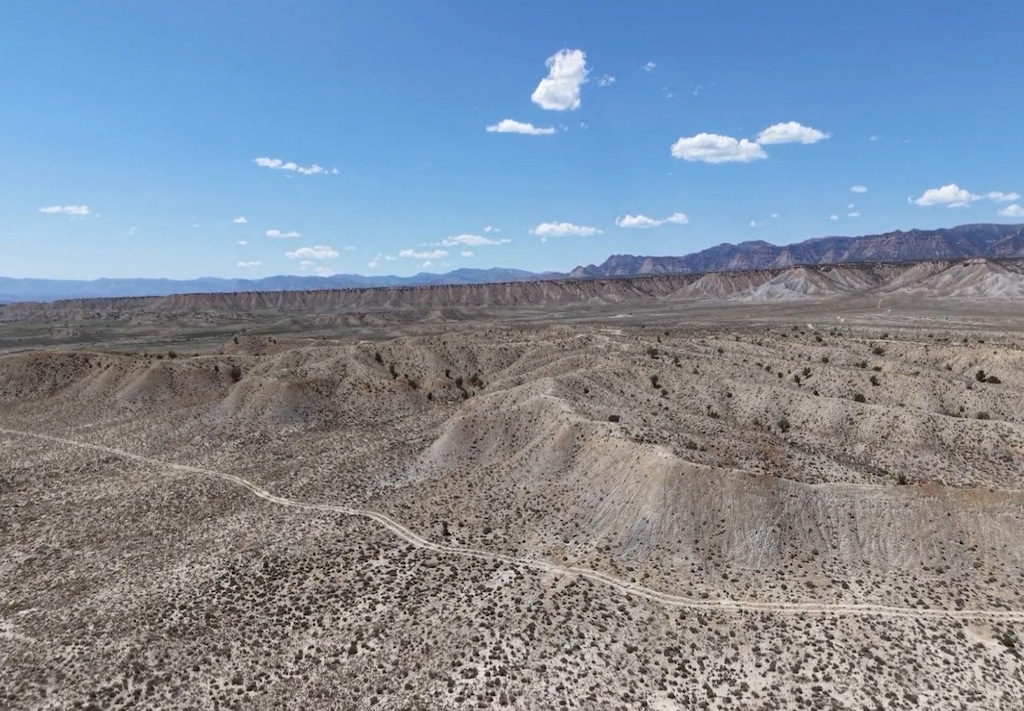
(Valar Atomics, Trust Lands Administration) The site Valar Atomics has leased from the state Trust Lands Administration for an energy and data center campus is shown near Wellington. This photo was included in a presentation to the TLA's board of trustees on Aug. 20, 2026. Valar's initial lease was 480 acres, with plans for an additional 160 acres upon the Utah National Guard relocating from adjacent land.
Many other agencies will set limits and standards for elements of the campus, Valar noted. For example, the Nuclear Regulatory Commission and the Department of Energy oversee reactor thermal power; the Utah Division of Air Quality regulates natural gas combustion and emissions; work in watersheds or that could impact cultural, wildlife and paleontological resources is covered by federal and state agencies.
Spent fuel would be placed in dry storage systems licensed by the NRC or authorized by DOE, the application said, and low-level radioactive waste would be stored temporarily until it’s shipped to a licensed disposal facility.
Valar also said it will reimburse the county for the expenses of processing its conditional use permit application, such as the costs of hiring consultants, engineers and lawyers. Under a development agreement, the company may pay an advance deposit or replenish an escrow account, it said.
Questions and opposition
State Sen. Nate Blouin, a Democrat from Millcreek, said the application is the first mention of a “sizeable” natural gas plant at the Valar site. “For a company promoting unproven nuclear technology to power a data center, that feels like a bait-and-switch,” Blouin said in a text message to The Tribune.
Leo Hardy, a pathologist in Price who has been one of the louder voices in opposition to the Valar project, has urged his neighbors to speak up at Thursday’s meeting.
At the planning commission’s regular monthly meeting on Tuesday, Hardy asked why there’s been no action on a citizen petition to the Carbon County Commission, which seeks a temporary moratorium on any large-scale energy projects.
The planning commission’s chairman, Gary Taylor, cut him off mid-sentence, saying, “the commission was not taking comments on Valar.” Hardy pointed out he never mentioned Valar, and was “talking about process.”
In an email to Carbon County residents and activists, Hardy wrote that his exchange with Taylor “demonstrated direct administrative bias on the formal record. They revealed that ordinary planning rules and procedural inquiries are being sidelined specifically to protect this project.”