 Leia Larsen
Note to readers • This story is made possible through a partnership between The Salt Lake Tribune and Grist, a nonprofit environmental media organization.
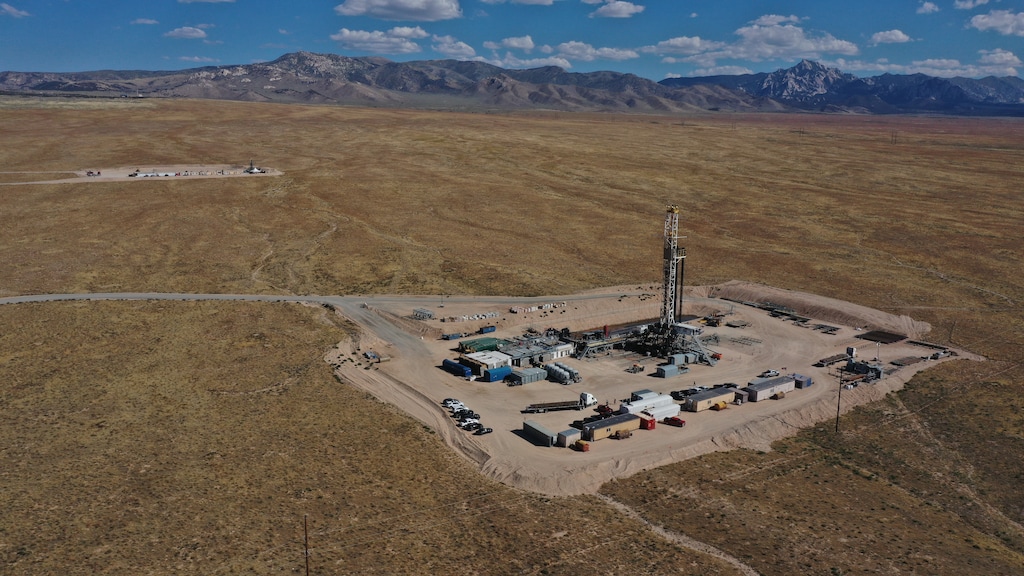
A geothermal plant in southwest Utah signed a deal to sell Google the equivalent of one-tenth the electricity currently used in the entire state.
Google plans to use it to power a possible data center.
Fervo Energy announced its agreement with the tech giant in a news release Tuesday. Under the deal, Fervo will provide 396 megawatts from its Cape Station near Milford through development of an “enhanced geothermal systems GeoCluster.” The company expects the electricity to be available by 2028. The agreement would allow Google to buy another 600 megawatts by June 2030.
That’s nearly 1 gigawatt of electricity combined — or about one quarter of the power currently consumed across Utah.
“This agreement reinforces that [geothermal] is ready to power the next generation of computing infrastructure,” Tim Latimer, CEO and co-founder of Fervo Energy, said in a statement.
The location of Google’s potential data center remains unknown. Final plans are subject to market conditions, local permitting and engineering, according to Fervo. Google purchased 300 acres of land in 2021 near Eagle Mountain, about 130 miles north of Fervo’s Cape Station, but the tech company has delayed building there due to power constraints.
Data centers have sparked widespread bipartisan backlash in Utah. Some politicians who supported TV celebrity Kevin O’Leary’s “Wonder Valley” hyperscale data center near the Great Salt Lake lost their primary elections this year, including Senate President Stuart Adams.
Much of the consternation over computing complexes centers on the amount of energy they consume. Developers have struggled to secure enough electricity to meet data center demands from utilities like Rocky Mountain Power. They’ve instead turned to natural gas-fueled generators and self-contained power plants, which produce carbon emissions, worsen climate change and exacerbate Utah’s smog pollution.
Powering data centers with renewables, however, could reduce impacts on communities and the environment, said Logan Mitchell, a climate scientist and energy analyst with Utah Clean Energy.
“It seems like that would be doing it in a way that’s much more sustainable and could be more beneficial,” Mitchell said. “I could see a data center that’s relying on clean technologies having a different reception.”
Geothermal also uses a much smaller land footprint than other renewables like wind and solar. And it generates electricity around the clock, regardless of weather conditions.
“It’s very similar to nuclear energy in that way,” Mitchell said.
He called the agreement between Fervo and Google a potential boon for Utah’s economy and carbon-free energy production. He also lauded the speed at which Fervo intends to bring the electricity online.
“Potentially expanding to a gigawatt by 2030, that’s really fast,” Mitchell said. “In the data center world, speed to power is a precious commodity.”
Soaring global energy demands, brought partly by the rise of artificial intelligence, have caused unprecedented delays as developers seek equipment for natural gas generation, Utility Dive reported. It now takes at least five years to secure a gas turbine from order to delivery.
Small modular nuclear reactors, embraced by Gov. Spencer Cox in recent years to meet Utah’s projected surge in electricity needs, also take about seven years to permit, site and build.
Fervo went public in May, offering 70 million shares at $27 apiece in May as part of its initial public offering. It signed a nonbinding Geothermal Framework Agreement with Google ahead of the IPO in March, according to filings with the U.S. Securities and Exchange Commission. Under that agreement, Fervo committed to provide at least 1 gigawatt of geothermal power to the tech company within two years and up to 3 gigawatts by the end of 2033, although Google is not obligated to buy the power.
“Now Google is saying, ‘Hey, we are going to purchase,’” Mitchell said. “I was expecting something to come out like this. And now it is, and that’s good news.”
Google also has a pilot project with Fervo in Nevada to power data centers, which began in 2023.
“The next chapter of advanced power generation technology is being written in Utah,” said Lucia Tian, director of advanced energy technologies at Google, in the news release. “This project will drive meaningful economic benefit to the local community … by making enhanced geothermal more affordable and accessible.”