 Brooke Larsen
A diverse group of rural Utah counties, ranchers, environmental groups and a tribe are raising red flags about a recently approved water pipeline in the West Desert.
The Indian Peaks Band of the Paiute Indian Tribe of Utah, the Center for Biological Diversity and a coalition that includes Utah and Nevada counties, residents and the Great Basin Water Network filed three separate appeals with the Interior Board of Land Appeals on Wednesday, challenging the Bureau of Land Management’s approval of the Pine Valley Water Supply Project last month.
The appeals also include petitions to temporarily halt the project while they are considered.
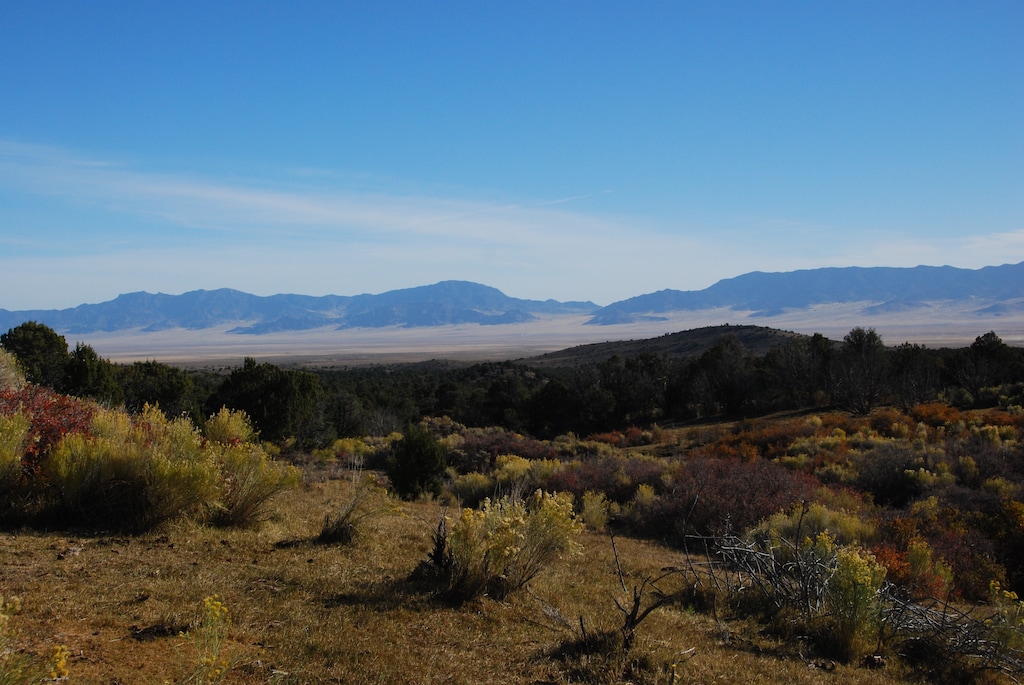
The project proposed by the Cedar Valley Water Conservancy, formerly known as the Central Iron County Water Conservancy District, would pump up to 15,000 acre-feet of groundwater from Pine Valley in Beaver County and pipe it to Iron County.
The Cedar Valley area, which includes Cedar City and Enoch, has been overdrawing its groundwater supply, and the Division of Water Rights ordered the region to develop a plan to cut back on how much water it pulls from the local aquifer.
To meet growing water demands, the conservancy has been investing in water conservation and a water reuse project, while also seeking a pipeline to bring water in from elsewhere.
“Our mission remains the long-term stability of water resources for our residents and agriculture in Cedar Valley,” the conservancy said in a statement Thursday morning. “By diversifying our water portfolio with court-decreed rights and following a federally approved environmental process, we are doing exactly what a responsible water district is tasked to do: planning for the next fifty years, not just the next five.”
(Loren Elliott | The New York Times) Irrigation in a field at sunset near Cedar City, March 24, 2023.
The pipeline is “the most expensive and risky choice for augmenting supply,” Kyle Roerink, executive director of the Great Basin Water Network, said in a statement on Wednesday. “Instead, Iron County officials need to start paying farmers fair market value in the Cedar Valley for their senior water rights before they pilfer from rural communities in the West Desert.”
Paul Monroe, general manager of the conservancy, told The Tribune in March that given the cost of water rights in the Cedar Valley, the pipeline is one of the area’s “cheaper options ... to bring in water.”
“Agriculture is part of our heritage ... so we’re not actively pursuing or trying to push agriculture or people with private property rights out,” he added.
The conservancy secured rights to develop groundwater in Beaver County after a settlement agreement in 2019.
“This court-decreed agreement was the result of years of working together to find regional solutions that respect the rights and needs of all parties involved,” the conservancy’s statement said.
The appealing counties — Beaver, Juab and Millard counties in Utah and Nevada’s White Pine County — are not happy with the project’s recent approval, though.
“This project doesn’t just harm our residents, it robs future generations of the ability to farm, ranch, hunt, fish and recreate in the West Desert,” Beaver County Commissioner Tammy Pearson said in a statement. “Beaver County’s appeal ensures we are defending the rights of our constituents and demanding accountability for desert water across the region.”
How the project could affect water users in the West Desert
The coalition of counties, alongside Milford City, the Central Nevada Regional Water Authority, Great Basin Water Network, residents, ranchers and a Nevada grazing district, argues that the BLM’s approval of the project would harm private property, water rights, public resources and the environment.
Their appeal alleges that the BLM violated the National Environmental Policy Act and the Federal Land Policy and Management Act by failing to prevent “unnecessary or undue environmental degradation” and to evaluate the effectiveness of the required monitoring and mitigation measures.
Without a stay to halt the project, the appeal states the counties and residents “will be immediately and irreparably harmed.”
Mark Wintch, a Beaver County rancher who is appealing the approval, said the project could be detrimental for him.
“It has a potential to ruin my ranch and livelihood,” he told The Tribune after the BLM approved the project in March. “There’s been no offer of buyouts — not that I’m for sale — but they’ve never once offered anything that would make me whole.”
The BLM’s environmental assessment said that the pipeline project could slow the flow of a spring that Wintch uses for irrigation and hydropower by 14%.
“My spring runs all of the farm,” Wintch said. “It runs the lights in the house. … We’ve got over 100 miles of pipe in the ground that benefits livestock, but also wildlife and animals around.”
The conservancy is required to have a monitoring and mitigation plan in place to make sure rights aren’t being impaired.
“The main point we need to do right now is make sure that monitoring plan is in place to … prevent those impacts from happening to begin with,” State Engineer Teresa Wilhelmsen said in March after the project approval.
How the project could affect the Indian Peaks Band
Beyond ranchers and rural counties, the Indian Peaks Band also says that the project will affect its water rights.
“It’s our homeland, and I worry for future generations,” Tamra Borchardt-Slayton, chair of the Indian Peaks Band, told The Tribune after the project was approved in March.
Borchardt-Slayton is concerned the pipeline will affect the band’s water rights in the area where they formerly had a reservation but were forcibly removed during the “termination era” in 1954.
(Leah Hogsten | The Salt Lake Tribune) Tamra Borchardt-Slayton, right, Indian Peaks Band chairperson of the Paiute Indian Tribe of Utah and her family, husband Mike Slayton, daughter Chanel and son Carver pose for a photo at Indian Springs, Saturday, August 12, 2023.
“The mountains, the water and the valley of Indian Peaks still carry our history,” Borchardt-Slayton said, “and today, the Indian Peaks Band continues to protect our culture, language, water rights and sacred places, because even though the land was taken, the identity of Indian Peaks people, Kwee’choovunt, could never be terminated.”
Even though the federal government terminated the band’s reservation, the act did not extinguish federally reserved water rights.
Those rights “survived termination, still exist today, and are impacted by the extraction of groundwater in Pine Valley for the PVWSP,” the band’s appeal states.
The BLM’s environmental impact statement said that its ability to analyze how the project could affect the tribe’s water rights is “limited,” but that the band’s former reservation lands fall within an area that could see groundwater drawdown ranging between 15 to 100 feet.
The agency said if the band concludes the project affects its water rights, then it could go through the process to quantify and adjudicate those rights.
“That’s problematic because an adjudication of water rights often takes years or decades,” Tom Murphy, the band’s attorney with the Native American Rights Fund, said.
By the time the band secures its rights, the water source could already be impaired.
How the project could affect the environment
The project also threatens plants and animals in the Great Basin National Park and the Fish Springs National Wildlife Refuge, according to an appeal from the Center for Biological Diversity.
“Utah’s West Desert is a place of abundant life and vibrant communities that shouldn’t be treated as a sacrifice zone,” Megan Ortiz, a staff attorney at the Center for Biological Diversity, said in a statement Thursday morning. “We won’t let it be sucked dry to feed more reckless development.”
Groundwater studies have shown that the project’s groundwater pumping “likely would exceed the basin’s sustained yield,” the appeal says.
An overdraft would cause “significant negative impact to environmental resources in the area,” extending beyond Pine Valley into Nevada, the appeal says.
The BLM has 45 days to grant or deny the appellants’ petitions for stay. The appeals are a “first step in the legal fight” to try to stop the project, Roerink told The Tribune.