 Carmen Nesbitt
Utah teachers face an unfair disciplinary process that needs overhauling, a state school board member alleges in a new report.
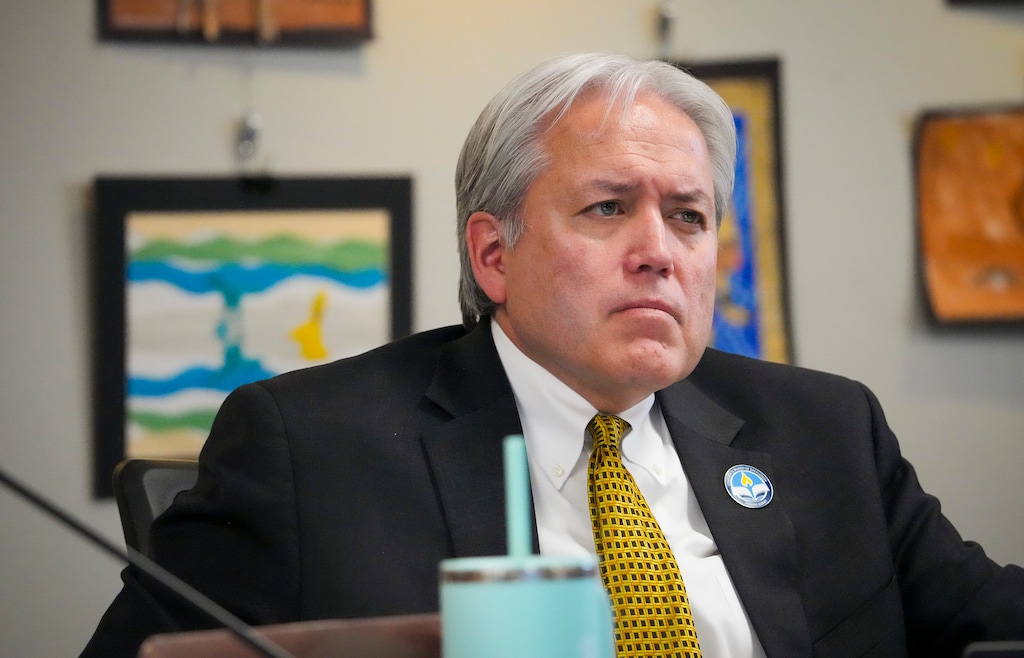
The report, written by Utah State Board of Education member Joseph Kerry, examines how the Utah Professional Practices Advisory Commission, or UPPAC, conducts business. The 11-member committee is charged with hearing and investigating allegations of educator misconduct throughout the state.
The system isn’t “lacking professionalism or good faith,” Kerry notes.
“To the contrary,” his report continues, “many participants described dedicated investigators and conscientious commission members who are attempting to do difficult work under increasing pressure and limited resources.”
Kerry serves as the chair of the board’s law and licensing committee, and his assessment comes ahead of what’s expected to be a comprehensive audit of UPPAC’s processes and procedures.
USBE voted in February to launch that audit, which will take about 10 months to complete, Kerry said in a statement to The Salt Lake Tribune. The state school board hasn’t yet reviewed his report, which was posted on the board’s public portal late last week.
“UPPAC is in need of reform and I believe that this report will inform not only the Board, but the Legislature, of the due process deficiencies within UPPAC,” Kerry said.
Ben Rasmussen, executive secretary for UPPAC and USBE’s director of law and professional practices, declined to comment, deferring to the state school board.
“As staff we follow the direction of the Board and implement Board rule,” Rasmussen said in a statement.
How the UPPAC process works
Utah requires schools and school districts to report educators accused or suspected of misconduct to UPPAC.
Anyone, including parents, can file a complaint.
Next, UPPAC decides whether further action is required. If so, it will open a case. For relatively minor allegations, UPPAC may decide to schedule an “expedited hearing” without first doing an investigation.
Three UPPAC members oversee those expedited hearings, which the educator, their representative and an administrator from their school or district attend — unless the educator declines the hearing and requests an investigation.
The goal of each investigation is to “present all sides of the story to UPPAC,” according to USBE’s website.
In both circumstances, UPPAC makes a disciplinary recommendation to state board members, who can either accept, reject or modify the commission’s recommendations.
Penalties range from written warnings to license suspension to license revocation, an action typically reserved for educators accused of felonies, such as sex crimes against minors.
No policy for conflicts of interest, report says
Kerry’s report first flagged that he believes UPPAC’s process is ripe for potential conflicts of interest.
That’s because, he wrote, UPPAC staff play “multiple roles across the lifecycle of a case.” For instance, investigators involved in fact-finding processes have later advocated against educators during hearings.
“Even if unintentional, this blending of investigative and quasi-advocacy roles undermines the fundamental requirement of a neutral decision-making process,” his report states.
The commission also lacks a formal policy addressing the issue, which “warrants immediate correction,” it adds. “Written conflict-of-interest policies are a basic safeguard in administrative adjudication systems.”
No formal guidance on dismissing complaints, report alleges
UPPAC doesn’t formally notify educators when a complaint is filed against them, though some may become aware through communication from school staff, according to the report.
Teachers are otherwise only alerted if UPPAC opens a case, it states.
Staff explained the aim is to avoid causing “unnecessary anxiety,” according to the report.
In turn, the report states, UPPAC often decides to open a case before an educator has had a chance to engage with UPPAC.
“If the educator’s first direct engagement with UPPAC occurs only after a case has already been opened,” the report states, “then the most consequential threshold decision has already been made without their participation.”
When deciding whether or not to open a case, the commission also does not use a “formally defined standard of review,” according to the report.
“The absence of a defined threshold creates substantial risk of inconsistency, arbitrariness, and inability to explain outcomes across similar cases,” Kerry argues.
Interviews are inconsistently recorded, report says
Kerry also accuses UPPAC of failing to keep “reliable” records.
Investigative interviews are not always recorded or transcribed, his report states. Often, an investigator’s written summary is preserved rather than a verbatim recording.
UPPAC shares those summaries, not direct evidence, when recommending discipline to state board members. At that stage of the process, educators aren’t allowed to address the board in person or in writing, the report notes.
“This structure creates a significant limitation on the Board’s ability to perform a truly independent review,” Kerry wrote.
If the state school board ultimately decides to modify an educator’s recommended discipline, members don’t need to explain the move.
“This represents one of the most significant concerns identified in the record,” Kerry wrote about his research. “If the Board increases a recommendation from one year to three years, or materially changes a sanction in either direction, affected educators and the public may have no way to know why.”
State cases ‘heavily’ rely on local investigations
Over the course of each case, UPPAC “heavily” relies on school- and district-level investigations, according to the report.
But the quality of those investigations can vary, and Kerry asserts that UPPAC may be receiving biased or “uneven” accounts.
Administrators also are often charged with investigating misconduct “within their own chain of command,” raising due process concerns, he wrote.
“It creates the risk, whether actual or perceived, that investigations may be influenced by institutional interests, including liability exposure, reputational considerations, or internal personnel dynamics,” his report states.
Those concerns are especially important when it comes to administrators “where power dynamics may discourage reporting and where internal investigators may have direct or indirect relationships with the subject of the investigation,” according to Kerry.
State law protects whistleblowers, but the fear of retaliation could keep misconduct from being reported, his report states. “The state may not be receiving a full and honest picture of misconduct in schools.”
Lawmakers eyeing UPPAC
Utah lawmakers have already taken steps toward curbing what they’ve identified as UPPAC fairness concerns. That includes passing SB312, which Gov. Spencer Cox signed into law last month.
The change allows teachers with suspended or revoked licenses to again work or volunteer in public schools under certain circumstances.
State law previously prohibited this with zero exceptions.
Under SB312, disciplined teachers can now work in unlicensed positions, like cafeteria or hall monitor roles, or certain administrative jobs — and only if a “technical” violation led to their discipline, not a “harmful” one.
“It is wrong to label someone who made an administrative mistake — or got crosswise with district leadership over some mundane matter — the same way we label someone who endangered children,” said the bill’s sponsor, Sen. John Johnson, R-North Ogden.
“In these cases,” he continued, “there is no justification for banning someone from school property.”
Two state school board members wanted the governor to veto the bill, arguing it “circumvents” UPPAC.
“It undermines the whole UPPAC process,” Carol Barlow Lear, a Utah State Board of Education member, previously told The Tribune.
The Utah Education Association, the state’s largest teachers’ union, also opposed the bill, arguing it could “weaken” consequences for serious misconduct.
Lear added she thought lawmakers should have waited until USBE completes its audit before passing SB312, arguing that the data may have informed a better law.